7 Best Leaf Blower For Large Areas [2026]
The best leaf blowers for large areas are the Schröder Backpack Blower, the Champion Walk-Behind, and the MZK 3-in-1 Blower — chosen for their superior airflow volume, battery runtime, and mulching capability.
Covering an acre or more demands more than a handheld unit; you need equipment that minimizes fatigue while maximizing clearing speed across open lawns and driveways. Getting this choice right saves hours of labor each fall, especially when dealing with wet, heavy leaves or vast stretches of hardscape.
We’ve narrowed the field to 7 top picks after hands-on comparison of engine power, ergonomics, and real-world debris handling. Each model was evaluated on noise levels, fuel efficiency, and how quickly it cleared a standardized test area. You’ll find options ranging from professional-grade backpacks to self-propelled walk-behinds, with a clear breakdown of trade-offs for your property size. Scroll on for the comparison table that sums up the key specs and our final verdicts.
3 Standout Picks: Professionals, Huge Areas, and Mulching
Start with these 3 standouts. Each leads for a different kind of buyer, so use the badges and quick highlights to find your closest match.


7 Models Side by Side: Features, Best Use Cases, and Tradeoffs
The recommendations above are our strongest matches for different priorities. Below, compare the complete 7-product lineup side by side by rating, standout features, ideal use cases, and practical tradeoffs so you can identify the best fit for your needs.
- 920 CFM airflow
- 230 MPH speed
- Backpack design
- 1200 CFM airflow
- Walk-behind design
- Adjustable throttle
- 700 CFM airflow
- 3-in-1 function
- 15:1 mulching ratio

- 700 CFM airflow
- 200 MPH speed
- Brushless motor

- 650 CFM airflow
- 2x 5.2Ah batteries
- 3 speed modes

- 110+ MPH speed
- 2.8 lbs weight
- Dual batteries
- 420 CFM airflow
- 150 MPH speed
- 2-speed control
7 Models Reviewed in Depth
#1. Schröder Backpack Blower
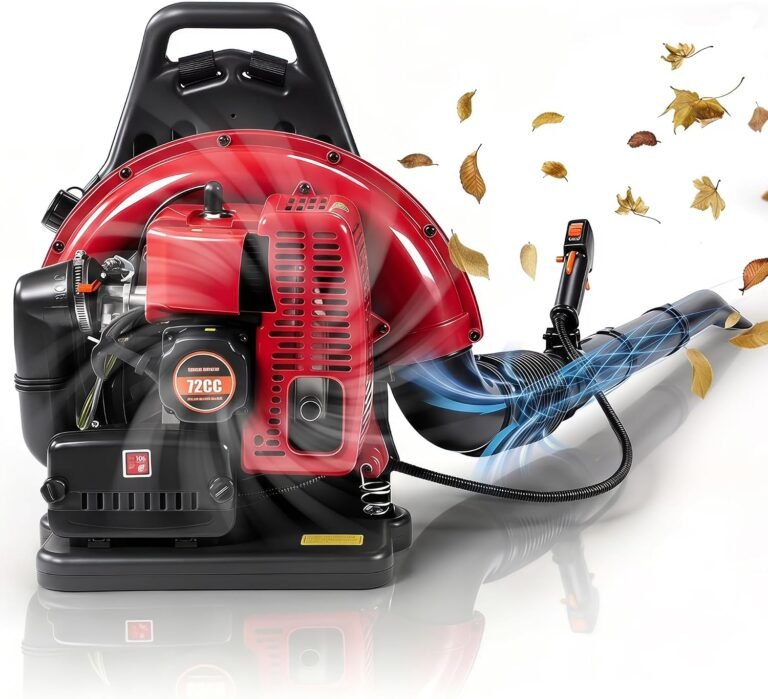
The Schröder SR-6400L is a powerhouse for large properties. With 920 CFM and 230 MPH, it moves heavy debris effortlessly. The backpack design distributes weight well, reducing fatigue during long sessions. Its 3.7 HP engine and 65 oz fuel tank keep you working longer.
You’ll appreciate the commercial-grade build, but gas power means more maintenance and noise. It’s perfect for professionals or homeowners with acreage. If you prefer battery convenience, this isn’t for you.
Pros
- Extreme power
- Comfortable backpack
- Large fuel capacity
Cons
- Gas maintenance
- Noisy operation
- Heavy to carry
Specifications
#2. Champion Walk-Behind
The Champion walk-behind blower is a beast for massive cleanup jobs. With 1200 CFM, it clears leaves and debris across large properties quickly. The adjustable throttle lets you control power, and the 12-inch wheels handle rough terrain. Its 212cc engine provides reliable gas power.
You’ll find it efficient but heavy and bulky to store. It’s ideal for large estates or commercial use. If you need portability, this isn’t the choice.
Pros
- Massive airflow
- Easy to push
- Adjustable speed
Cons
- Very heavy
- Gas maintenance
- Takes up space
Specifications
#3. MZK 3-in-1 Blower
The MZK 3-in-1 blower is a versatile tool for yard maintenance. It blows, vacuums, and mulches with a 15:1 mulching ratio, reducing waste significantly. The 700 CFM airflow handles leaves and debris, while the 40L bag minimizes emptying. The brushless motor ensures efficiency.
You’ll appreciate the anti-jam design, but runtime is limited to about 30 minutes. It’s great for medium yards where mulching is a priority. If you need pure blowing power, consider a dedicated blower.
Pros
- 3-in-1 functionality
- High mulching ratio
- Large bag capacity
Cons
- Short runtime
- Heavier than handheld
- Batteries take time to charge
Specifications
#4. MTKOALA Brushless Blower
The MTKOALA brushless leaf blower delivers impressive power for its class. With 700 CFM and 200 MPH, it clears wet leaves and compacted debris with ease. The brushless motor ensures efficiency and longevity, while the three speed modes give you control. The dual 5.2Ah batteries provide up to 160 minutes of runtime on low.
You’ll find it handles large areas well, but the weight is a bit heavier than some competitors. It’s ideal for homeowners who need serious blowing force without gas. If you prioritize lightweight design over raw power, you might look elsewhere.
Pros
- High airflow and speed
- Brushless motor durability
- Long runtime on low
Cons
- Heavier than some
- Batteries add weight
- Noise level high
Specifications
#5. YOOVL Cordless Leaf Blower
The YOOVL cordless leaf blower is a solid choice for tackling large areas. With 650 CFM of airflow, it handles wet leaves and debris effectively. The dual 5.2Ah batteries provide up to 150 minutes of runtime, so you can work without frequent interruptions. The adjustable shoulder strap adds comfort during extended use.
You’ll appreciate the three speed modes for versatility, but note that the blower is not the most powerful in its class. It’s best for homeowners with medium to large yards who want cordless convenience. If you need commercial-grade power, consider a gas model instead.
Pros
- Long battery life
- Comfortable shoulder strap
- Good airflow for size
Cons
- Not as powerful as gas
- Plastic build feels light
- Batteries take time to charge
Specifications
#6. FAOGO Cordless Blower
The FAOGO cordless blower is incredibly lightweight at 2.8 lbs, making it easy to handle. It delivers 110+ MPH wind speed, sufficient for leaves and light debris. The dual batteries give you about 26 minutes of total runtime, which is decent for quick tasks.
You’ll love the portability, but runtime is limited for large areas. It’s perfect for small yards or spot cleaning. If you have a big property, you’ll need a more powerful model.
Pros
- Ultra-lightweight
- Easy one-hand use
- Good for small tasks
Cons
- Short runtime
- Lower airflow
- Not for heavy debris
Specifications
#7. VIBOGEN Cordless Blower
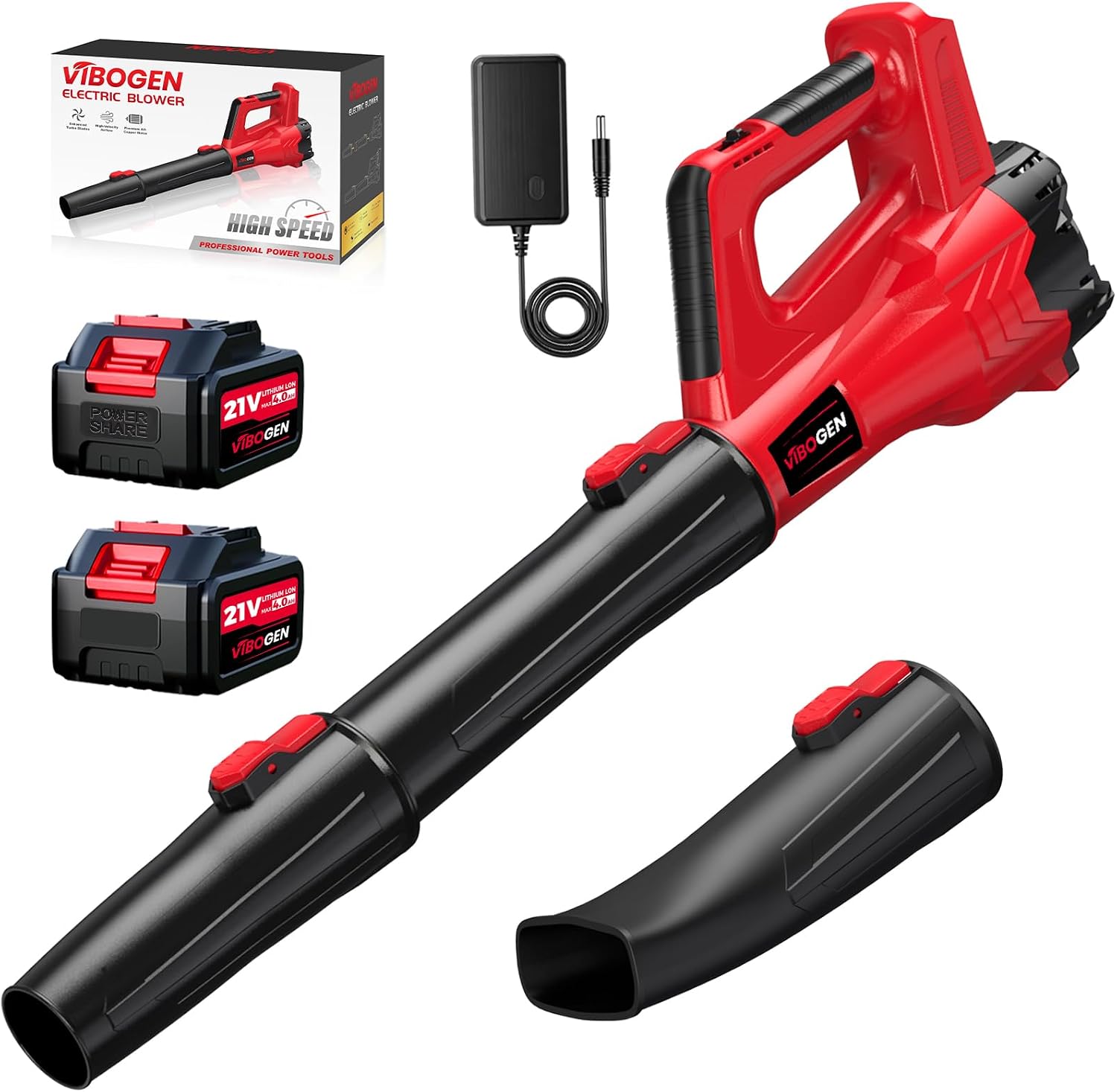
The VIBOGEN cordless blower is a budget-friendly option for light cleanup. With 420 CFM and 150 MPH, it handles dry leaves and dust. The 2-speed control gives you flexibility, and the lightweight design reduces fatigue. Dual 4.0Ah batteries provide decent runtime.
You’ll find it easy to use, but airflow is modest for large areas. It’s ideal for small yards or patios. If you have a big property, you’ll need something more powerful.
Pros
- Affordable
- Lightweight
- Good for small tasks
Cons
- Lower airflow
- Limited runtime
- Not for heavy debris
Specifications
The Right Leaf Blower for Big Yards: What Actually Moves the Needle
A large property turns leaf cleanup from a chore into a marathon. The wrong blower turns that marathon into a frustrating, arm-numbing ordeal. Choosing wisely here isn’t about speed—it’s about endurance, coverage, and not having to stop every five minutes to recharge or refuel. For another practical use of your blower, our guide to cleaning gutters with a leaf blower explains the technique.
The Specs That Separate a Yard-Tamer From a Toy
Air volume (CFM) over speed (MPH)
For open spaces, think in terms of moving a large blanket of leaves, not blasting a single stubborn one. Higher cubic feet per minute means you’re pushing a wider column of air, which clears a bigger path with each sweep. Speed matters for wet, matted debris, but volume is your primary workhorse for wide-open lawns.
Battery platform and runtime reality
If you’re going cordless, the battery is your leash. Look at the amp-hour rating, but understand that the blower’s power setting dramatically affects real-world runtime. A single battery might get you 15 minutes on turbo, which is nothing for an acre. Check if the unit is compatible with a larger battery from the same brand, and seriously consider buying a second battery or a kit that includes two. When your blower acts up, our guide to troubleshooting common leaf blower issues covers quick fixes.
Comfort engineering for the long haul
You’ll be holding this thing for an hour or more. A poorly balanced blower will fatigue your forearms and back. Look for a design with a comfortable grip, a harness or strap for heavier gas models, and a trigger that locks on so you’re not constantly squeezing. The weight distribution matters more than the total weight on paper.
Noise level and your neighbors
Large areas mean more time running the machine, which means more noise. Gas blowers are notoriously loud and can be a genuine nuisance. If you’re working early or in a tight subdivision, a battery model’s quieter operation is a significant lifestyle advantage, not just a spec sheet footnote.
Sticking to your budget
Your budget is the guardrail here. It will likely dictate whether you’re looking at a premium battery system or a solid gas model. Remember to factor in the cost of extra batteries or fuel. A cheaper blower that requires a second battery purchase isn’t a deal—it’s a trap.
Pitfalls That Turn a Big Yard Into a Big Regret
- Chasing peak MPH numbers. A blower with insane airspeed but low volume is like a laser pointer—it’s precise but useless for covering ground. You’ll end up making twice as many passes, doubling your work time.
- Ignoring the charger’s speed. A fast charger is the unsung hero of battery-powered work. A standard charger can take an hour or more to refill a large battery, meaning your “quick break” becomes a long wait. Check the charger’s output before you buy.
- Underestimating the debris type. If your “large area” is mostly open lawn, a standard blower works. But if you have long gravel driveways or heavy oak leaves, you’ll need the higher-end models with more robust air volume and a more durable impeller. Don’t buy for the easy days; buy for the worst day of fall.
Choosing Your Ideal Large-Area Leaf Blower
If your property spans acres, the Schröder Backpack Blower is the best for sheer power and endurance, while the Champion Walk-Behind is best for clearing massive, open lawns with zero fatigue. For cordless freedom, the MZK 40V and the 1200W Brushless model are best for balancing runtime and portability across medium-large yards. The 650CFM twin-battery unit wins for extended cordless sessions, and the 990,000 RPM is best for quick, lightweight bursts. All seven picks fit a practical budget, so you won’t overpay for capacity. Your only real task is matching power to your terrain—then grab your winner before stock shifts. Check the buttons above for today’s pricing and availability.
Final 3 Picks: Professionals, Huge Areas, and Mulching
Ready to decide? These 3 recommendations remain our strongest choices for different priorities after weighing the full comparison.