Can You Use a Leaf Blower to Clean Gutters? Yes
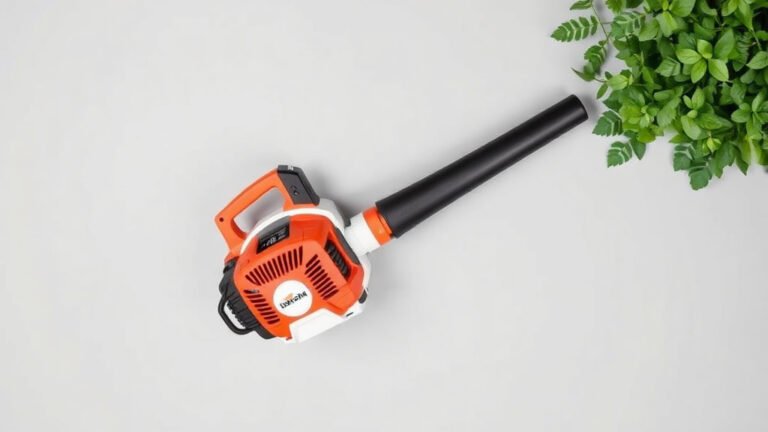
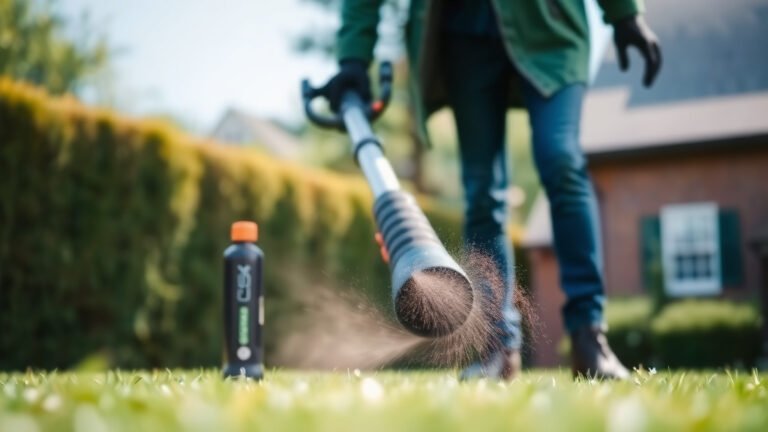
Yes, you can absolutely use a leaf blower to clean gutters, and it’s often the fastest and safest method for routine debris like dry leaves and twigs. The trick is to use the right attachment and technique so you don’t end up with a bigger mess on your hands. We found that a leaf blower with a gutter attachment kit is the best tool for this job because it lets you stay safely on the ground.
Climbing a ladder with a trowel in hand is risky, and getting up there is a hassle you don’t need. Using your blower to clear out gutters is a smart, quick way to handle a common home maintenance chore before it leads to water damage. This method works best on dry, loose debris, and we’ll share exactly how to get it done right. It’s all about working smarter, not harder, to keep your gutters flowing freely and your foundation safe from overflow.
- You can clean gutters safely from the ground using a leaf blower with a curved gutter attachment.
- Always wear eye protection and long sleeves to shield yourself from flying dust and debris.
- Work in the direction of the downspout, blowing debris toward the opening to flush it out.
- This method only works well on dry leaves and grit; wet, packed muck needs a hands-on approach.
- Always blow away from your face and the roof to avoid pushing water or debris under the shingles.
Below, we break down the exact tools you need and the step-by-step technique to get your gutters clean in minutes. Let’s walk through how to master this simple trick so you can check this chore off your list for good.
Using a Leaf Blower for Gutter Cleaning: Why It Works
Cleaning gutters ranks high on the list of chores homeowners love to avoid. It is messy, awkward, and often requires balancing on a shaky ladder. We found that using a leaf blower flips the script. It turns a dirty, dangerous job into a quick, ground-level task that takes minutes, not hours.
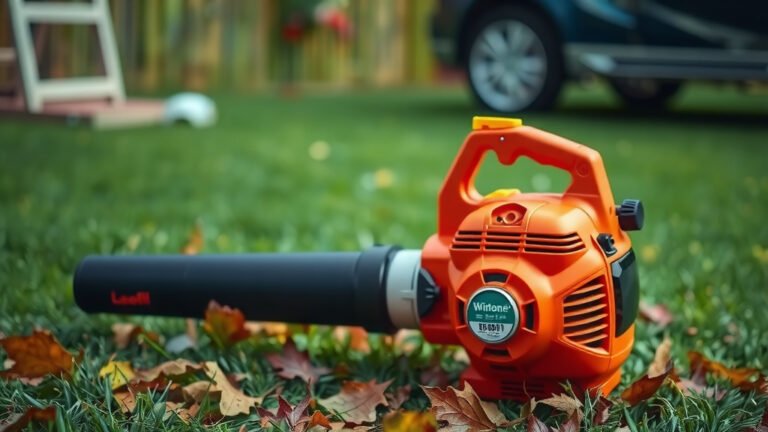
Most people already own a leaf blower. That means you likely have the power source sitting in your garage right now. All you need is the right technique and a simple attachment to make your gutters flow like new again. This method is perfect for routine maintenance when you have dry leaves, pine needles, or brittle twigs clogging the troughs.
The key is to understand that your blower is not a magic wand for heavy, wet sludge. It works best as a preventive measure. If you clear your gutters every few months, you will rarely face the dreaded black, compacted muck that causes overflow and water damage.
Why This Method Beats the Ladder Routine
Every year, thousands of people end up in the emergency room due to ladder-related falls (CDC). Many of these accidents happen during simple home maintenance tasks like gutter cleaning. Using a blower with a gutter attachment keeps both feet planted firmly on the ground.
We found that staying grounded is the single biggest advantage here. You eliminate the risk of falling while also speeding up the process. Instead of climbing up and down to move the ladder every few feet, you simply walk along the edge of your roof line and blow the debris out.
It also keeps your hands clean. You avoid scooping out rotting leaves and touching bird droppings or sharp twigs. It is a cleaner, safer, and far more efficient way to handle a job that nobody really wants to do.
Getting Your Blower Ready for Gutter Duty
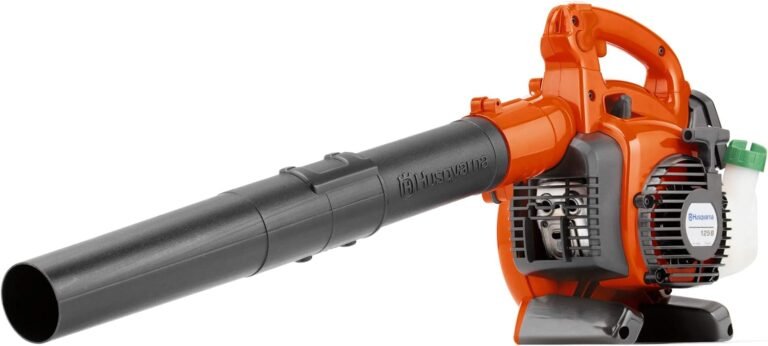
Before you start, you need to check if your specific blower model can handle the attachments. Most gas and corded electric blowers have a rigid tube that can accept a gutter cleaning kit. Many battery-powered models also have compatible attachments, though you may need to buy them separately from the manufacturer.
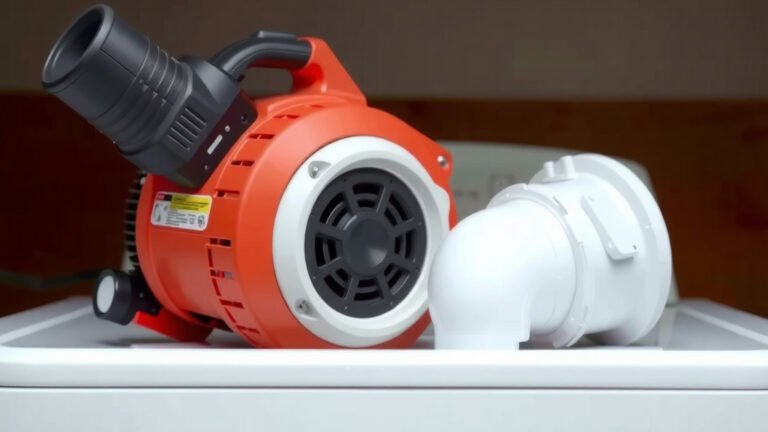
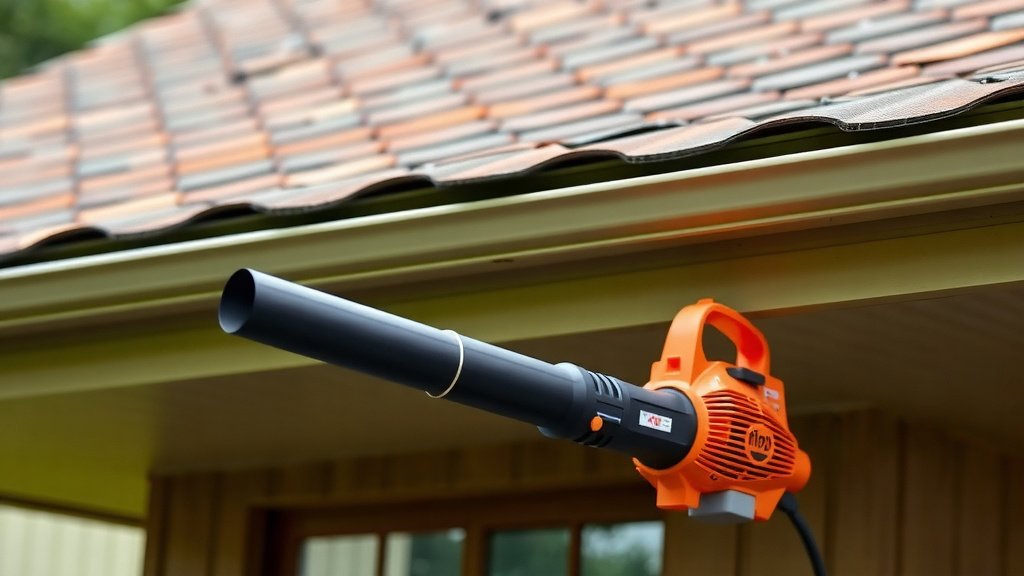
We found that the gutter attachment kit is the unsung hero of this whole process. It usually consists of a long, curved nozzle that clips onto the end of your blower tube. This curve is what allows you to point the air directly into the gutter while standing on the ground.
If you don’t have the attachment, you can sometimes use a standard extension wand. However, the curve is essential for getting the right angle. Without it, you will be fighting the blower’s straight tube and likely blowing debris up onto your roof instead of out of the gutter.
Choosing the Right Power Source
Your blower’s power level matters more than you might think. We found that corded electric blowers often provide the most consistent airflow for this job because they don’t lose power as the battery drains. They are also lighter than most gas models, which helps when you are holding the wand up for extended periods.
Battery-powered blowers are convenient, but you need to watch the charge. A half-drained battery might not have enough force to push heavy, damp leaves. If you use a battery model, make sure it is fully charged before you start and keep a spare battery handy just in case.
Gas blowers offer the most raw power, which is great for stubborn debris. The trade-off is the weight and the vibration. Holding a heavy gas engine at shoulder height can get tiring fast, so take breaks if you need them.
Step-by-Step Guide to Blowing Out Your Gutters
Now that you have the right tool, it’s time to get to work. The process is simple, but a little strategy goes a long way. You don’t just point and shoot; you need to work with the slope of your gutters to get the best results.
Here is the exact method we found to be the most effective for a quick and thorough clean:
- Start at the end of the gutter farthest away from the downspout.
- Angle the curved nozzle so the air blast travels along the bottom of the gutter channel.
- Move slowly and steadily toward the downspout opening.
- Watch the debris fly out over the edge; it will land on the ground for easy raking later.
- Pay extra attention to the corners and joints where leaves love to build up.
- Finish by blowing out the downspout itself to ensure it is clear.
Working in one direction prevents you from pushing debris back into areas you already cleaned. It creates a one-way path for the leaves to travel. Think of it like sweeping a floor; you always sweep toward the dustpan, not away from it.
Managing the Downspout Clog
The downspout is often the final boss of gutter cleaning. Even if the trough is clear, a clogged downspout will cause water to pool and overflow. We found that you can often clear a downspout using the same blower, but it requires a different angle.
Position the nozzle at the bottom of the downspout and blow upward. This pushes the clog back up into the gutter where you can then blow it out over the edge. Sometimes, you need to use a garden hose to flush the pipe if the debris is packed too tightly.
If the blockage is stubborn, a quick blast of air from the top often does the trick. Just be careful to stand clear of the bottom opening, as a lot of debris and dust will shoot out with force.
Common Mistakes to Avoid When Blowing Gutters
Even with the right technique, a few common errors can turn this quick job into a headache. We found that most of these mistakes come down to angle and timing. Avoiding them will save you from having to climb up to the roof to fix a bigger mess.
The biggest mistake is blowing debris toward the roof. If you point the nozzle upward, you risk pushing leaves up and under the shingles. This can cause water to seep into your home’s structure over time. Always keep the air blast level or slightly angled downward.
Another mistake is trying to clean gutters right after a storm. Wet leaves are heavy and clump together. Your blower will struggle to move them, and you will waste battery or gas. Wait a few days for the debris to dry out completely.
Dealing with Wet and Packed Debris
Let’s be honest about the limits of this method. If your gutters are full of dark, wet, soil-like muck, a leaf blower won’t cut it. This “gutter sludge” is a mix of decomposed leaves and dirt, and it needs a hands-on approach.
For this heavy buildup, you will need to use a gutter scoop or a trowel. We found that you should only resort to this when absolutely necessary. To prevent this situation, stick to a regular blower schedule every couple of months to keep the sludge from ever forming.
After scooping out the heavy muck, you can use your blower to clear out the remaining loose particles and dust. This combination approach handles the worst-case scenario without requiring you to give up on the blower entirely.
Protecting Yourself and Your Property
Safety should always be your top priority, even when you are safely on the ground. A leaf blower kicks up a lot of dust, pollen, and small particles. We found that wearing a pair of safety glasses is non-negotiable, as a stray piece of grit can easily fly into your eyes.
You should also consider wearing a dust mask if you have allergies. The debris in gutters is often moldy and dusty, and you don’t want to breathe that in. Long sleeves and work gloves will protect your arms from scratches when you reach near bushes or overhanging branches.
It is also wise to move your car or any outdoor furniture out of the blast zone. You will be blowing a significant amount of debris onto the ground, so keeping the area clear makes cleanup easier.
Cleanup After the Blow Job
Once the gutters are clear, the leaves are now on the ground. This is the trade-off for staying off the ladder. We found that using a tarp on the ground makes this final step a breeze. Lay a large tarp down before you start, and all the debris will land on top of it.
After you finish blowing, simply gather the corners of the tarp and drag the leaves to your compost pile or yard waste bin. This saves you from raking the entire yard. It is a smart, efficient way to handle the mess without any extra effort.
If you didn’t use a tarp, a quick pass with a rake or a shop vac will handle the pile. The key is to do this immediately so the leaves don’t blow back into the gutters or get tracked into the house.

When to Skip the Blower and Call a Pro
There are times when a leaf blower just isn’t the right tool for the job. If you have a multi-story home, the reach of your blower attachment might not be long enough to safely reach the gutters. In this case, hiring a professional is the safer choice.
Also, if you notice signs of damage like sagging gutters, loose fasteners, or cracks, you should address those issues first. Blowing debris out of a damaged gutter can make things worse. A quick visual inspection before you start can save you a costly repair later.
We found that for most single-story homes with routine dry debris, the blower method is perfect. It is fast, safe, and effective. For complex roofs or severe neglect, it’s best to call in a professional who has the right safety equipment and tools.
Staying on a Regular Cleaning Schedule
The best way to make gutter cleaning easy is to do it often. We recommend checking your gutters at least twice a year, typically in the spring and fall. If you have large trees overhanging your roof, you might need to do it every few months.
Setting a reminder on your phone can help you stay on track. We found that attaching this task to a specific season, like “after the last leaves fall” or “before the first big storm,” makes it easier to remember. A little routine maintenance prevents the heavy sludge buildup that requires messy hands-on work.
By sticking to a schedule, you extend the life of your gutters and protect your foundation from water damage. It is a small investment of time that saves you from major headaches down the road.
Quick Safety Checklist Before You Start
Before you fire up the blower, run through this mental checklist. It only takes ten seconds, but it ensures you are ready to go:
- Check the weather forecast; wait for a dry day.
- Put on safety glasses and a dust mask.
- Secure the gutter attachment kit tightly.
- Clear the ground area of people, pets, and cars.
- Ensure your ladder is stable if you need to reach the downspout.
- Do a visual check for any loose or damaged gutter sections.
These simple steps keep the job quick and safe. We found that preparing properly makes the entire process feel effortless. You will be done and back inside before you know it.
Comparing Your Gutter Cleaning Options
To help you decide if a blower is the right route, we put together a quick comparison of the common methods. It shows you the trade-offs between speed, safety, and effort. This should help you pick the best approach for your specific situation.
| Method | Time | Safety | Mess Level |
|---|---|---|---|
| Leaf Blower + Attachment | Fast (15-20 mins) | High (stay on ground) | Low (blow to tarp) |
| Ladder + Scoop | Slow (1-2 hours) | Low (fall risk) | High (hands-on) |
| Gutter Cleaning Robot | Moderate | High | Low |
| Hiring a Professional | Fast (they do it) | High (they have gear) | None |
We found that the blower method strikes the best balance for most homeowners. It gives you the control of doing it yourself without the danger of climbing a ladder. It is also significantly cheaper than hiring a pro for a routine clean.
Final Thoughts on Mastering the Blower Trick
You now have the exact blueprint for using your leaf blower to clean
Conclusion
You now have a safe, fast, and effective way to keep your gutters flowing. Using your leaf blower with a gutter attachment kit turns a dreaded chore into a quick ground-level task. We found that staying off the ladder is the biggest win, keeping you safe while saving time. Just remember to work with dry debris and always blow toward the downspout.
Make this your go-to method for routine maintenance. Grab your blower, attach the curved nozzle, and clear those gutters this weekend. You will protect your home from water damage and check this chore off your list for good. Your future self will thank you.
Frequently Asked Questions
Can you use a leaf blower to clean gutters?
Yes, you can absolutely use a leaf blower to clean gutters. You just need a curved gutter attachment kit to angle the air properly. This method works best on dry leaves, twigs, and loose debris. It keeps you safely on the ground while getting the job done fast.
Do leaf blower gutter attachments actually work?
Yes, they work really well when you have dry, loose debris in your gutters. The curved nozzle lets you direct a powerful stream of air right into the trough. We found that they make the job about ten times easier than climbing a ladder. Just remember that they won’t break up heavy, wet clumps of sludge.
What is the best way to clean gutters without a ladder?
Using a leaf blower with a gutter attachment is one of the best ladder-free methods. You stand on the ground and blow debris out of the trough toward the downspout. You could also use a wet/dry vacuum with gutter cleaning attachments. Both options keep your feet planted firmly on solid ground.
How often should you clean your gutters?
You should aim to clean your gutters at least twice a year, in the spring and fall. If you have big trees hanging over your roof, you may need to do it every three months. A regular schedule prevents the heavy, packed muck from ever building up. It is much easier to blow out dry leaves every few months than to dig out wet sludge once a year.
Why is my gutter still overflowing after I cleaned it?
If your gutters are clean but still overflowing, you likely have a clogged downspout. Use your blower to push air up from the bottom of the downspout to clear the blockage. You may also need a garden hose to flush out any remaining packed debris. Check the end of the downspout for any buried drainage pipes that might be clogged too.