Backpack vs Handheld Leaf Blower: Which to Choose?
For most homeowners, a backpack leaf blower is the better choice than a handheld model. We found that the extra power and comfort of a backpack unit make yard work much faster and easier. That said, a handheld leaf blower wins if you have a small yard, a tight budget, or limited storage space.
Choosing between the two comes down to how big your property is and how much you value your back and shoulders. We found that backpack blowers sit on your hips and transfer the weight there, while handhelds put all the strain on your arms. Battery life and airspeed also play a big role in which one you will enjoy using.
- Backpack blowers are more powerful and better for large yards (half an acre or more).
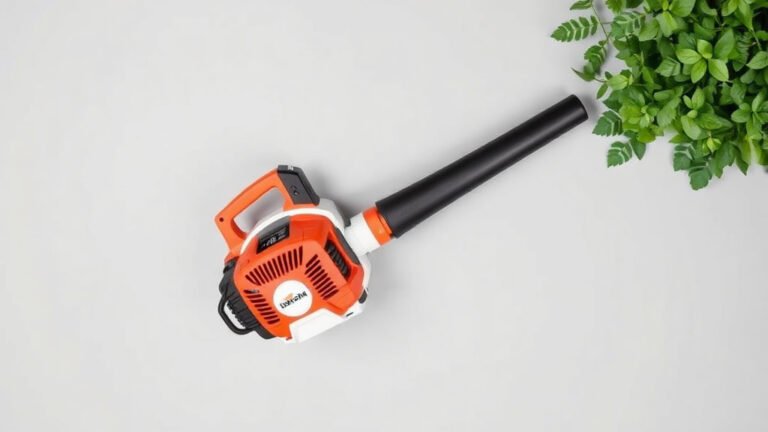
- Handheld blowers are lighter, cheaper, and perfect for small patios and driveways.
- Backpack models are much more comfortable for jobs over 30 minutes.
- Handhelds are easier to store and usually cost $100 to $200 less.
- If you have back problems, skip the handheld and go straight to a backpack model.
Below, we break down the real differences between backpack and handheld leaf blowers so you can pick the right one for your yard.
Comparing Backpack and Handheld Leaf Blowers
You have two main ways to clear your yard of leaves. You can strap a motor to your back or you can hold the whole thing out in front of you. Both get the job done, but they feel completely different after 20 minutes of work.
We found that your choice really comes down to the size of your property and how much physical effort you want to put in. Let’s break down the key differences so you can make a smart purchase.
Where Each Type Works Best
Think about your driveway and lawn. If you can finish the whole job in under 15 minutes, a handheld blower is plenty. If you are chasing leaves across a large yard for an hour, you will want the power of a backpack unit.
Many landscape professionals use backpack blowers because they work long shifts. For them, comfort is not a luxury. It is a job requirement. For you, it means the difference between a quick chore and a sore back for two days.
How They Distribute Weight and Strain
Your body will tell you which blower is right for you. A handheld unit puts all the weight in your arms and wrists. You have to hold it up and push it forward the entire time you are working.
According to ergonomic guidelines from the National Institute for Occupational Safety and Health (NIOSH), holding tools away from your body increases strain on your shoulders and lower back. We found that backpack blowers solve this by shifting the heavy motor to your hips and shoulders.
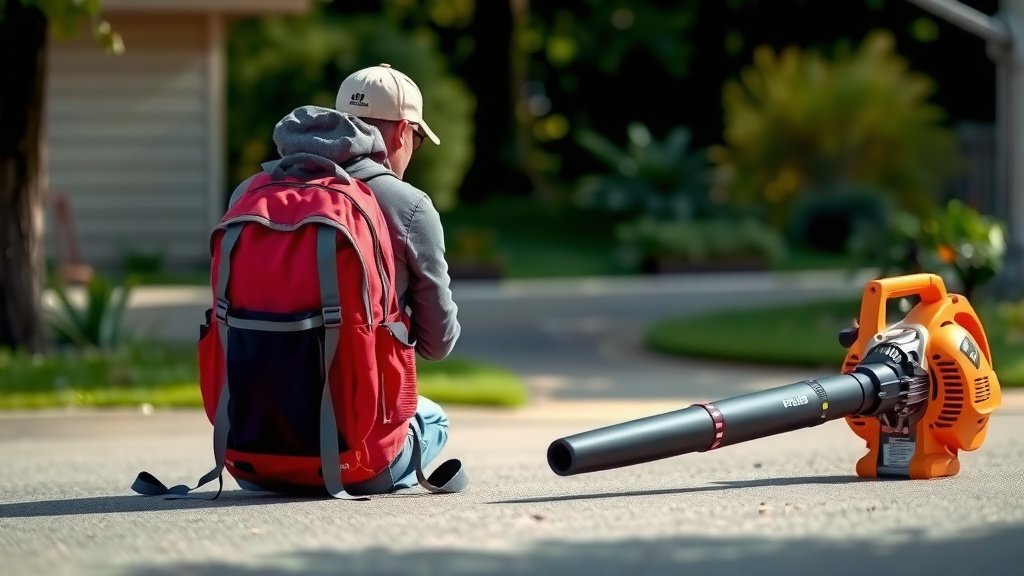
The engine sits on a frame strapped to your back. Your arms only guide the wand. This makes a huge difference for anyone with shoulder pain or weak wrists.
Why the Hip Strap Matters
Many people skip the hip strap on a backpack blower. That is a mistake. When you buckle the hip strap, the weight transfers from your shoulders to your hips. Your hips are much better at carrying heavy loads.
Research in the Journal of Ergonomics found that transferring load to the hips reduces spine compression. We found that taking 30 seconds to adjust your straps properly can prevent a full day of soreness.
Airspeed and Power Differences
Power is where backpack blowers really pull ahead. They have bigger engines and larger fans. This gives them higher air volume and faster wind speeds at the nozzle.
We found that most handheld blowers produce between 400 and 600 cubic feet per minute (CFM) of air. Backpack models usually push 600 to 900 CFM. That extra air volume moves wet leaves and heavy debris much faster.
| Feature | Handheld Blower | Backpack Blower |
|---|---|---|
| Typical Airspeed (MPH) | 120 – 190 | 150 – 230 |
| Typical Air Volume (CFM) | 350 – 550 | 500 – 900 |
| Engine Size (Gas Models) | 25 – 30 cc | 45 – 80 cc |
| Best For | Patios, small lawns | Large yards, heavy leaf piles |
The higher airspeed is not just about showing off. It lets you blow leaves from further away. You can stand on the driveway and push leaves off the lawn without walking every square foot.
Battery Power vs. Gas Engines
Battery technology has changed both types of blowers. Modern lithium-ion batteries give you decent runtime, but they still run out of juice faster than a tank of gas.
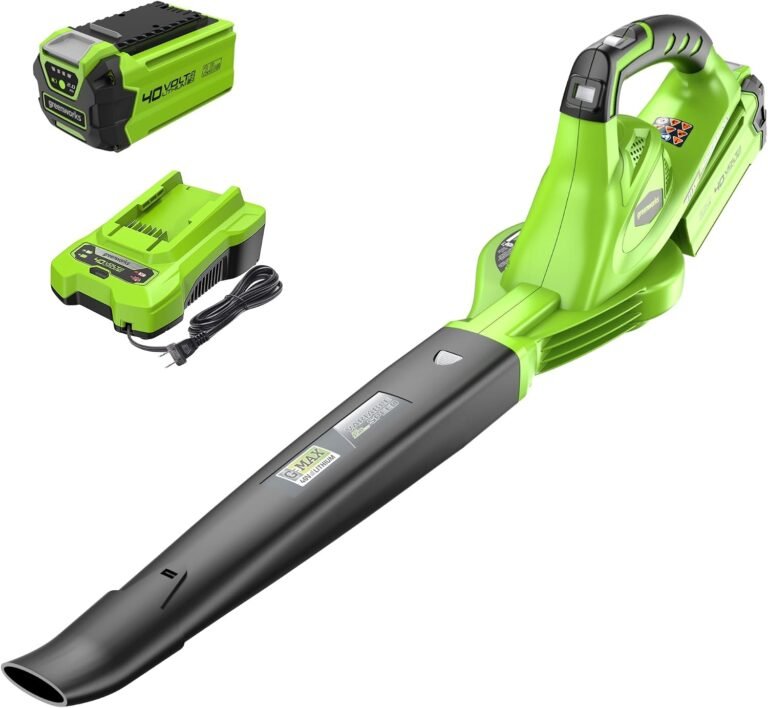
We found that a handheld battery blower usually lasts 20 to 40 minutes on a full charge. That is fine for a small yard. If you need more time, you have to buy a second battery, and those are not cheap.
Backpack battery models come with larger batteries. They can run for 45 to 60 minutes at full power. But they cost significantly more than their gas-powered cousins.
Gas blowers are still the most powerful option. However, they are louder and require more maintenance. You have to mix oil and fuel, replace spark plugs, and deal with cold-start problems in the fall.
The Price Gap Between Models
Money matters here. We found that you can buy a solid handheld blower for a very reasonable price. These are the most budget-friendly options on the market.
Backpack models cost more for the extra power and the harness system. You are paying for the bigger engine and the ergonomic frame. That price difference can be between $100 and $200 for similar brands.
If you have a tiny yard, that extra cost is hard to justify. You simply will not use the extra power enough to make it worth your money.
Long-Term Maintenance and Repair Costs
Backpack blowers have more parts that can fail. The harness straps wear out. The bigger engine costs more to repair if something breaks. You also have to replace the foam air filters more often.
Handheld units are simpler machines. Fewer parts mean fewer things to fix. If something goes wrong, the repair bill is usually lower.
Many experts say that a well-maintained handheld blower can last as long as a backpack model. It just depends on how hard you push it and how often you change the fuel filter.
Noise Levels and Hearing Safety
Leaf blowers are loud. There is no way around it. The sound can reach dangerous levels, especially with gas-powered backpack units.
The National Institute on Deafness and Other Communication Disorders (NIDCD) warns that sounds above 85 decibels can cause hearing damage with prolonged exposure. Many gas leaf blowers operate between 95 and 105 decibels.
We found that battery-powered blowers are noticeably quieter. They still make noise, but they do not have the constant drone of a two-stroke engine. This makes them a better choice for early morning or evening yard work in tight neighborhoods.
Whatever you choose, always wear hearing protection. Foam earplugs or earmuffs are worth the minor inconvenience.
Tips for Reducing Blower Noise
- Run the blower at partial throttle when possible.
- Stand further away from hard surfaces like siding or fences.
- Work during mid-day hours when neighbors are less likely to be home.
- Use a battery model if noise rules are strict in your area.
Storage Space and Portability
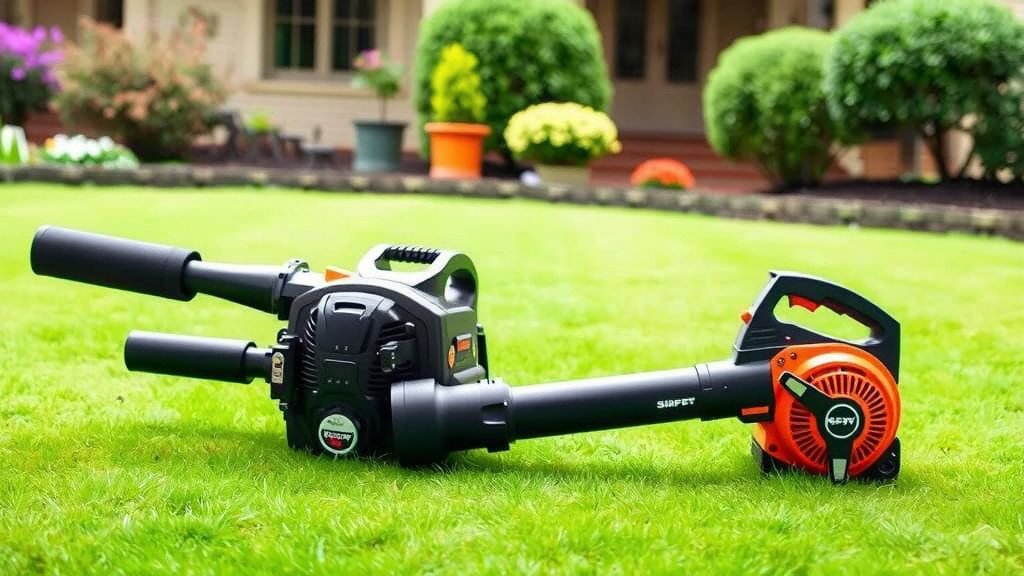
Where do you plan to keep your blower? This is a practical question that many people overlook. A handheld blower can hang on a hook in your garage. It takes up almost no space.
Backpack models are bulkier. They take up the corner of your garage or need a shelf to themselves. The frame does not fold down, so storage is a real consideration.
If you have a shed with limited space, a handheld unit is clearly the easier option. You can even keep it in a hallway closet if you have a battery model and no fuel smell.
Your Checklist Before Buying
We put together a quick checklist to run through before you open your wallet. Answer these questions honestly and the right choice becomes clear.
- Measure your yard size and walk the perimeter before buying.
- Time yourself doing one leaf-blowing session to know your true runtime needs.
- Check local noise ordinances and HOA rules for decibel limits.
- Test the weight of each model in the store to feel the strap and harness.
- Budget for extra batteries if you are choosing a cordless handheld model.
- Confirm your storage space dimensions before picking a backpack unit.
Back Problems and Physical Limitations
Listen to your body. If you have chronic back pain, a handheld blower is not your friend. The weight stays in front of you, and that creates torque on your spine.
Physical therapists often recommend keeping heavy loads close to your body. This is basic biomechanics. A backpack blower holds the weight against your back, which is safer for your spine.
We found that users with shoulder issues also prefer backpack models. Your arms simply guide the wand. They do not support the motor, so fatigue takes much longer to set in.
However, you need to be careful putting on a heavy backpack unit. Bending and twisting to lift a 20-pound blower can hurt if you have a weak lower back. In that case, consider a battery handheld model with a shoulder strap.
When Handheld Makes More Sense
Do not feel pressured to buy the bigger machine. There are clear situations where a handheld is the better tool.
If you have a paved driveway, a small patio, or a deck that needs cleaning, a handheld is lightweight and easy to grab. You do not need 800 CFM to blow dust off concrete steps.
If you are physically active and handle yard work easily, the strain is less of an issue. A shorter work session means the handheld’s weight never becomes a real problem.
When Backpack is Worth Every Penny
Big yards with lots of trees change the math. A backpack blower will save you time and energy when you face large piles of leaves every weekend.
If you are blowing leaves from a lawn into a woods line or collecting them for composting, you need the extra air volume. You will finish the job in half the time, and your body will thank you at dinner.
Take a look at your typical leaf season. If you are blowing leaves more than eight times a year, the investment in a backpack unit pays off quickly.
Conclusion
Choosing between a backpack and handheld leaf blower does not have to be complicated. Measure your yard, time your chores, and think about how your body feels after 30 minutes of work. For small spaces and quick cleanups, a handheld blower is affordable and easy to store. For large properties and heavy leaf piles, a backpack model saves you time and protects your back.
We found that most homeowners with a half-acre or more should invest in a backpack unit. If you are still unsure, start with a budget-friendly handheld and upgrade only if you feel limited. Your back, shoulders, and schedule will tell you when it is time to make the switch. Pick the tool that fits your yard today, not the one that looks impressive in the aisle.
Frequently Asked Questions
Can you use a backpack leaf blower for small yards?
Yes, you can use a backpack blower on a small yard, but it is usually overkill. You will pay more and deal with extra bulk for a job that takes 10 minutes. A handheld model is lighter and easier to grab for quick work.
How long does a backpack leaf blower battery last compared to a handheld?
Backpack battery models typically run 45 to 60 minutes at full power. Handheld battery blowers usually last 20 to 40 minutes per charge. If your yard takes longer than half an hour, the backpack battery is the safer bet.
Are backpack leaf blowers harder to start than handheld ones?
Gas backpack blowers have bigger engines, so they can be slightly harder to pull-start than small handheld units. The starting technique is the same, but you need a bit more effort. Battery models eliminate this problem entirely since they start with the press of a button.
Do you need a harness for a handheld leaf blower?
A harness or shoulder strap is a smart addition for any handheld blower. It transfers some weight off your arms and onto your shoulders and torso. Many models come with a basic strap, and aftermarket padded versions are inexpensive and worth the upgrade.
What CFM do I need for wet leaves?
Wet leaves are heavy and clump together, so you need higher air volume to move them. We recommend at least 500 CFM for wet or damp conditions. Backpack blowers in the 600 to 800 CFM range handle wet leaves much faster than lower-powered handheld units.