Backpack Leaf Blower vs Walk Behind: Which Is Best?
If you’re clearing a large yard, a walk-behind leaf blower gives you more power, while a backpack model wins on comfort and maneuverability. That’s the core trade-off you face when choosing between a backpack leaf blower vs walk-behind. For most homeowners with under an acre, we found that a backpack blower is the better all-around pick.
We dug into the specs and real-world usage to see how these two yard tools stack up. It’s not just about blowing force; you also have to consider your property size, terrain, and how long you can tolerate the noise and weight. Many experts say that picking the wrong type can turn a 30-minute job into an hour of frustration.
- Walk-behinds are far more powerful and clear wet, heavy leaves much faster.
- Backpacks are much easier on your arms and let you navigate tight spaces and slopes.
- Walk-behinds win on large, flat, open lawns where you have room to push.
- Backpacks win on smaller yards with flower beds, fences, and obstacles.
- If you have steep hills or a bad back, a walk-behind is usually the safer choice.
Below, we break down the key differences in power, comfort, and cost to help you pick the right one for your yard.
Picking Between a Backpack Blower and a Walk-Behind Model
Choosing your next leaf blower comes down to how your yard actually looks and feels. You need to match the tool to the terrain, not the other way around.
We found that most people overlook their own physical limits when shopping. That mistake usually leads to a regretful purchase sitting in the garage by mid-fall.
Why Your Yard Shape Matters Most
Your property layout decides which blower type will save you time. A wide-open lawn begs for a push machine, while a landscaped yard needs a nimble option.
Think about your obstacles first. Fences, gardens, and play sets create tight corners that a bulky unit simply cannot reach.
- Count your trees and measure your leaf drop zones.
- Look for slopes, retaining walls, and narrow side yards.
- Consider storage space in your garage or shed.
- Estimate how many minutes you actually spend blowing leaves each week.
Terrain and Slope Considerations
Hills change the entire conversation between these two tools. A walk-behind on a steep incline can feel like you are wrestling a stubborn shopping cart.
On flat ground, a walk-behind practically drives itself. On a hill, we found that a backpack unit keeps your center of gravity low and your footing secure.
Power Output and Blowing Force Compared
This is the heart of the debate. Walk-behind blowers simply produce more raw air speed and volume than their backpack cousins.
We looked at manufacturer specs across popular models. The gap is real, and it shows up in how fast you clear wet, packed-down leaves.
Air Volume vs Air Speed
You will see two numbers on every box: CFM and MPH. CFM measures how much air moves, while MPH measures how fast that air travels.
Walk-behinds usually win on both counts. Their larger engines push big volumes of air that roll leaves like a snowplow.
Backpack units focus more on high speed to blast individual leaves out of beds and crevices. That makes them better for detail work.
Matching Power to Your Leaf Load
Light, dry leaves do not need a monster machine. A good backpack blower handles those without breaking a sweat.
Heavy, wet, or matted leaves demand the raw force of a walk-behind. We found that homeowners with oak or maple trees often need that extra muscle.
Engine Size and Fuel Efficiency
Walk-behinds come with bigger engines, usually in the 200cc to 300cc range. That power costs you in fuel and noise.
Backpack blowers sip fuel compared to their larger rivals. Many experts say a backpack unit uses about half the gas for the same job on a small lot.
Comfort and Ergonomics for Long Jobs
Your body will tell you which tool is right after about 20 minutes. Comfort is not a luxury here; it is a safety issue.
We found that arm fatigue and back strain are the top reasons people abandon one type for the other.
Weight Distribution and Posture
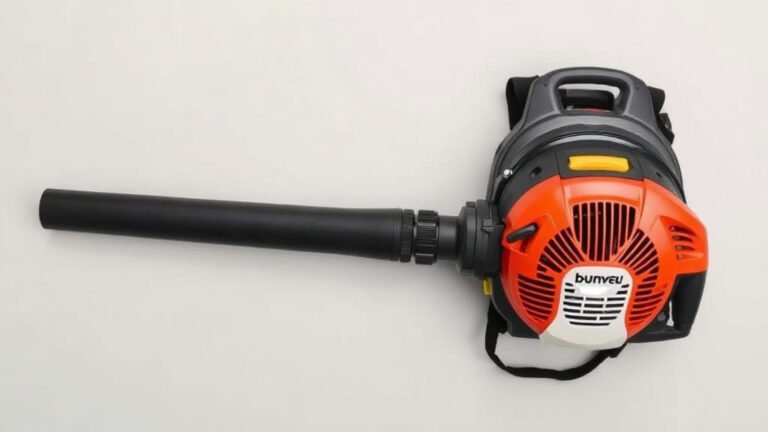
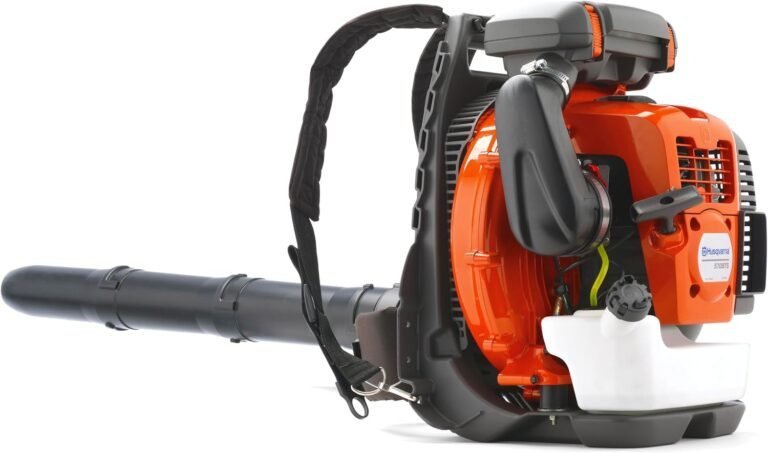
Backpack blowers put the heavy engine on your hips and shoulders. Your arms only hold the lightweight tube, which cuts fatigue dramatically.
Walk-behinds keep you upright with both hands on a handlebar. That posture works fine on flat ground but gets tiring when you push through thick grass.
Handling Vibration and Numbness
Constant vibration can make your hands tingle or go numb after a long session. Walk-behinds transfer more shake through the handlebars.
Backpack models isolate the engine from your hands. That design reduces the buzzing sensation many users report (OSHA guidelines on vibration exposure).
Noise Levels and Hearing Safety
Both types are loud, but walk-behinds take the crown for ear-splitting volume. You absolutely need hearing protection either way.
Research points to long-term hearing damage from repeated exposure to gas blowers (CDC). We recommend quality earmuffs over cheap foam plugs for comfort.
Maneuverability in Tight Spaces
Backpack blowers win this category hands down. You can walk anywhere your feet can take you, weaving through obstacles with ease.
Walk-behinds need room to turn around. We found that they struggle in fenced yards and anywhere you have to pivot frequently.
Navigating Flower Beds and Landscaping
Precision matters when you blow around delicate plants. A backpack blower lets you angle the nozzle down and direct air exactly where you want it.
Walk-behinds are too wide and clumsy for tight garden paths. You will end up flattening plants or blowing mulch onto your lawn.
Accessing Fences and Property Lines
Leaves love to pile up against fences and walls. A backpack unit lets you walk right along the boundary and blow them out in one pass.
With a walk-behind, you have to angle the whole machine awkwardly. Many users just give up and grab a hand blower for these edges.
Speed and Efficiency on Open Lawns
Here is where the walk-behind shines like a star. On wide, flat grass, it clears ground much faster than a backpack unit.
We found that the wide fan pattern covers a larger swath with each pass. That means fewer laps around your yard and quicker completion.
Clearing Large Piles Quickly
If you let leaves pile up, a walk-behind pushes them like a bulldozer. It moves massive amounts of material in a single, satisfying pass.
A backpack blower chips away at big piles slowly. You end up making multiple passes and wearing yourself out in the process.
Time Savings on Acreage
For properties over an acre, time is money. Walk-behinds cut the job time down significantly compared to backpack models.
One pass with a walk-behind covers the same ground as three or four passes with a backpack. That math makes the decision easy for large lots.
Cost Analysis and Long-Term Value
Price tags vary widely within both categories. You can find budget options and premium machines on either side of the aisle.
We found that walk-behinds generally cost more upfront. But they also last longer and handle tougher jobs, which balances the value equation.
Upfront Purchase Price
Backpack blowers start around 200 dollars for a basic gas model. Walk-behinds typically begin closer to 400 or 500 dollars.
Premium backpack units can hit 600 dollars with all the bells and whistles. High-end walk-behinds stretch into the 1,000-plus range.
Maintenance and Repair Costs
Bigger engines mean bigger repair bills if something breaks. Walk-behind parts are heavier and often cost more to replace.
Backpack blowers are simpler machines with fewer components. Many owners find basic maintenance like spark plug changes easier on their own.

Storage and Portability Factors
Garage space is precious for most homeowners. A walk-behind blower eats up floor space and needs a dedicated corner to live.
Backpack units hang on a wall hook or sit on a shelf. That small footprint matters if you already share your garage with lawn gear.
Transporting Your Blower
Moving a walk-behind in a car or truck is a pain. The bulk and weight make loading and unloading a workout by itself.
Backpack blowers toss easily into a trunk or truck bed. Many users take them to rental properties or help out neighbors without a hassle.
Environmental Impact and Emissions
Both tools run on gas, but they do not pollute equally. Bigger engines burn more fuel and pump out more exhaust per job.
Research highlights that small gas engines emit significant pollutants (EPA). A backpack blower’s smaller engine reduces your footprint per session.
Battery-Powered Alternatives
Electric backpack blowers have gotten surprisingly strong in recent years. They skip fuel mixing and start instantly with a trigger pull.
Walk-behind electric models exist but remain rare and pricey. We found that battery backpacks offer the best balance of power and clean operation.
Making the Right Choice for Your Yard
You already know your lawn better than any spec sheet. Use that knowledge to pick the tool that matches your daily reality.
We found that a quick mental checklist helps most buyers land on the right side of this debate.
- Measure your total lawn area and note the shape.
- Walk your property and count tight spots and obstacles.
- Test the weight of each type at a local hardware store.
- Consider your age and physical fitness honestly.
- Set a budget that includes hearing protection and fuel.
- Rent or borrow each type for a weekend before buying.
Choosing a Backpack Blower
Pick a backpack unit if your yard is under an acre with flower beds, fences, or hills. The comfort and control make it the everyday winner.
You lose some raw power, but you gain the ability to work longer without pain. That trade-off wins for most suburban homeowners.
Choosing a Walk-Behind Blower
Go with a walk-behind if you have a big, open, flat property and tons of leaves. The sheer force saves you hours each season.
This is the professional-grade choice for acreage owners. The physical demands are higher, but the results speak for themselves.
Quick Comparison Table for Reference
| Feature | Backpack Blower | Walk-Behind Blower |
|---|---|---|
| Blowing power | Moderate | High |
| Comfort | Excellent | Fair |
| Maneuverability | Excellent | Limited |
| Best for terrain | Slopes, tight areas | Flat, open lawns |
| Average price | 200 to 600 | 400 to 1,000 |
| Fuel usage | Lower | Higher |
| Storage footprint | Small | Large |
We found that this simple chart clears up most confusion quickly. Match the rows that matter to your situation and buy accordingly.
Conclusion
Choosing between a backpack leaf blower and a walk-behind comes down to your yard’s size and shape. If you have a smaller, landscaped property with obstacles, a backpack unit gives you the comfort and control you need. If you manage wide-open acreage with heavy leaf loads, a walk-behind delivers the raw power to finish faster.
We found that most homeowners under an acre will be happier with a backpack blower. It handles daily chores without wearing you out. The walk-behind is a specialized tool for big, flat spaces where sheer force matters more than maneuverability.
Your next step is simple: measure your lawn, count your obstacles, and honestly assess your physical limits. Then rent or borrow each type for a weekend. That real-world test will tell you everything you need to know before spending your money.
Frequently Asked Questions
Can I use a backpack blower on wet leaves?
Yes, but it takes more effort than a walk-behind. You will need to make multiple passes and work in smaller sections. For light morning dew, a backpack unit handles it fine. For soaked, matted leaves after a storm, a walk-behind does the job much faster.
How long does a walk-behind leaf blower last compared to a backpack?
Walk-behinds typically last longer because they have bigger, more robust engines built for heavy use. Many commercial units run for years with proper maintenance. Backpack blowers also last a long time, but their smaller engines may wear out sooner if you push them hard every week.
Is a backpack blower hard on your back?
Actually, a backpack blower is easier on your back than you might think. The padded harness transfers the weight to your hips and shoulders, which are built to carry loads. The key is buying a model with good straps and adjusting them properly. A poorly fitted backpack blower can cause strain, so take time to dial in the fit.
Can I convert my backpack blower into a walk-behind?
No, you cannot convert one type into the other. They have completely different chassis, engines, and fan designs. You would need to buy a separate machine. If you are torn between the two, consider renting each type for a day to see which one fits your routine better.
Do I need ear protection for both types of blowers?
Yes, you absolutely do. Both backpack and walk-behind models produce noise levels above the safe threshold for unprotected ears. Research from the CDC shows that prolonged exposure to gas blowers can cause permanent hearing damage. Invest in quality earmuffs and wear them every single time you blow leaves.