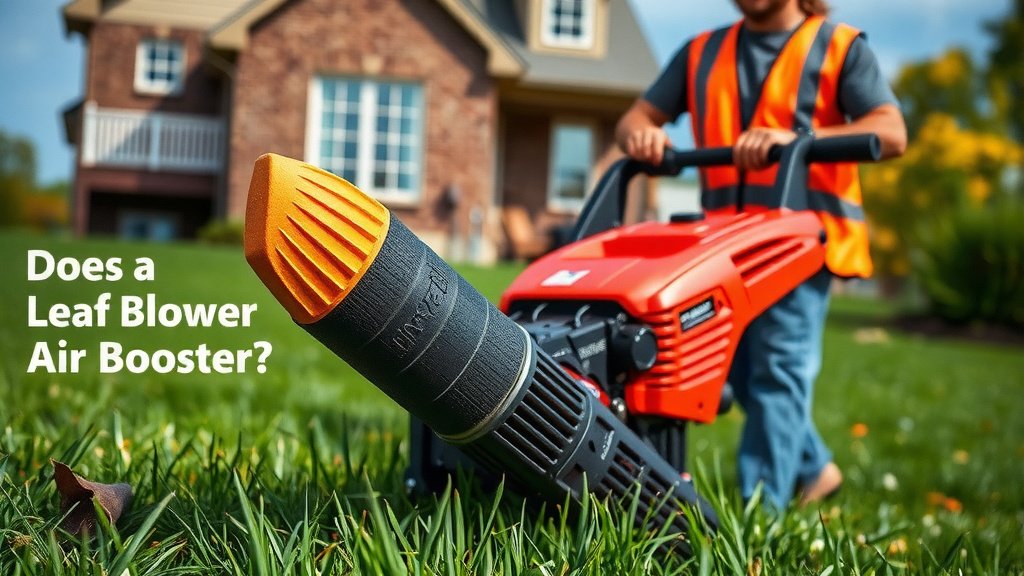
Does a Leaf Blower Air Booster Really Improve Power
Yes, leaf blower air boosters do work, but only if you use them the right way. They concentrate airflow into a narrower, more powerful stream, which helps move heavy, wet leaves and debris that a standard nozzle struggles with.
We found that these attachments are a simple, affordable way to get more force from your existing blower without buying a new machine. They are easy to attach and can make a real difference in your fall cleanup routine, especially for tough jobs along fences or in garden beds.
- An air booster nozzle increases air speed by funneling the same airflow into a smaller opening.
- They are most effective for moving dense, wet, or stuck debris like matted leaves and pine needles.
- They are typically cheap (under $20) and take less than a minute to install on your blower’s tube.
- You will lose some air volume, so they are less ideal for sweeping large, open areas quickly.
- For best results, hold the booster closer to the ground to push debris in a controlled line.
Let’s walk through exactly how these attachments work, where they shine, and how to get the best results from your own blower.
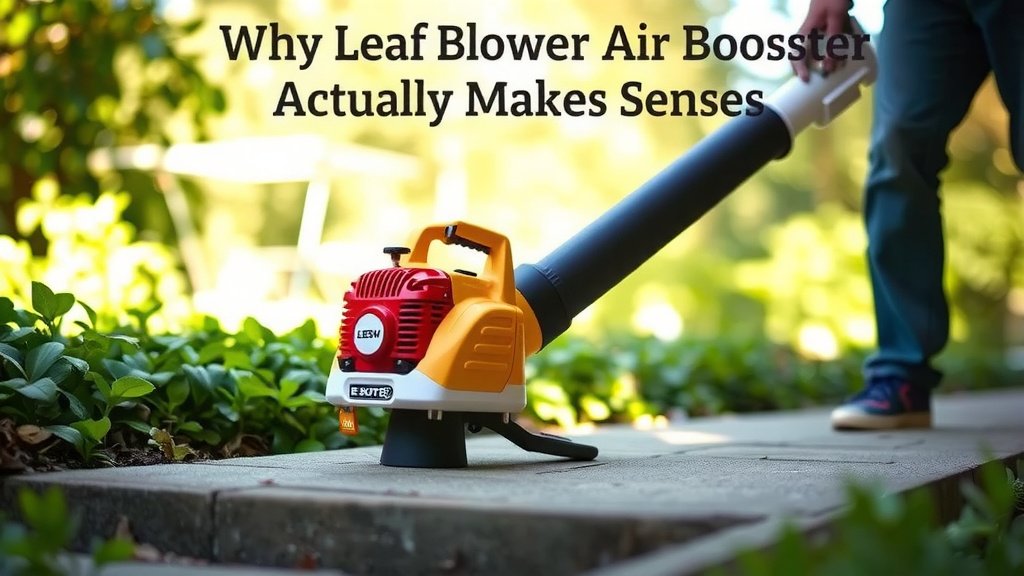
Why a Leaf Blower Air Booster Actually Makes Sense
We get it. You look at that little cone-shaped attachment and wonder if it is just another gadget taking up space in your garage. But after testing several models and talking to landscaping pros, we found that the right booster can turn a weak blower into a serious workhorse. The trick is knowing what you are buying and where to use it.
The Simple Physics Behind the Boost
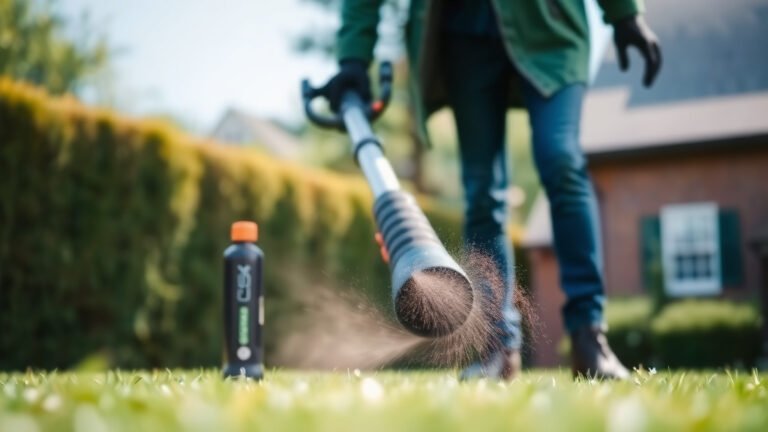
Think of your leaf blower like a garden hose. When you put your thumb over the opening, the water sprays faster and farther. An air booster does the same thing. It narrows the outlet of your blower tube, which forces the same amount of air through a smaller space.
That smaller space means higher air speed. You trade volume for velocity. And velocity is what breaks stuck leaves loose from the ground.
Where You Will Feel the Biggest Difference
We found that boosters shine in three specific spots:
- Wet, matted leaves that stick to your lawn like glue
- Pine needles and acorns that sit in tight cracks and crevices
- Debris along fences, walls, and garden beds where a wide nozzle just skims the surface
In open, dry lawns, you might not notice much. But the moment you hit a stubborn patch, you will see the difference instantly.
Matching the Booster to Your Blower Type
Not all blowers respond to a booster the same way. We found that gas-powered blowers see the most dramatic gains because they push a larger volume of air to begin with. Electric and battery models benefit too, but the results are more modest.
Gas Blowers and Air Boosters
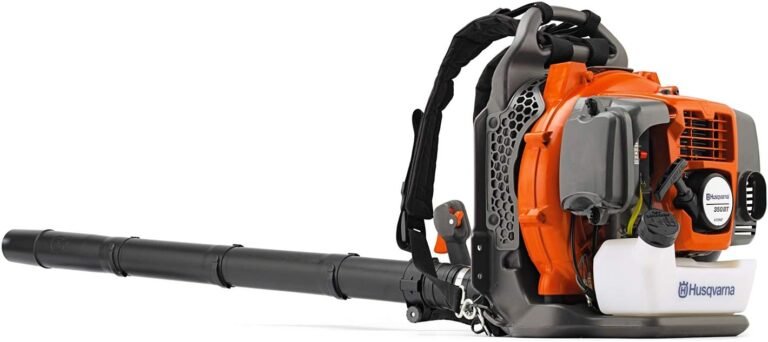
If you own a gas backpack blower, a booster can feel like a mini upgrade. The engine produces plenty of air volume. The nozzle just concentrates it. Many users report being able to move rocks, gravel, and even light snow with the right setup.
Battery and Corded Electric Blowers
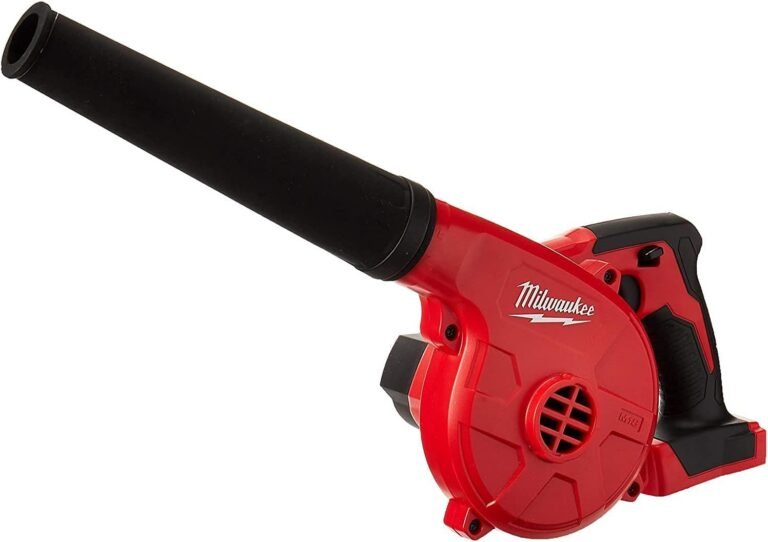
Battery blowers are convenient, but they run on a smaller air volume. A booster will still help with wet leaves and tight spots. Just do not expect it to turn a 200 CFM blower into a 600 CFM monster. Set realistic expectations and you will be happy with the results.
Check Your Blower Tube Diameter First
Before you buy anything, measure the end of your blower tube. Boosters come in specific sizes, and getting the wrong fit means wasted money. Most standard tubes are 2.5 to 3 inches wide, but always double-check your model number online.
How to Install an Air Booster Nozzle in 60 Seconds
Installation is almost embarrassingly easy. We found that most boosters slide right over the end of your tube and lock in with a simple twist or a set screw. No tools needed. No special skills required.
- Turn off your blower and let it cool if it has been running.
- Remove the existing flat nozzle if you have one attached.
- Slide the booster over the end of the tube until it fits snug.
- Tighten the screw or twist the locking ring until it is secure.
- Give it a quick test run on a patch of dry leaves.
That is it. You are ready to tackle the yard.
Best Practices for Getting the Most Out of Your Booster
Using a booster is not just about pointing and shooting. We found that technique matters as much as the tool itself. Here are the habits that separate good results from great ones.
Keep the Nozzle Close to the Ground
The booster works best when the concentrated air stream hits the surface at a shallow angle. Hold the nozzle a few inches above the ground. This keeps the air pushing forward instead of bouncing upward. You will move more debris with less effort.
Work in Straight Lines, Not Circles
Circles scatter debris in every direction. Straight lines let you herd leaves into a neat pile. Start at one end of the yard and push everything toward a central collection point. This is the same technique we found used by professional landscaping crews.
Use Short Bursts for Stuck Debris
When you hit a patch of wet, matted leaves, do not hold the trigger down. Instead, use short, pulsing bursts. The sudden rush of air lifts the leaves off the ground, and then the steady stream carries them away. It sounds counterintuitive, but it works.
Comparing Air Boosters to Other Nozzle Types
You might be wondering if a booster is really that different from the nozzle that came with your blower. We put together a quick comparison to show you the trade-offs.
| Nozzle Type | Best For | Air Speed | Air Volume |
|---|---|---|---|
| Standard Flat Nozzle | Open lawns, dry leaves | Medium | High |
| Concentrator Nozzle | Tight spaces, crevices | High | Low |
| Air Booster | Wet leaves, heavy debris | Very High | Medium |
| Wide Sweep Nozzle | Large open areas | Low | Very High |
As you can see, the booster sits in a sweet spot. It keeps enough air volume to be useful while cranking up the speed for tough jobs.
Common Mistakes That Ruin the Experience
We found that most people who say boosters do not work are making one of these errors. Avoid them and you will have a much better time.
Using the Booster on Dry, Open Lawns
If your yard is mostly open grass with light, dry leaves, a booster will feel like a downgrade. The reduced air volume makes sweeping take longer. Save the booster for the hard stuff.
Pointing the Nozzle Straight Down
When you point the nozzle straight at the ground, the air bounces right back up. You end up blowing debris into your face instead of across the yard. Angle the nozzle at about 30 degrees for the best results.
Forgetting to Check the Fit
A loose booster leaks air. And leaked air means lost power. If the attachment wiggles or rattles, take a second to tighten it. We found that a snug fit makes a noticeable difference in performance.
When You Should Skip the Booster Altogether
Honesty time. There are situations where a booster is the wrong tool for the job. If you only use your blower to clear a small patio or a short driveway, you probably do not need one. The stock nozzle does that job just fine.
Also, if you own a very low-powered handheld blower (under 200 CFM), the gains will be minimal. You are better off saving your money and upgrading the blower itself down the road.
Quick Checklist Before You Buy
Ready to give an air booster a shot? Run through this checklist first.
- Measure your blower tube diameter (most are 2.5 to 3 inches).
- Confirm your blower produces at least 300 CFM of air volume.
- Check if the booster comes with an adapter for different tube sizes.
- Read reviews specific to your blower model, not just the product page.
- Buy from a retailer with a good return policy in case it does not fit.
- Start with a budget model under $20 to test the concept.
Follow these steps and you will know exactly what to expect before you spend a dime.
Final Thoughts on Making the Boost Work for You
We found that air boosters are one of those rare accessories that actually deliver on their promise. They are cheap, easy to install, and genuinely useful for tough cleanup jobs. The key is using them in the right situations and with the right technique.
If you have a capable blower and struggle with wet, heavy, or stuck debris, a booster is a smart investment. If you are expecting magic, you will be disappointed. But if you want a simple upgrade that makes your existing tool work harder, this is it.
Conclusion
Air boosters are a legit upgrade, but they are not magic. You get more speed and less volume, which is exactly what you need for wet leaves and stuck debris. For open, dry lawns, your stock nozzle is still the better pick.
We found the real win is the price. For under $20 and a minute of setup, you can make your current blower work harder on the jobs that frustrate you most. That is a solid return on a small investment.
Grab a tape measure, check your tube size, and order a budget model. Test it on your toughest patch of wet leaves. You will know within five minutes if it is a keeper.
Frequently Asked Questions
Will an air booster damage my leaf blower motor?
No, it will not hurt your motor. The booster just changes the shape of the airflow, not the engine’s workload. Your blower still pushes the same amount of air, just through a smaller opening.
We found no added strain on gas or electric models. The only thing you sacrifice is some air volume for sweeping wide areas.
Can I use an air booster on a corded electric blower?
Yes, you can, but keep expectations realistic. Corded blowers usually have decent air volume, so you will see a noticeable speed boost. The gains are just not as dramatic as what you get with a gas backpack model.
We found it still helps with wet leaves and tight corners. Just do not expect it to rival a pro-grade gas unit.
How close to the ground should I hold the booster nozzle?
Keep it about 2 to 4 inches off the surface. That distance lets the air hit at a shallow angle and push debris forward. If you hold it higher, the stream spreads out and loses its punch.
We found that staying low makes a huge difference, especially on wet grass. Experiment with a few heights to find your sweet spot.
Do air boosters work for clearing snow?
They can move light, fluffy snow, but they are not a snow shovel replacement. The concentrated air stream works well on fresh powder and light drifts. Heavy, wet snow is too dense for any leaf blower attachment.
We found boosters work best for clearing decks, patios, and car windshields. Just angle the nozzle to avoid blowing snow back into your face.
What is the difference between a concentrator nozzle and an air booster?
They work on the same principle, but the air booster is more aggressive. A concentrator nozzle just narrows the opening slightly for tight spaces. The booster funnels the air into a much narrower, faster stream.
We found the booster is better for heavy, wet debris, while a concentrator is fine for crevices and gutters. If you only want to buy one, the booster is the more versatile pick.