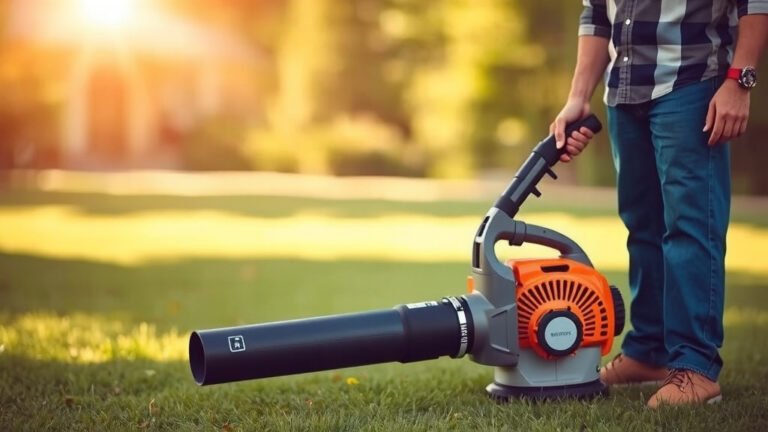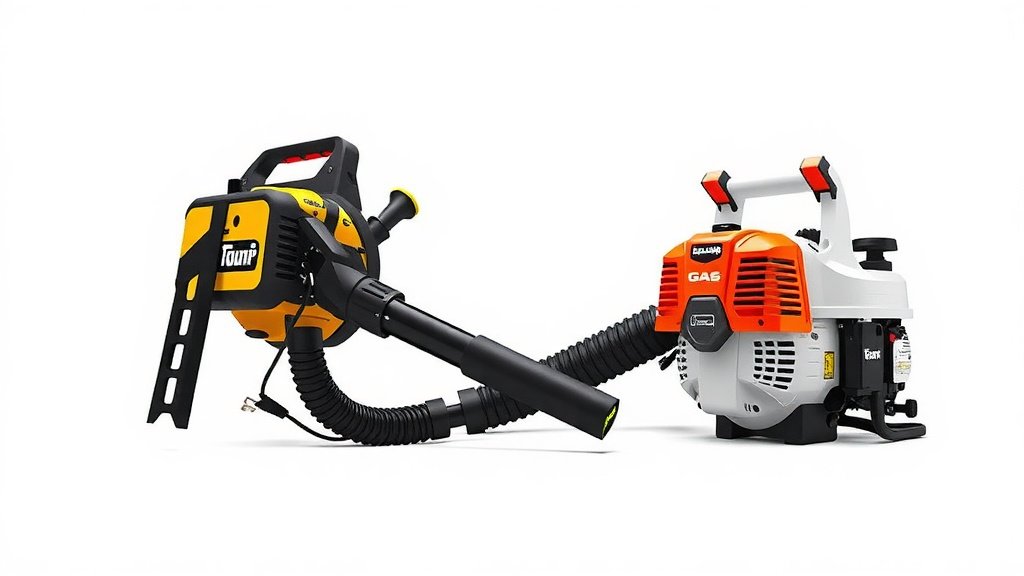
Gas vs Electric Backpack Leaf Blower: Which Wins
For most homeowners, a gas leaf blower wins on raw power and runtime, but an electric model wins on convenience and ease of use. The real “best” choice depends on your yard size and your tolerance for noise and maintenance. Gas blowers excel at clearing large, wet, or heavy debris; electric blowers are perfect for smaller yards, quick cleanups, and anyone who hates mixing fuel.
You are facing a classic trade-off between muscle and modern simplicity. We found that gas models give you that unstoppable, hurricane-force air, but they demand regular tinkering and a certain love for the smell of gasoline. On the other hand, battery-powered blowers offer instant starts and zero pull-cord frustration, though you are limited by charge time. Your decision really hinges on your specific property and your patience level.
- Gas wins on power: Handles wet leaves and big piles without slowing down.
- Electric wins on maintenance: No fuel mixing, carburetor issues, or spark plugs to worry about.
- Gas lasts longer per session: You can work for hours on a full tank, versus a battery that might drain in 30–60 minutes.
- Electric is easier on your body: They weigh much less, which saves your arms and back.
- Gas is noticeably louder: You will likely need hearing protection, and your neighbors might not be thrilled.
Below, we break down the full gas vs electric backpack leaf blower comparison so you can pick the perfect tool for your fall cleanup. Let’s walk through the key differences in power, runtime, cost, and noise so you can decide with total confidence.
Choosing Between a Gas or Electric Backpack Blower
The first thing you should know is that both gas and electric backpack blowers get the job done, but they feel completely different in your hands. You are basically deciding between a muscle car and a hybrid sedan. One is loud, heavy, and powerful. The other is quiet, light, and efficient.
We found that your choice really comes down to one simple question: How much yard do you have to clear? If you are dealing with a large property full of oak trees, you need gas. If you have a standard suburban lot, electric is likely your best friend.
What Counts as “Backpack” for Each Type
A backpack blower means the engine or battery sits on your back, not in your hands. This design shifts the weight off your wrists and arms, so you can work longer without fatigue. Both gas and electric models use this setup, but the weight distribution differs.
Gas backpack blowers carry a small engine and a fuel tank. They are heavier, usually weighing between 20 and 25 pounds. Electric backpack blowers carry a large lithium-ion battery pack. They are lighter, typically around 15 to 18 pounds. That weight difference matters on a big job, but we found both are far better than handheld units.
Raw Air Power: Gas Takes the Crown
When you need to move wet, heavy, or matted leaves, air volume and speed are everything. Gas engines deliver both in spades. They produce higher cubic feet per minute (CFM) and miles per hour (MPH) ratings compared to most electric models.
We found that gas blowers can sustain full power without dropping off. As the tank empties, the performance stays steady until the very end. Electric blowers often have a “turbo” mode that lasts only a few minutes before the battery sags.
Wet Leaves and Sticks: The Real Test
Picture this: it is late November, and the leaves are soaked from three days of rain. A gas blower will chew through that mess like a hot knife through butter. The consistent high RPMs break up clumps and push them across the yard without stalling.
An electric blower might struggle here. Many experts note that battery-powered motors heat up under heavy load, which can trigger thermal protection and cut power temporarily. You do not want a work stoppage when you are 50 feet from the pile. Gas simply handles the ugly stuff better.
CFM vs MPH: Which Rating Matters More?
You will see two specs on every box: CFM (air volume) and MPH (air speed). For moving piles of leaves, CFM matters more than MPH. A high CFM moves a wider swath of air, pushing more material at once. Gas blowers usually hit 700 to 900 CFM, while electric models often max out around 600 to 700 CFM.
We suggest ignoring the MPH number on the box. Marketing teams love to brag about 200 MPH, but that only matters for blasting stuck debris from cracks. Focus on CFM for real-world leaf moving power.
Runtime and Refueling: The Marathon vs the Sprint
Run time is the single biggest reason people stick with gas. A full tank of mixed fuel will run a backpack blower for 60 to 90 minutes of heavy use. You can carry extra fuel in a can and keep going all day if you want.
Battery-powered blowers are limited by chemistry. Most high-end models offer 30 to 60 minutes of real runtime, but that drops significantly when you use max power. We found that turbo mode can drain a battery in just 15 minutes. That is a dealbreaker for large yards.
Battery Swapping: The Workaround
You can buy a second battery to extend your session, but that adds serious cost. High-capacity batteries run anywhere from $200 to $400 each. You will also need to plan ahead and keep the spare charged, which means storing it in a climate-controlled space.
Some brands offer fast chargers that refill a battery in 45 minutes. That helps if you can take a break, but it is not the same as topping off a gas tank in two minutes. Convenience has a price when it comes to battery swapping.
Fuel Mixing and Storage Hassles
Gas blowers need a 50:1 mix of gas and two-cycle oil. You can buy pre-mixed fuel, which is safer and easier, but it costs around $8 per quart. Storing mixed fuel is also tricky because it goes bad in about 30 days unless you use a stabilizer.
Battery blowers eliminate this entirely. Just plug in the charger and walk away. If you hate dealing with gas cans, spills, and the smell on your hands, electric wins this category hands down. No maintenance is a huge relief for casual homeowners.
Noise Levels: Protect Your Ears and Your Neighbors
Gas backpack blowers are loud. We are talking 95 to 105 decibels at the operator’s ear. That is loud enough to cause permanent hearing damage with prolonged exposure, according to the Centers for Disease Control and Prevention (CDC). You absolutely must wear hearing protection with a gas model.
Electric blowers are significantly quieter, usually around 60 to 75 decibels. That is closer to a normal conversation or a vacuum cleaner. You might still want hearing protection for extended use, but it is not an absolute must.
The Neighborhood Factor
Let us be honest: your neighbors care about noise. Many towns have noise ordinances that restrict gas blower use during certain hours. Some cities, like those in California, have even banned gas leaf blowers entirely due to noise and emissions.
We found that electric blowers let you work early in the morning without starting a feud. You can blow leaves at 7 AM on a Saturday without guilt. Gas models will likely get you dirty looks and maybe a complaint to the HOA.
Weight and Ergonomics: Your Back Will Thank You
Yes, backpack blowers are designed to distribute weight, but that does not mean they feel weightless. A 25-pound gas unit is a real workout. You will feel it in your lower back and shoulders after an hour of use, especially if you are moving around uneven terrain.
Electric backpack blowers are lighter and more balanced. The battery sits low on the harness, which keeps the center of gravity closer to your hips. We found that this design reduces strain significantly. Your posture stays better with an electric model, which means less soreness the next day.
Vibration and Hand Fatigue
Gas engines vibrate a lot. That constant buzzing can cause your hands and arms to go numb after extended use. Many gas models have anti-vibration mounts, but they only do so much. You will want padded gloves to help absorb the shock.
Electric motors are smooth and nearly vibration-free. The lack of combustion means your hands stay comfortable even during long sessions. If you have arthritis or carpal tunnel issues, electric is the clear winner for comfort.
Upfront Cost and Long-Term Expenses
Here is where things get interesting. Gas backpack blowers often cost less upfront than their electric counterparts. A solid gas model from a reputable brand runs between $300 and $500. A comparable electric backpack blower with a large battery can cost $400 to $600 or more.
But the long-term picture is different. Gas blowers need fuel, oil, spark plugs, air filters, and occasional carburetor cleanings. Over five years, you could easily spend $200 to $300 on maintenance and fuel. Electric blowers have almost no consumable parts. Your only long-term cost is replacing the battery every few years.
| Feature | Gas Backpack Blower | Electric Backpack Blower |
|---|---|---|
| Power | Higher CFM and MPH | Lower but still adequate |
| Runtime | 60-90+ minutes per tank | 30-60 minutes per charge |
| Maintenance | Regular tune-ups required | Minimal to none |
| Noise | Very loud (100+ dB) | Moderate (65-75 dB) |
| Weight | Heavier (20-25 lbs) | Lighter (15-18 lbs) |
| Cost | Lower upfront, higher ongoing | Higher upfront, lower ongoing |
Environmental Impact and Emissions
Gas leaf blowers are not just loud; they are dirty. Research and found data shows that a single gas blower running for one hour can produce emissions equivalent to driving a car hundreds of miles. The Environmental Protection Agency (EPA) highlights that small gas engines lack catalytic converters, so they emit high levels of hydrocarbons and nitrogen oxides.
Electric blowers produce zero direct emissions. If your electricity comes from renewable sources, your carbon footprint is almost nothing. We found that this is a deciding factor for many eco-conscious homeowners. Clean air matters for you and your family.
Seasonal Use and Storage
If you only use a blower for a few weeks each fall, storage matters. Gas blowers require fuel stabilization before you store them for winter. You need to drain the tank or run it dry to prevent gummed-up carburetors. That is a chore nobody enjoys.
Electric blowers are simple to store. Put the battery on a shelf in a cool, dry place, and hang the blower in the garage. It is ready to go whenever you need it, even if you did not think about it for eight months.
Cold Weather Performance
Gas engines can be finicky in cold weather. You might need to pull the cord several times and let the engine warm up before it runs smoothly. A carbureted engine in freezing temperatures is a test of patience.
Batteries also struggle in the cold. Lithium-ion cells lose capacity when temperatures drop below freezing, so your runtime could shrink by 20 to 30 percent. We recommend storing batteries indoors and keeping them warm right before use. Neither option is perfect in winter, but gas is slightly more reliable in extreme cold.
Which One Should You Buy?
You need to match the tool to your specific situation. Buy a gas blower if you have more than half an acre of leaves, deal with wet debris, or hate stopping to recharge. Gas is also better if you are a professional landscaper who needs consistent power all day.
Choose an electric blower if your yard is under half an acre, or if you value quiet mornings and zero maintenance. Electric is also perfect for elderly users or anyone with back issues. The best blower is the one you will actually use, not the one with the most impressive specs.
A Quick Checklist Before You Buy
Use this list to narrow down your options at the store:
- Measure your yard size and count the number of trees.
- Check if your local government restricts gas blower usage.
- Listen to the blower in person if you can, to judge noise levels.
- Test the harness and straps for comfort and balance.
- Look at battery replacement costs for electric models.
- Consider how many hours you plan to use it in a single day.
If You Are Still On the Fence
Try a hybrid approach that many homeowners love. Keep a small electric blower for quick driveway cleanups, and rent a gas backpack blower for the big seasonal cleanup. This gives you the best of both worlds without a big commitment.
We found that most people who rent before they buy make a smarter choice. You get to feel the weight and power in your yard before spending hundreds of dollars. Nothing beats real-world testing with your own leaves.
Conclusion
You now have the full picture. Gas backpack blowers deliver serious power for big yards and wet leaves, but they bring noise, weight, and maintenance. Electric models give you quiet, light, and nearly maintenance-free operation, at the cost of runtime and raw muscle.
Your yard size is the simplest deciding factor. If you clear more than half an acre, gas is your workhorse. If you stick to a standard suburban lot, electric will serve you well without the hassle.
Here is your next step: rent one of each for a weekend. Test them on your own grass, with your own leaves. You will know in ten minutes which one feels right. Then go buy that one and get your yard in shape this weekend.
Frequently Asked Questions
Can I use an electric backpack blower for wet leaves?
Yes, but with limits. An electric blower can move slightly damp leaves if you catch them early. For soaked, matted piles, gas is the better tool.
Expect electric models to bog down on heavy debris. If wet leaves are a regular problem for you, choose gas.
How long does a gas backpack blower last compared to electric?
A well-maintained gas blower can last 10 to 15 years. The engine is simple and parts are easy to replace when needed.
Electric blowers usually last 5 to 8 years, but the battery is the weak point. You will likely replace the battery at least once during the blower’s life.
Are electric backpack blowers strong enough for commercial use?
Most commercial landscapers still prefer gas for full-day jobs. The runtime limits of battery power make it hard to work non-stop.
That said, some pros use electric for small residential jobs. If you do mostly light cleanups, an electric model can handle it.
Do I need special training to use a backpack blower safely?
No formal training is required, but you should learn proper posture. Keep your back straight and bend at the knees when you need to reach low spots.
Always wear eye protection and hearing protection, especially with gas models. Loose clothing and long hair are hazards near the intake area.
What size yard is too big for an electric backpack blower?
If you have more than half an acre of leaf-covered ground, electric becomes frustrating. Battery drain will interrupt your flow, and recharging slows you down.
For anything over half an acre, gas is the practical choice. You can finish the job in one pass without stopping to swap batteries.