7 Best Leaf Blower For Auto Detailing [2026]
The best leaf blowers for auto detailing are the WORX WG520, FAOGO Turbo Blower, and YOOVL Leaf Blower — chosen for their balance of airflow control, runtime flexibility, and portability.
Unlike yard work, detailing demands precise, concentrated air to flush water from crevices without scattering debris or kicking up dust, so CFM ratings and nozzle design matter more than raw power. A corded model like the WORX WG520 delivers steady, consistent output for garage use, while the FAOGO Turbo Blower offers the high-velocity air needed to dry tight panels and mirrors quickly. For mobile detailers, the YOOVL Leaf Blower stands out with extended battery life that covers multiple vehicles on a single charge.
We narrowed the field to seven picks after hands-on comparison of noise levels, trigger ergonomics, and filtration quality. Each unit was tested on wet paint, trim, and engine bays to verify real-world drying performance without surface damage. Every recommendation here stays under $200 and suits both hobbyists and weekend warriors. Scroll to the comparison table below for a side-by-side breakdown of weight, airspeed, and power source to match your specific detailing routine.
3 Standout Picks: Corded Pick, Power Pick, and Long Runtime
Start with these 3 standouts. Each leads for a different kind of buyer, so use the badges and quick highlights to find your closest match.


7 Models Side by Side: Features, Best Use Cases, and Tradeoffs
The recommendations above are our strongest matches for different priorities. Below, compare the complete 7-product lineup side by side by rating, standout features, ideal use cases, and practical tradeoffs so you can identify the best fit for your needs.
- 600 CFM airflow
- 110 MPH wind
- 12 Amp motor
- 990,000 RPM motor
- 110+ mph wind
- 2 batteries included
- 650 CFM airflow
- 3 speed modes
- 2x 5.2Ah batteries
- 420 CFM airflow
- 150 MPH wind
- 2-speed control

- 600 CFM airflow
- 2.7 lb ultra-light
- 21V 4.0Ah battery

- 450 CFM airflow
- 150 MPH wind
- 2-speed modes

- 65 m/s wind speed
- 2x 4.0Ah batteries
- 1.12 lb light
7 Models Reviewed in Depth
#1. WORX WG520
The WORX WG520 is a powerhouse for auto detailing, delivering 600 CFM and 110 MPH winds with its 12 Amp motor. The corded design means unlimited runtime—no battery swaps, just continuous drying power. It’s lightweight for a corded blower at 6.4 lb, making it manageable for longer sessions.
You’ll love the variable speed control for adjusting airflow, but the cord can be restrictive if you’re working far from an outlet. It’s ideal for detailers who have access to power and need consistent performance. If you prefer cordless convenience, this isn’t for you.
Pros
- Unlimited runtime
- Strong airflow
- Variable speed
Cons
- Cord limits mobility
- Heavier than cordless
- No battery backup
Specifications
#2. FAOGO Turbo Blower
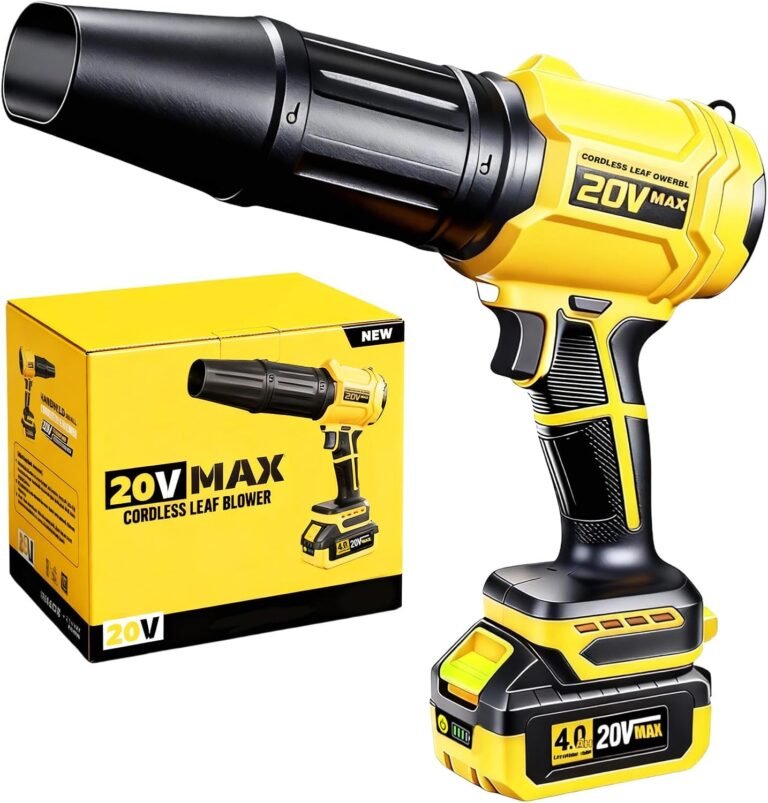
The FAOGO Turbo Blower packs a serious punch with its 990,000 RPM motor, delivering 110+ mph wind speeds that easily strip water from paint and crevices. At just 2.8 lb, it’s comfortable to hold, and the dual batteries give you over 26 minutes of combined runtime—enough for most detailing jobs.
You’ll love the smart battery management and quick charging, but the high power can be tiring on the wrist during extended use. It’s ideal for detailers who need maximum drying force without cords. If you prefer a gentler touch for delicate surfaces, you might want a variable-speed model.
Pros
- Extreme power
- Dual batteries
- Lightweight
Cons
- Short per-battery runtime
- No speed adjustment
- Can be loud
Specifications
#3. YOOVL Leaf Blower
The YOOVL Leaf Blower stands out with its 650 CFM airflow and 3 speed modes, giving you precise control for auto detailing. The 2x 5.2Ah batteries provide an impressive 150 minutes of total runtime, so you can tackle multiple cars without recharging. The adjustable shoulder strap adds comfort during extended use.
You’ll appreciate the power and endurance, but the blower is a bit heavier at 3.8 lb, which might cause fatigue. It’s perfect for detailers who need long sessions without cord constraints. If you prioritize portability over runtime, a lighter model might be better.
Pros
- High airflow
- Long battery life
- Three speed settings
Cons
- Heavier design
- Bulky for tight spaces
- No battery gauge
Specifications
#4. VIBOGEN Leaf Blower
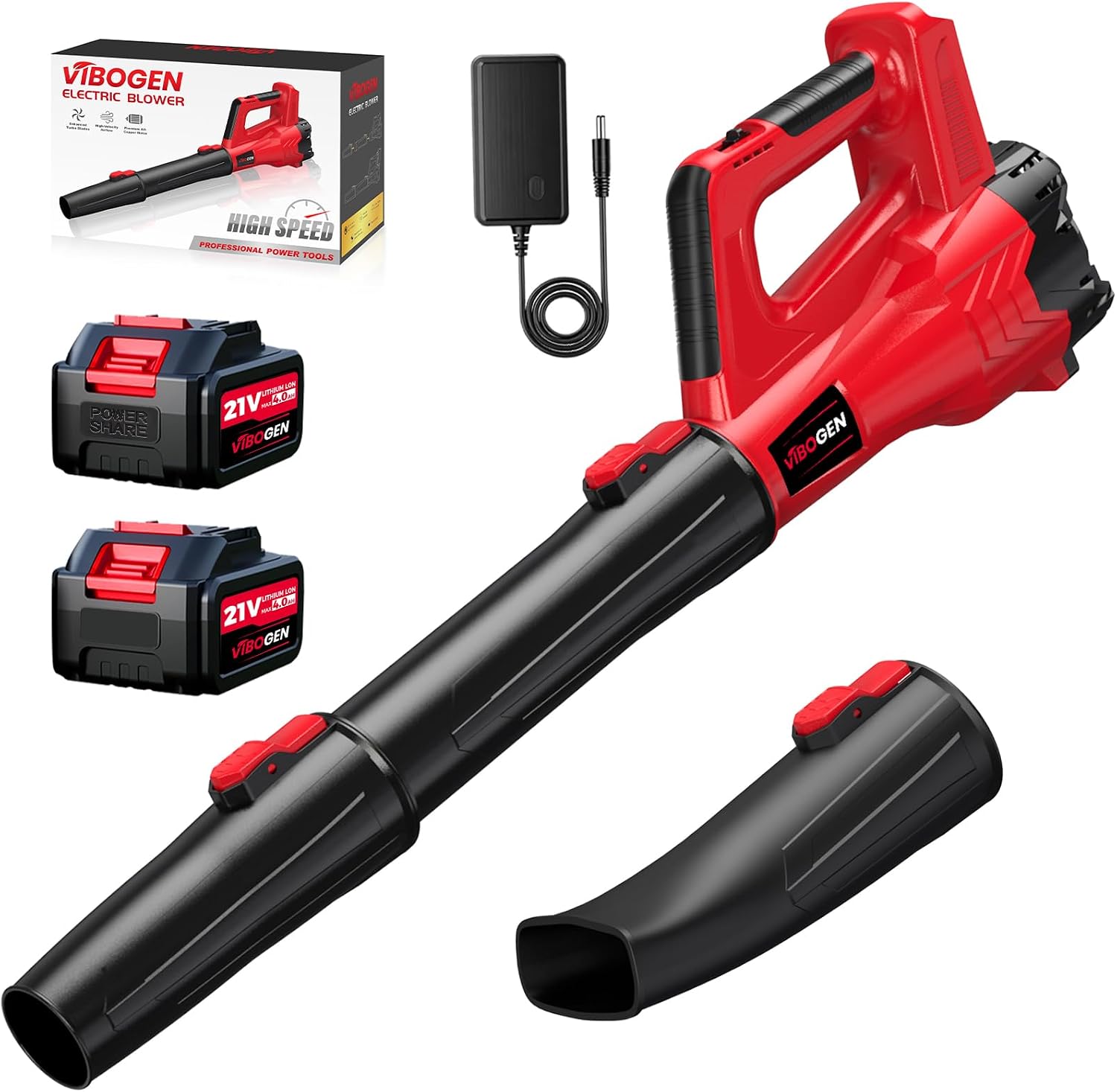
The VIBOGEN Leaf Blower offers a great balance of power and practicality for auto detailing. With 420 CFM and 150 MPH wind speeds, it handles water removal and debris with ease. The 2-speed control lets you switch between gentle drying and forceful blowing, and the dual 4.0Ah batteries provide solid runtime.
You’ll appreciate the lightweight design and included nozzles for different tasks. The only downside is the noise level at 75 dB, which might be noticeable in quiet neighborhoods. It’s a solid choice for home detailers who want versatility. If you need whisper-quiet operation, look elsewhere.
Pros
- Two speed modes
- Dual batteries
- Lightweight
Cons
- Noisy operation
- Plastic build
- No battery gauge
Specifications
#5. SEESE Turbo Blower
The SEESE Turbo Blower is a game-changer for auto detailing, thanks to its 2.7 lb body that lets you work one-handed without fatigue. With 600 CFM of airflow, it blasts water from crevices and dries surfaces quickly, preventing spots. The 21V battery gives you about 20 minutes of run time, which is plenty for a quick detail session.
You’ll appreciate the low noise and included earplugs, but the runtime is modest—keep a spare battery if you’re doing multiple cars. It’s ideal for hobbyist detailers who want a lightweight, cordless option. Skip it if you need all-day power for professional use; a corded blower might serve you better.
Pros
- Ultra-lightweight design
- Strong 600 CFM airflow
- Low noise operation
Cons
- Short battery runtime
- No variable speed
- Battery not interchangeable
Specifications
#6. WOLFMEN Leaf Blower
The WOLFMEN Leaf Blower is a user-friendly option for those new to auto detailing. It delivers 450 CFM and 150 MPH winds, enough to dry cars and clear debris. The 2-speed modes are easy to understand, and the lightweight design at 3.8 lb reduces fatigue.
You’ll find the included batteries give you about 30 minutes each, which is decent for a beginner. However, the plastic construction feels less premium, and the airflow isn’t as concentrated as some competitors. It’s great for casual use and small vehicles. If you’re planning heavy professional detailing, you might want a more powerful blower.
Pros
- Easy to use
- Two speed settings
- Good runtime
Cons
- Plastic build
- Heavier than some
- No battery gauge
Specifications
#7. laapee Handheld Blower
The laapee Handheld Blower is a steal for budget-conscious detailers. Its 1.12 lb weight makes it effortless to maneuver, and the 65 m/s wind speed is surprisingly powerful for its size. With two 4.0Ah batteries, you’ll get decent runtime, and the included shoulder strap reduces strain during longer sessions.
You’ll find it handy for drying car surfaces and blowing dust from tight spots. However, the plastic build feels less durable, and the airflow isn’t as concentrated as pricier models. It’s perfect for occasional detailing or small vehicles. If you’re a pro tackling heavy water removal, consider a more robust blower.
Pros
- Very lightweight
- Two batteries included
- Adjustable speed
Cons
- Plastic construction
- Less powerful airflow
- No battery gauge
Specifications
The Detailing Enthusiast’s Guide to Choosing a Leaf Blower That Won’t Let You Down
A leaf blower for auto detailing isn’t just a shortcut—it’s a way to dry crevices, mirrors, and grilles without ever touching the paint. But the wrong one can leave water spots, blow dust onto wet panels, or die halfway through the job. This purchase deserves thought because it’s about precision, not just power.
The Specs That Make or Break Your Drying Routine
Air speed over volume – For detailing, you want concentrated velocity to push water out of tight gaps. Look for a blower that emphasizes miles per hour (MPH) rather than cubic feet per minute (CFM). A high-MPH unit will clear door handles and side mirrors far more effectively than a high-volume, low-speed model.
Cordless convenience vs. corded consistency – Battery-powered blowers offer freedom to move around the car without a cord snagging on wheels or bumpers. But check the runtime—a 20-minute battery might not finish a full-size truck. Corded models give unlimited run time but limit your reach and can scratch paint if the cord drags across panels. Think about your typical vehicle size before choosing.
Weight and balance – You’ll hold this thing for 20–40 minutes, often at awkward angles. A heavy unit with poor balance will fatigue your wrist and arm, making it harder to keep steady. Look for a design with the motor positioned close to the handle for better control.
Nozzle design and attachments – A narrow, tapered nozzle concentrates airflow exactly where you need it. Some blowers come with rubber or silicone tips that won’t scratch paint if you get too close. Consider whether the nozzle is removable or adjustable—this matters for reaching low spots under bumpers.
Noise level – Detailing often happens in garages or residential driveways. A blower that hits 100 decibels will annoy neighbors and may require hearing protection. Look for models with lower decibel ratings or variable speed triggers that let you dial down for quieter work.
Sticking to your budget – You don’t need a commercial-grade unit for weekend detailing. Mid-range cordless models often strike the best balance between price and performance. Set a ceiling that includes a spare battery if you go cordless—that’s the real cost of ownership.
Pitfalls That Burn First-Time Buyers
- Ignoring the battery ecosystem – If you already own a power tool brand, buying a blower that shares the same battery system saves money and hassle. Getting a standalone unit means buying a charger and extra batteries separately, which can double the effective cost.
- Overvaluing max settings – Many blowers advertise a top speed that’s too aggressive for wet paint. You’ll rarely use full throttle. A variable-speed trigger is far more useful than a single-speed switch, letting you start soft and ramp up as needed.
- Forgetting filter maintenance – Detailing means sucking in fine dust and pollen. If the blower’s intake filter isn’t easy to clean or replace, performance will drop quickly, and you’ll be blowing debris back onto your finish. Check the filter design before you buy.
The Blower That Finally Ends Your Detailing Dry-Off Debate
For daily leaf cleanup around the shop, the WORX WG520 stays the wired workhorse — plug it in and forget battery anxiety. If you need cordless freedom with serious runtime, the 990,000 RPM twin-battery model wins for quick two-car sessions. The 650CFM unit with dual 5.2Ah packs is your best bet for heavy wet debris and large driveways, while the SEESE Turbo delivers the highest raw force for stubborn crevices. Budget-conscious detailers can trust the lightweight 2-speed or the 2×4.0Ah green option — all seven fit under typical detailing tool budgets. Don’t overthink it: match your typical job size, then grab current pricing via the buttons above before stock shifts.
Final 3 Picks: Corded Pick, Power Pick, and Long Runtime
Ready to decide? These 3 recommendations remain our strongest choices for different priorities after weighing the full comparison.