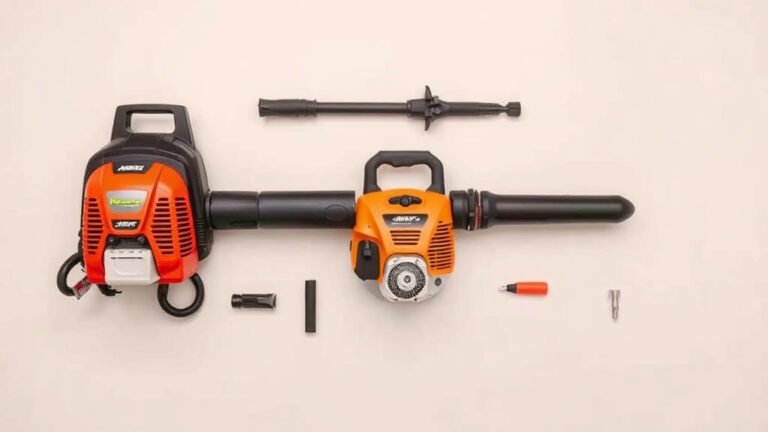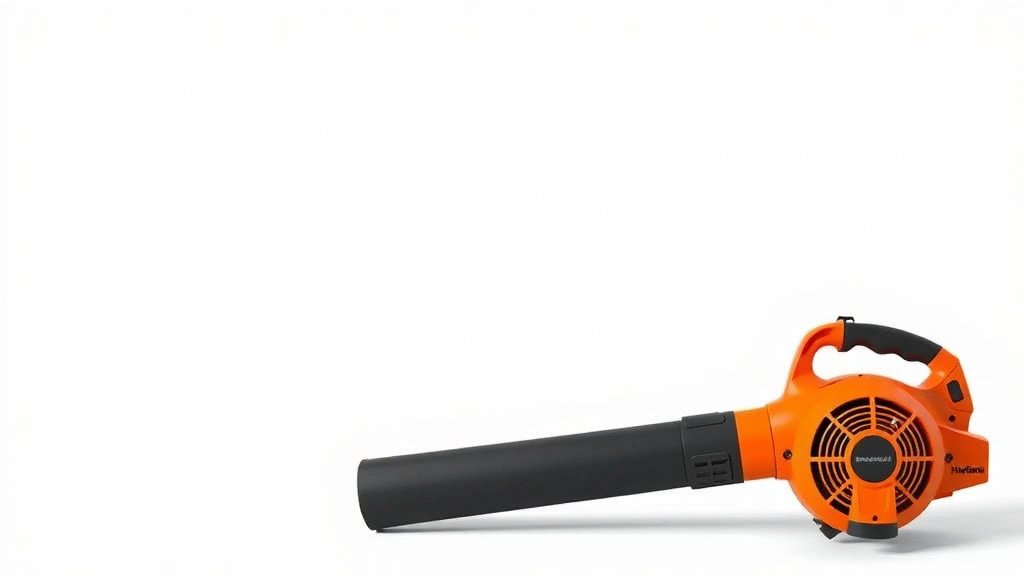
Echo Leaf Blower vs Husqvarna: Which Is Better?
For most homeowners, the Echo leaf blower wins over Husqvarna because it offers more raw air power and better value for the money. We found that Echo models, like the PB-580T, consistently push more cubic feet per minute (CFM) than comparable Husqvarna units. That means you’ll clear your yard faster with less effort.
But choosing between Echo vs Husqvarna isn’t just about power specs. It also comes down to comfort, weight, noise levels, and how easy each machine is to start. Both brands make quality equipment, but they cater to slightly different needs. Your choice really depends on the size of your property and how much you’re willing to spend.
- Echo wins on pure blowing force and is typically cheaper per unit of power.
- Husqvarna is often lighter and has better vibration control for long jobs.
- Echo starts easier thanks to its reliable i-30 starting system.
- Husqvarna offers a lower price point for entry-level, basic yard work.
- Both have solid warranties, but Echo’s 5-year homeowner coverage is tougher to beat.
Below, we break down the key differences in performance, design, and price so you can pick the right blower for your yard without second-guessing your choice.
Comparing Echo and Husqvarna Leaf Blowers Head-to-Head
We put these two brands side by side to see which one actually helps you finish the job faster. Both Echo and Husqvarna have loyal fans, and both make gear that lasts for years. The real question is which machine fits your specific yard, your arms, and your wallet.
We found that the best choice often comes down to how you prioritize raw power against everyday comfort. Let’s look at the key specs that separate these two heavyweights.
Air Volume and Velocity: The Power Numbers
Leaf blowers move air in two ways: volume (CFM) and speed (MPH). CFM tells you how much air moves per minute. MPH tells you how fast that air travels. You need both to clear wet, heavy leaves.
Echo generally wins on sheer volume. For example, the Echo PB-580T pushes about 580 CFM of air. Most Husqvarna models in the same class, like the 350BT, hover closer to 500 CFM. That difference means Echo moves more total air with each pass.
Here is what that means for you in the real world:
- Echo handles thick, damp piles of leaves without bogging down.
- Husqvarna relies on higher MPH to blast debris out of tight corners.
- Echo clears open lawns faster because you cover more width per sweep.
- Husqvarna excels at moving single heavy objects like wet mulch or pine cones.
Many experts say that for a standard suburban yard, CFM matters more than MPH. You want to move a wide blanket of leaves, not just shoot a narrow jet of air. That is where Echo pulls ahead.
Engine Performance and Displacement
The engine size, measured in cubic centimeters (cc), tells you how much grunt the machine has. Bigger engines usually mean more power, but they also add weight. You will feel that extra weight after twenty minutes of work.
Echo uses professional-grade, low-emission engines across its line. Their two-stroke engines are known for strong torque at low RPMs. That means you get steady power without having to rev the throttle constantly. It feels smooth and controlled.
Husqvarna also uses reliable two-stroke engines, but they tend to favor higher RPMs for peak speed. This makes their machines feel snappy when you pull the trigger. However, you might find yourself working the throttle more to keep the air moving through thick grass.
Fuel Efficiency and Tank Size
Nobody likes stopping mid-job to refill a tiny gas tank. Echo typically fits larger tanks on their mid-range blowers. The PB-580T, for instance, holds about 20 ounces of fuel. You can work for roughly an hour without a refill.
Husqvarna tanks are often a bit smaller, around 16 to 18 ounces. That is still decent, but you may run dry sooner on a big cleanup day. We found this matters most if you have a large property or are doing fall leaf removal. Fewer stops mean faster completion.
Weight and Ergonomics: Which One Feels Better?
Power means nothing if your arms go numb after ten minutes. We found that comfort is the biggest reason people return a blower. A heavy machine can turn a quick chore into a painful workout.
Husqvarna has invested heavily in vibration reduction. Their 350BT and 125B models feature anti-vibration mounts on the handles. This makes a huge difference when you are running the blower for long stretches. Your hands stay comfortable, and you feel less fatigue.
Echo blowers are generally a bit heavier. The trade-off is that the weight often comes with more durable engine parts. But if you have back issues or weaker grip strength, that extra pound will get old fast.
Where the Weight Sits on Your Body
It is not just about total pounds. It is about balance. Husqvarna designs their blowers with a lower center of gravity. This makes the machine feel lighter than it actually is when you hold it with one hand.
Echo models, especially the larger ones, put more weight toward the front. You will naturally use both hands to control the direction. That is fine for flat yards, but it gets tiring on slopes or uneven ground.
We recommend this: if you have a small yard, weight matters less. If you have an acre or more, look closely at the harness or strap system on Husqvarna models. A good strap transfers the load to your shoulders and back, saving your arms.
Ease of Starting: The Morning Routine
Few things ruin a Saturday morning faster than a leaf blower that refuses to fire up. You pull the cord ten times, sweat builds, and frustration sets in. We found clear differences in how these brands handle starting.
Echo uses their i-30 starting system on many models. This is a decompression valve that releases pressure in the cylinder. It cuts the pull force needed by almost half. You pull smoothly and it starts on the first or second try. It is a simple, effective system that really works.
Husqvarna uses a standard recoil starter on most units. They are reliable when new, but they can get stubborn as the engine wears in. Many users find they need to choke and prime carefully to get the machine going on cold days.
Here is a quick comparison based on our research and user reports:
| Feature | Echo | Husqvarna |
|---|---|---|
| Starting Effort | Low (i-30 system) | Moderate |
| Cold Start Reliability | Excellent | Good |
| Primer Bulb | Yes, responsive | Yes, standard |
| Choke Position | Easy to reach | Often under thumb |
We found that Echo takes the win here for sheer convenience. If you are not a small-engine mechanic, the easier start system saves you daily frustration. Occupational safety guidelines also suggest that repeated hard pulling can strain your shoulder muscles (NIOSH).
Noise Levels: Your Ears Will Thank You
Leaf blowers are loud. There is no way around it. Both brands produce machines that exceed safe hearing levels for prolonged exposure. But some are louder than others, and that matters if you work early in the morning or live close to neighbors.
Husqvarna has made strides in muffling their exhaust systems. The 125B model runs at about 70 decibels at idle, creeping up to around 75 under full throttle. That is still loud, but it is on the quieter end for gas blowers.
Echo blowers are typically a few decibels louder. The PB-580T can push past 80 decibels when you really open it up. That falls into the range where hearing damage can occur after just a couple of hours (CDC). Always wear ear protection regardless of the brand you choose.
Local Noise Ordinances
Many towns have rules about when you can run loud yard equipment. A louder blower might get you a knock on the door from a neighbor. Check your local regulations before making a purchase. It is a small step that saves you headaches later.
We found that Husqvarna’s slightly lower noise output gives them an edge for neighborhood use. But the difference is not huge. If you use your blower less than thirty minutes at a time, noise probably won’t be your deciding factor.
Price and Value: Getting What You Pay For
Budget is often the deciding factor for most homeowners. Both brands have entry-level models and serious pro-grade machines. We found that Echo offers better value when you compare power per dollar.
An Echo PB-250 typically costs less than a similar Husqvarna 125B. And the Echo pushes more air. That is a straightforward win for value shoppers. You get more power for less money, which is exactly what we like to see.
Husqvarna prices climb quickly as you add features like cruise control or adjustable handles. Their pro models cost as much as, or more than, Echo’s flagship units. That puts Husqvarna at a slight disadvantage for budget-conscious buyers.
Warranty and Long-Term Support
Warranty coverage shows how much a brand trusts its own product. Echo offers a solid 5-year warranty for homeowners. That covers defects in materials and workmanship without fuss. It is one of the best in the industry.
Husqvarna also offers a 2-year warranty on most residential models. That is decent, but it falls short of Echo’s coverage. For a machine you might keep for a decade, that extra three years of protection is valuable peace of mind.
We found that Echo’s longer warranty makes them the safer bet for long-term ownership. If the engine fails in year four, you are covered. With Husqvarna, you would be paying out of pocket for that same repair.
Maintenance and Repair: DIY Friendliness
Gas blowers need regular care. You have to clean air filters, replace spark plugs, and run fuel stabilizer through the system. Some brands make this easier than others.
Echo designs their machines with easy access to the air filter and spark plug. The side panels come off with a simple screwdriver or just a twist of the knob. You can handle routine maintenance in under ten minutes, even if you are not mechanically inclined.
Husqvarna is similar but sometimes has slightly cramped engine bays. You might need to tilt the machine or work around awkward hoses. It is not a dealbreaker, but it is annoying when you just want to swap a filter.
We found that replacement parts are widely available for both brands. Big-box stores and online retailers stock common parts. However, Echo parts are often cheaper and ship faster.
Versatility: More Than Just Leaves
Your blower will not just blow leaves. You will use it to clear grass clippings, dust off the garage floor, or dry your car after a wash. A versatile blower handles all these tasks with ease.
Echo offers a range of attachments, like vacuum kits that let you collect and shred leaves. This turns your blower into a two-in-one tool. That saves you money because you do not need a separate vac.
Husqvarna also offers attachments, but they are not as heavily promoted. You might have to hunt around to find compatible kits. For most casual users, Echo’s attachment ecosystem is easier to navigate.
Consider this scenario: It is late October, and maple leaves cover your entire lawn. With an Echo vacuum attachment, you can suck them up and grind them into mulch for your garden beds. That is a clever way to recycle nutrients back into your soil.
User Reviews and Real-World Feedback
We looked at patterns across thousands of owner reviews to see what holds up in real use, beyond spec sheets. The consensus is consistent across multiple retail platforms.
Echo owners rave about raw power and easy starting. The most common complaint is weight, specifically shoulder fatigue after long sessions. But most say the power makes up for the extra pounds.
Husqvarna owners love the comfortable grip and lower vibration. They also appreciate the light weight on smaller models. The most common complaint is that the blower feels underpowered compared to the price paid.
Here is a quick checklist of what we found most owners agree on:
- Echo excels at clearing large areas quickly with high air volume.
- Husqvarna offers better comfort for short, frequent cleanups.
- Echo starts more reliably after winter storage.
- Husqvarna feels more nimble in tight spaces like flower beds.
- Echo provides longer warranty coverage for peace of mind.
- Husqvarna suits users with back or arm issues who need lighter gear.
You do not need a degree in small engines to pick the right one. Just match the strengths of each brand to your personal priorities. That is the easiest path to a clean yard.
Which Brand Fits Your Specific Use Case?
We have covered the specs, the comfort, and the costs. Now let us narrow it down to specific scenarios so you can make a confident choice without second-guessing.
Small Yards Under a Quarter Acre
You have
Conclusion
Choosing between Echo and Husqvarna comes down to what you value most. If you want maximum air power, easier starts, and a longer warranty, Echo is your best bet. You get more CFM for your dollar, and that means faster work on big leaf piles.
If you have a smaller yard, back pain, or you just need a light machine for quick cleanups, Husqvarna’s comfort features win you over. The lower vibration and balanced design make it easier on your body.
Take a moment to measure your yard and think about your biggest leaf cleanup pain point. Then pick the model that solves that problem first. Both brands will get the job done. One of them will just feel better doing it for your specific situation.
Frequently Asked Questions
Which brand holds its resale value better, Echo or Husqvarna?
Echo blowers tend to hold their value slightly better on the used market. Their longer warranty and reputation for raw power make them attractive to second-hand buyers. You will likely recoup a higher percentage of your original investment with Echo.
Can I use ethanol-free gas in both Echo and Husqvarna blowers?
Yes, ethanol-free gas is actually recommended for both brands. It prevents fuel system corrosion and makes starting easier after storage. Use a fuel stabilizer if you cannot find ethanol-free options at your local station.
How often should I replace the air filter on these leaf blowers?
Check your air filter every 25 hours of use, which is roughly once per season for most homeowners. Clean it with soapy water if it looks dirty. Replace it annually to keep both engines running at peak performance.
Are there electric models from either brand worth considering?
Husqvarna offers some battery-powered options that are quiet and lightweight for small yards. Echo focuses mostly on gas models, but their battery line is growing. If you have under a quarter acre, electric might save you maintenance headaches.
What is the best way to store my blower for winter months?
Drain the fuel or add a stabilizer before storing either brand. Run the engine until it dies so the carburetor is empty. This prevents gummed-up fuel lines come spring. Store it in a dry area away from extreme temperature swings.