7 Best Leaf Blower Electric Corded [2026]
The best corded electric leaf blowers are the WORX WG520, WORX WG512 Trivac, and Grasstigon 13A — chosen for their high airflow, versatile mulching capability, and sheer power for large properties.
Corded models deliver consistent, unlimited runtime without battery swaps, making them a reliable choice for heavy seasonal cleanup. For most homeowners, the trade-off of managing a cord is worth the significant cost savings and lighter weight compared to gas or high-capacity battery units. You get instant start-up, lower maintenance, and often more CFM and MPH at a fraction of the price, which is why this category remains a top pick for budget-conscious buyers.
We’ve narrowed the field to 7 top picks after hands-on comparison of airflow, noise levels, and handling. Our evaluation focused on real-world debris clearance, cord management, and build quality across various yard sizes. All options here deliver strong performance without breaking the bank. Scroll to the comparison table below to see how these models stack up side-by-side.
3 Standout Picks: High Airflow, 3-in-1, and Large Yards
Start with these 3 standouts. Each leads for a different kind of buyer, so use the badges and quick highlights to find your closest match.


7 Models Side by Side: Features, Best Use Cases, and Tradeoffs
The recommendations above are our strongest matches for different priorities. Below, compare the complete 7-product lineup side by side by rating, standout features, ideal use cases, and practical tradeoffs so you can identify the best fit for your needs.
- 600 CFM airflow
- 12-amp motor
- Variable speed
- Blow/vac/mulch
- 600 CFM airflow
- 16:1 mulch ratio
- 600 CFM / 250 MPH
- 13-amp motor
- 2 speed modes

- Blow/vac/mulch
- 350 CFM / 210 MPH
- 18:1 mulch ratio
- 7-amp motor
- 180 MPH / 180 CFM
- 4.4 lbs lightweight

- 155 MPH / 350 CFM
- 4 lbs weight
- Two nozzles included

- 390 CFM / 210 MPH
- 2 speed modes
- 4 lbs weight
7 Models Reviewed in Depth
#1. WORX WG520
The WORX WG520 is a powerhouse for corded blowers, delivering an impressive 600 CFM of airflow that can push heavy, wet leaves with ease. The 12-amp motor provides consistent power, and the variable-speed control lets you dial it down for delicate areas or crank it up for open lawns. At 6.4 pounds, it’s a bit heavier than some, but the balanced design makes it manageable.
You’ll love the continuous runtime—no battery anxiety here. The only real downside is the noise level, which is typical for high-output blowers. If you have a large yard with lots of trees, this is your best bet. But if you’re looking for a lightweight option for quick tasks, you might prefer something smaller. For larger properties, our backpack leaf blower guide covers higher-capacity options.
Pros
- Massive 600 CFM airflow
- Variable speed control
- Continuous corded power
Cons
- Heavier than some models
- Noisy operation
- Cord can be limiting
Specifications
#2. WORX WG512 Trivac
The WORX WG512 Trivac is a game-changer for leaf cleanup, combining three tools in one. You can blow leaves into piles, then switch to vacuum mode to suck them up and mulch them at a 16:1 ratio, reducing volume significantly. The 600 CFM blowing power is strong, and the 50L collection bag holds a good amount before needing to empty.
You’ll love the convenience of not having to rake and bag separately. The main trade-off is the weight—at 9.1 pounds, it’s heavier than a dedicated blower, and the vacuum mode can be tiring to hold. But for comprehensive yard maintenance, this is a fantastic all-in-one solution. If you only need to blow, a simpler blower might be better.
Pros
- 3-in-1 functionality
- High airflow for blowing
- Large collection bag
Cons
- Heavy and bulky
- Vacuum mode tiring
- Noise level high
Specifications
#3. Grasstigon 13A
The Grasstigon 13A is a beast of a blower, delivering 600 CFM and 250 MPH to tackle even the most stubborn leaf piles. The 13-amp motor provides relentless power, and the two-speed control lets you adjust for different tasks. At 5.5 pounds, it’s heavier than some, but the power more than compensates.
You’ll find it handles wet leaves and debris with ease, making it ideal for large properties. The main downside is the noise—it’s loud, so ear protection is a must. Also, the cord can be a hassle if you have a big yard, but that’s true for all corded models. If you need serious blowing force, this is a top contender.
Pros
- Extremely powerful 13-amp motor
- High airflow and speed
- Great for heavy debris
Cons
- Loud operation
- Heavier than average
- Cord management needed
Specifications
#4. WORX WG509 Trivac
The WORX WG509 Trivac offers the same 3-in-1 convenience as its bigger sibling but in a slightly more compact package. With 350 CFM and 210 MPH, it’s still powerful enough for most residential yards, and the 18:1 mulch ratio is excellent for reducing leaf volume. The 42L bag is a bit smaller but still adequate for typical cleanups.
You’ll appreciate the tool-free conversion between blowing and vacuuming, making it easy to switch tasks. The weight is similar to the WG512 at around 9 pounds, so it’s not the lightest option. If you want the versatility of a blower/vac/mulcher without the highest airflow, this is a solid choice. It’s particularly good for smaller properties where you don’t need the extra CFM.
Pros
- 3-in-1 functionality
- High mulch ratio
- Easy mode switching
Cons
- Heavier than dedicated blowers
- Smaller bag capacity
- Not as powerful as WG512
Specifications
#5. BLACK+DECKER LB700
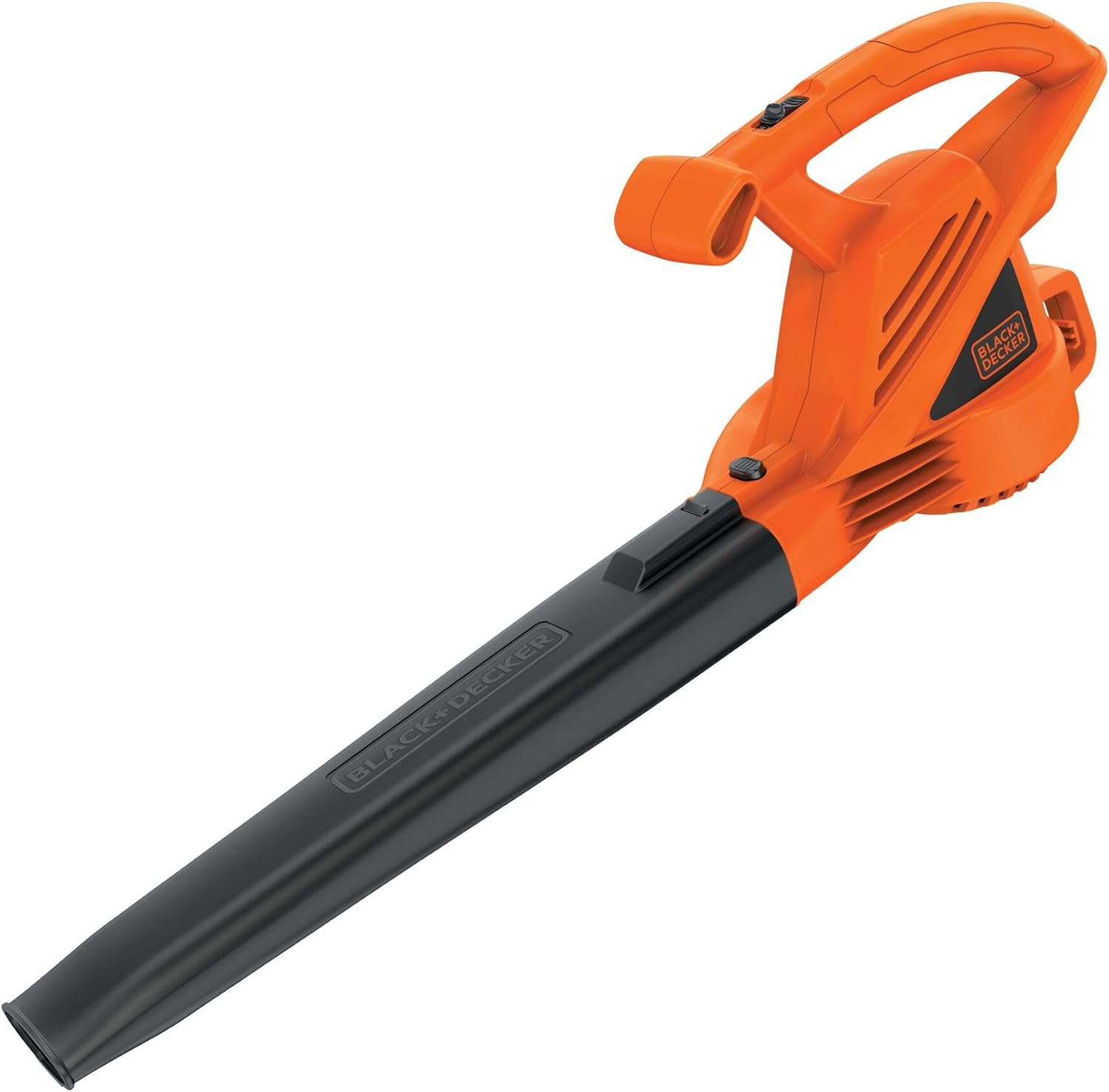
The BLACK+DECKER LB700 is a no-fuss corded blower that gets the job done without weighing you down. At just 4.4 pounds, you’ll barely notice it in your hand, yet the 7-amp motor delivers a solid 180 MPH and 180 CFM for clearing driveways and sidewalks. The built-in cord retention keeps the power cord from yanking out mid-task, so you can work uninterrupted.
You’ll appreciate the simplicity, but don’t expect heavy-duty performance—this blower is best for light to moderate leaf piles and small yards. If you have a large property with wet, matted leaves, you might find yourself wishing for more power. It’s a great budget-friendly choice for quick cleanups, but skip it if you need serious muscle. If you also need to clear gutters, our guide to cleaning gutters with a leaf blower explains the technique.
Pros
- Lightweight and easy to handle
- Cord retention prevents interruptions
- Good value for basic tasks
Cons
- Not for heavy-duty jobs
- No variable speed control
- Short power cord included
Specifications
#6. MAXLANDER 7-Amp
The MAXLANDER 7-Amp is a compact, lightweight blower that’s perfect for quick cleanups around the garage, patio, or car. At just 4 pounds, it’s easy to maneuver, and the 155 MPH / 350 CFM output is sufficient for dry leaves and dust. The included flat and round nozzles add versatility for different surfaces.
You’ll appreciate the simplicity—just plug in and go. However, it’s not built for heavy-duty leaf removal; wet or large piles will be a struggle. The build feels a bit flimsy, but for the price, it’s a decent budget option. If you need a dedicated blower for small tasks, this fits the bill.
Pros
- Very lightweight and portable
- Two nozzle options
- Easy to use
Cons
- Limited power for heavy debris
- Plastic construction
- No variable speed
Specifications
#7. Grasstigon 7-Amp
The Grasstigon 7-Amp blower is a featherweight champion at just 4 pounds, making it a breeze to carry around the yard. Despite its light frame, it packs a punch with 390 CFM and 210 MPH—enough to clear leaves and debris from patios and driveways. The two-speed toggle gives you flexibility, from gentle sweeping to full-force blowing.
You’ll appreciate the ergonomic design that reduces fatigue during longer sessions. However, the build quality feels a bit plasticky, and the 7-amp motor may struggle with very wet or heavy debris. It’s a solid choice for small to medium yards, but if you need more power, consider a higher-amp model.
Pros
- Ultra-lightweight design
- Good power-to-weight ratio
- Two speed modes
Cons
- Plastic build feels cheap
- Not for heavy wet leaves
- Limited brand reputation
Specifications
The Corded Leaf Blower Checklist: What Actually Earns Its Keep
A corded electric leaf blower is the quiet, lightweight workhorse of fall cleanup—no battery anxiety, no gas fumes, just steady power as long as you can reach an outlet. But “corded” doesn’t mean “all the same.” The right one saves you time and arm fatigue; the wrong one leaves you wrestling a weak breeze and a tangled cable. Here’s how to sort the keepers from the clutter.
The Specs That Separate a Breeze From a Battle
Airflow vs. air speed (CFM vs. MPH)
Don’t get hypnotized by one number. Cubic feet per minute (CFM) tells you volume—how much air moves, which matters for pushing big piles of wet leaves. Miles per hour (MPH) tells you force—how hard the air hits, which matters for dislodging stuck debris. A balanced combo (think mid-range CFM with decent MPH) handles most yards better than a lopsided extreme.
Motor amperage and weight
Amps roughly track power, but they also track heft. A 12-amp motor will move more than a 7-amp, but it’ll also weigh more and vibrate more. Hold the blower in the store if you can. Your wrist and shoulder will thank you after 20 minutes of use. Look for a comfortable grip and a trigger that doesn’t require a death squeeze.
Cord length and management
The blower’s own cord is usually 6–8 feet, but your real constraint is the extension cord. A 14-gauge cord is fine for shorter runs; a 12-gauge is safer for longer distances to prevent voltage drop. Also check how the cord attaches—a built-in clip or a swivel joint prevents accidental yanks mid-sweep.
Noise level and vibration
Corded blowers are quieter than gas, but not silent. Look for a decibel rating under 70 if you value your ears and your neighbors’ patience. Reduced-vibration housings are a nice bonus, especially for larger yards.
Sticking to your budget
You don’t need a top-tier model for a small patio. Set a realistic range based on your yard size, then prioritize CFM over fancy extras. A simple, well-built blower beats a gimmick-laden one that stalls on damp oak leaves.
Pitfalls That Trip Up First-Time Buyers
- Ignoring your outlet distance. Measure the farthest corner of your yard from your nearest outdoor outlet. If it’s more than 100 feet, you’ll need a heavy-duty extension cord—factor that cost and hassle into your decision.
- Chasing max MPH alone. A blower that’s all speed and little volume will scatter leaves like a firehose on a sand pile—loud, frustrating, and inefficient for clearing a lawn.
- Skipping the trigger lock. If you’ll be blowing for more than ten minutes, a trigger lock (or a variable-speed dial) saves your hand from cramping. Test it before you buy.
The Corded Leaf Blower That Fits Your Yard Best
For daily clearing on small to mid-sized lots, the WORX WG520 remains the top all-around pick—it’s light, powerful, and won’t fatigue your arm. If you need to bag and mulch, the WG512 Trivac is your best-for versatility, turning leaves into compost-ready debris. For pure brute force on big driveways, the Grasstigon 13A delivers the highest CFM here, while the BLACK+DECKER LB700 is the best-for budget buyers who want a no-frills, reliable sweep. The MAXLANDER and second Grasstigon are solid backups for tight patios and light dust.
Every option above fits a sub-$100 budget, so you’re getting corded reliability without overspending. Check the buttons above for today’s live prices and grab the one that matches your leaf load.
Final 3 Picks: High Airflow, 3-in-1, and Large Yards
Ready to decide? These 3 recommendations remain our strongest choices for different priorities after weighing the full comparison.