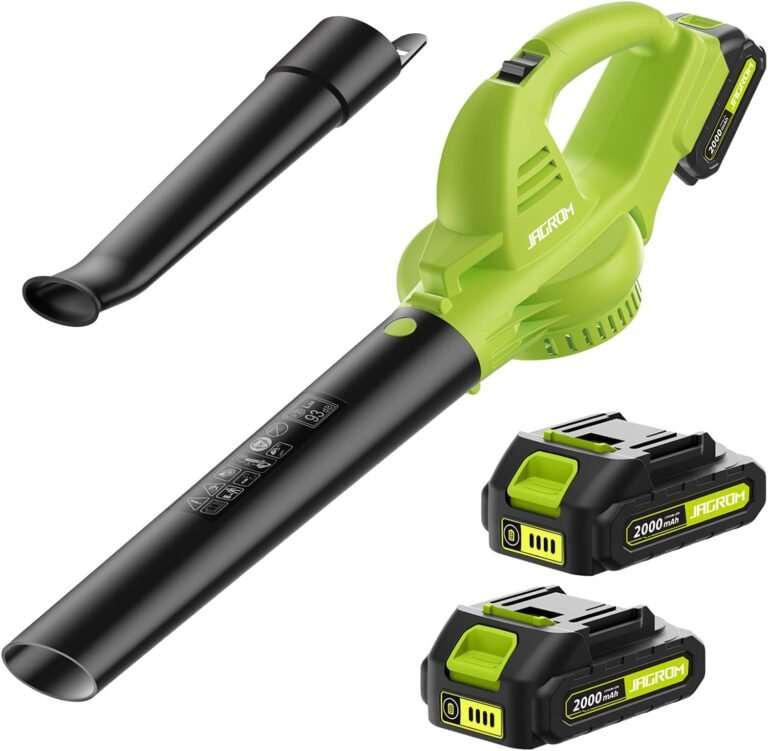
Leaf Blower Gas Mixing Guide: 2-Stroke Ratios Explained
To mix leaf blower gas correctly, use a 40:1 gas-to-oil ratio (which is 3.2 ounces of 2-cycle oil per 1 gallon of fresh gasoline) unless your owner’s manual says otherwise. That’s the key to keeping your engine running smoothly and avoiding costly damage.
We found that most handheld and backpack leaf blowers on the market today require this same 40:1 mix, though some older models may need 50:1. You must use high-quality 2-cycle engine oil specifically designed for air-cooled engines, and always mix it in a separate fuel can. Never pour the oil straight into the tank; always mix it with gas first for a consistent blend.
- The magic ratio: The standard is 40:1 (3.2 oz of oil per gallon of gas).
- The right oil: Use air-cooled 2-cycle oil, not regular motor oil.
- Fresh gas is a must: Don’t use gas older than 30 days; it goes stale.
- Shake it up: Mix thoroughly in a gas can before filling the blower.
- Always check the manual: If your blower is different, the manual is the final word.
Below, we’ll walk you through the exact steps to mix leaf blower gas perfectly every time, plus the common mistakes to avoid. Let’s get your blower running like new.
Mixing Leaf Blower Fuel Like a Pro
You do not need a degree in small engines to get this right. We found that mixing gas for your leaf blower takes about five minutes and just a few simple supplies. When you nail the ratio, your engine runs cooler, cleaner, and starts on the first pull. It also prevents carbon buildup that clogs the exhaust ports.
The biggest mistake we see? People guessing at the oil amount. That tiny measuring error can destroy a piston in under an hour. So, let us show you the exact process, step by step.
Gathering the Right Supplies
Before you touch the gas can, collect everything you need. You will need a clean, approved fuel container, fresh gasoline, and the correct 2-cycle oil. That is it. No special tools, no fancy equipment.
We found that using a dedicated gas can for your mixed fuel is a smart move. It prevents confusion with your lawn mower gas. Label it clearly with a permanent marker so you never accidentally pour straight gas into the blower.
Choosing the Right Gasoline
Head to any gas station and grab the lowest octane you can find. Most manuals call for 87 octane regular gas. Higher octane does not give you more power; it just costs more money.
You also want to look for ethanol-free gas if you can find it. Ethanol attracts water and can cause the fuel to break down faster. Many local stations sell it, and some hardware stores carry it in cans. The US Environmental Protection Agency notes that ethanol can be hard on small engines, especially when the fuel sits for weeks (EPA).
Picking the Correct 2-Cycle Oil
Do not grab the bottle of 10W-30 from your car. That will turn your engine into a paperweight. You need oil that says “2-cycle” or “2-stroke” on the label. It must also say “for air-cooled engines” on the front.
We recommend paying a little extra for synthetic blend 2-cycle oil. It burns cleaner and leaves less ash inside the cylinder. That means fewer deposits on the spark plug and longer engine life overall.
Finding Your Exact Gas-to-Oil Ratio
Here is the golden rule: do not trust your neighbor, and do not trust the internet. Trust the manual that came with your machine. The manufacturer set that number for a reason.
That said, we found that the vast majority of modern leaf blowers use a 40:1 ratio. Some brands, like certain Echo models, still call for 50:1. Old Stihl units might want 50:1 too. It only takes 30 seconds to check the manual or look for a sticker near the fuel cap.
Understanding What the Numbers Mean
The ratio refers to parts of gas to parts of oil. So, 40:1 means 40 parts of gas and 1 part of oil. You can scale this up or down as long as you keep the same proportion.
For a one-gallon mix, that works out to 3.2 fluid ounces of oil. If you have a smaller can, like a quart, you only need 0.8 ounces. That is just under 1 ounce, which is about two tablespoons. Using too much oil can foul the spark plug; using too little can seize the engine.
Consulting the Manual First
We know, nobody reads manuals anymore. But this is one time you should flip the pages. Look for the section titled “Fuel” or “Mixing Instructions.” It will list the ratio and often provide a small mixing chart.
If you lost the manual, search online using your blower’s model number. You can usually find a PDF in about two minutes. If you have a generic brand with no manual, email the manufacturer’s customer support. They can tell you the exact spec for your machine.
The Step-by-Step Mixing Process
Okay, you have your supplies and your ratio. Now it is time to mix. Follow these steps exactly, and you will get a perfect batch every single time.
We found that the secret is to mix in a separate can, not in the blower tank. Pouring oil straight into the tank almost always leads to a poor mix and potential engine damage.
Step 1: Measure the Oil First
Use a dedicated measuring cup or the built-in measuring chamber on the oil bottle. Most 2-cycle oil bottles have a small window with ounce markings. Squeeze the oil into the chamber until it reaches the right line for your gallon size.
Do not guess. Guessing is how engines die. If you are between two lines, round down rather than up. A slightly lean mix is safer than a rich mix that gums up the engine.
Step 2: Add Oil to the Empty Can
Pour the measured oil directly into your clean, empty fuel can. This is important. Adding oil to an empty can helps it mix better when you add gas. The gas will agitate the oil as it fills the container.
Make sure the can is clean. Old dirt or debris in the can can clog the tiny fuel filter in your blower. If your can has been sitting in the shed for months, rinse it out with a little gas first and let it air dry.
Step 3: Add the Gasoline
Now, pour the correct amount of fresh gasoline into the can. For most people, that is one full gallon. Fill the can no more than 95 percent full. This leaves a little air space at the top, which helps when you shake.
Do not top it off completely. You need that air pocket to create turbulence when you mix. A completely full can is very hard to shake properly.
Step 4: Shake It Like You Mean It
This step is crucial. Put the cap on tight, then shake the can for at least 30 seconds. We found that shaking harder and longer gives you a more consistent blend. You want the oil and gas to become one single liquid, not two layers.
If you see swirls or streaks in the fuel, keep shaking. The mix should look uniform, like slightly tinted gas. Some oils are red or blue, so your fuel might look a little colored. That is totally normal.
Step 5: Let It Settle Briefly
After shaking, set the can down for about 60 seconds. This lets any foam or bubbles settle. You do not need to wait long, just enough for the liquid to calm down. Large air bubbles in the fuel line can cause starting issues.
Then, open the can and pour the mixture into your blower’s tank. Leave a little room at the top of the blower tank, maybe 10 percent. Fuel expands when it gets hot, and you do not want it spilling out.
A Quick Reference Table for Common Ratios
We built this table to save you time. Print it out and tape it to your gas can with clear packaging tape. That way, you never have to do the math again.
| Gas Amount | Oil at 40:1 | Oil at 50:1 |
|---|---|---|
| 1 Gallon | 3.2 oz | 2.6 oz |
| 2 Gallons | 6.4 oz | 5.2 oz |
| 1 Quart | 0.8 oz | 0.6 oz |
| 1 Liter | 0.85 oz | 0.7 oz |
Always double-check your manual. Some older models from certain brands use 32:1, which needs 4 ounces per gallon. That is rare, but it exists. When in doubt, check the manufacturer’s website.
Common Mixing Mistakes That Ruin Engines
We have seen some real horror stories over the years. A guy once mixed his blower gas with chainsaw bar oil because “it was right there.” That engine did not last 10 minutes. Let us help you avoid the most common pitfalls.
These mistakes are easy to make, even for experienced DIYers. Knowing what they are is the first step to avoiding them.
Using Old or Stale Gasoline
Gasoline starts to degrade the moment it leaves the pump. We found that gas older than 30 days can separate and lose its combustibility. Stale gas leaves a gummy varnish inside the carburetor that clogs the tiny jets.
Only mix what you will use in a few weeks. If you want to extend the life, add a fuel stabilizer like STA-BIL brand. Many experts say that stabilizer can keep the mix fresh for up to 12 months (National Institutes of Health).
Mixing Directly in the Blower Tank
We get it, you are in a rush. But pouring oil into the blower tank and then adding gas on top is a recipe for trouble. The oil is thicker than gas and sinks to the bottom. This creates a rich mixture at the start and a lean one at the end.
Always mix in an external can. This ensures every drop of gas has the same amount of oil. Your engine will run smoothly from the first pull to the last.
Using Regular Motor Oil
Automotive motor oil does not burn cleanly. It leaves heavy ash deposits that can melt the piston or score the cylinder walls. This is not a minor mistake; it is a catastrophic one.
Many guidelines point to the fact that 2-cycle oil has special additives that make it fully combust. “Regular motor oil is meant to be recycled through the engine, not burned,” says the American Petroleum Institute. Do not cheap out on this one.
A Pre-Flight Checklist for First-Time Mixers
You are almost ready to head outside and tackle those leaves. Before you do, run through this quick checklist. It takes less than a minute and saves you a long walk back to the shed for a forgotten item.
- Fresh gas: Is the gas younger than 30 days?
- Right oil: Is it 2-cycle air-cooled oil?
- Correct ratio: Did you check the manual for the exact number?
- Mixed in a can: Is the mixture in a separate fuel can, not the blower tank?
- Shaken thoroughly: Did you shake for at least 30 full seconds?
- Labeled container: Is the can marked so you know it contains mixed fuel?
That final tip about labeling is a lifesaver. We cannot tell you how many times we have grabbed a can thinking it was straight gas, only to smoke out the whole yard because it was actually pre-mixed. Labeling prevents that embarrassing and costly mistake.
Now you are armed with all the knowledge you need. Take a deep breath, grab your gear, and mix that batch like a pro. Your leaf blower will thank you with smooth starts and powerful performance all season long.
Conclusion
Mixing leaf blower gas is one of those small tasks that makes a huge difference. You now know the core rule: check your manual for the exact ratio, then mix in a separate can with fresh gas and quality 2-cycle oil. That simple habit protects your engine from costly damage and keeps it starting on the first pull.
Before you head outside, grab your supplies and make your first batch. Label that can clearly so you never mix it up with mower gas. Then shake, pour, and get to work. Your blower will run smoother, last longer, and thank you with every leaf it clears.
Frequently Asked Questions
Can I use premium gas instead of regular for my leaf blower?
You can, but you do not need to. Premium gas does not boost performance in a leaf blower engine. Stick with the lowest octane available at the pump, usually 87, and you will save money without sacrificing power.
How long does mixed leaf blower gas stay fresh?
Mixed fuel stays usable for about 30 days under normal conditions. Adding a fuel stabilizer can stretch that to roughly 3 months. After that, the gas starts to break down and can leave gummy deposits in your carburetor.
What happens if I accidentally use straight gas in my leaf blower?
Straight gas will quickly damage a 2-cycle engine because the oil provides the lubrication it needs. If you catch the mistake early, drain the tank right away and refill with the proper mix. Even a few minutes of running without oil can cause serious internal wear.
Can I mix a smaller batch, like enough for just one tank?
You can, but it is tricky to measure tiny amounts accurately. A one-quart batch needs less than an ounce of oil, which is hard to get exact. Mixing a full gallon at a time is easier and gives you a more consistent blend.
Do I need to shake the gas can again after it has been sitting?
Yes, you should. Oil and gas can separate over time, especially if the can has been sitting for a few days. Give it a good 15-second shake before you pour to ensure the mixture is uniform and the engine gets proper lubrication.