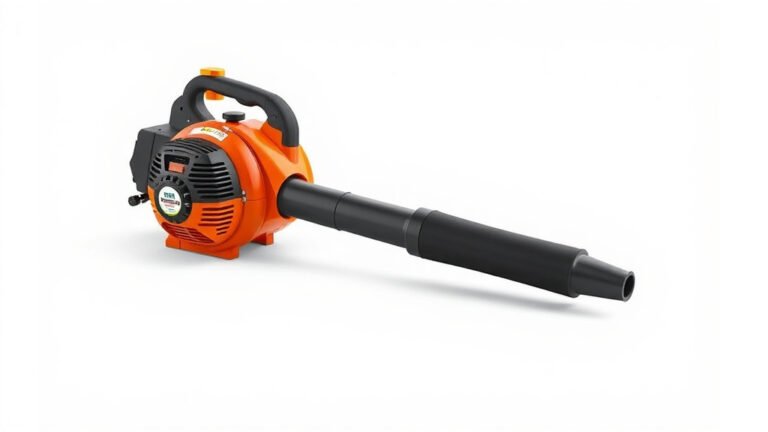
Hanging Your Leaf Blower: Smart Storage Tips
The quickest way to hang a leaf blower is to use a simple wall-mounted hook or a sturdy pegboard, placing it at a height where the blower is secure but still easy to lift. Most gas and cordless blowers hang best from the main handle or the tube section, so you want a hook strong enough to support its full weight. We found that keeping it off the ground saves floor space and prevents accidental damage to the housing and controls.
You probably don’t want to dig a bunch of holes in your garage wall just to store this one tool. There are many smart ways to organize your gear, from using heavy-duty utility hooks to building a simple DIY rack. The best method depends on your wall type and how much weight you are dealing with, so a little planning goes a long way.
Here is the short version of what you need to know before you grab your drill:
- Check the weight of your blower to pick the right hook or bracket.
- Always anchor into a stud or use heavy-duty drywall anchors for safety.
- Hang it by the handle or the tube, never by the air intake or wiring.
- Mount it high enough to keep the cord and nozzles clear of foot traffic.
- Add a separate hook right next to it for the battery and charger.
Below, we break down the specific steps to get your blower off the floor and on the wall without any hassle. Let’s walk through the tools you need and the exact mounting process.
Hanging Your Leaf Blower the Smart Way
You finally want that garage to look organized. We found that the trick to storing a leaf blower is less about the blower itself and more about the mounting spot. Most people hang the unit by its main handle, but you need to check your specific model first.
Look at the handle and the tube section. Many gas blowers have a curved tube that fits perfectly over a hook. Cordless models often have a flat battery base that slides into a cradle. Pick a spot that matches your blower’s natural balance point.
What You Need Before You Start
Grab a stud finder, a pencil, and a level. You also need the right hardware for your wall type. Drywall alone won’t hold a heavy gas blower without anchors. A simple utility hook rated for 50 pounds works for most handheld units.
For backpack blowers, you need a wider bracket. The harness adds bulk, so a standard hook often fails to hold the straps securely. We found that using two hooks side by side solves this problem easily.
Choosing the Right Hook or Bracket
Heavy-duty steel hooks are the most common choice. They come in single and double prong styles. The double prong gives you extra security if you hang the blower by its tube. Rubber-coated hooks protect the plastic housing from scratches.
Pegboard systems work well for lightweight cordless blowers. The standard pegboard hook holds up to 20 pounds. For anything heavier, you should use a wall-mounted utility bracket designed for power tools.
Finding the Perfect Mounting Spot
Walk around your garage and look at the wall space near your other tools. You want the blower close to where you grab it for quick yard work. Keep it away from the car doors so you never accidentally hit it.
Height matters more than you think. Mount the hook at chest level. This lets you lift the blower straight up and off without bending your back. If you hang it too high, you risk dropping the unit while reaching.
Clearance and Safety Zones
Leave at least 12 inches of clearance on each side of the blower. This gives you room to grab the handle without hitting the wall. Also, check that the air intake vents stay unobstructed. Blocking airflow can cause moisture buildup over time.
Do not hang the blower near a water heater or furnace. Gas fumes from the fuel tank need ventilation. Keep it at least three feet away from any ignition source for safety.
Wall Type Considerations
Drywall with studs is the easiest to work with. You simply screw the hook directly into the stud. If you have brick or concrete, use a masonry drill bit and sleeve anchors. These hold much better than standard screws.
Metal garage walls need special self-tapping screws. Many people skip this step and regret it later. A falling blower can damage the housing or bend the tube. Take the extra five minutes to do it right.
Step-by-Step Installation Process
Once you have your spot, the installation takes less than ten minutes. We found that marking everything before drilling saves time and frustration. A small mistake here means a crooked hook and a wobbly blower.
Follow these simple steps for a secure mount:
- Use the stud finder to locate the center of a wall stud.
- Mark the spot with a pencil at your desired height.
- Hold the hook against the wall and level it carefully.
- Mark the screw holes through the hook’s mounting plate.
- Drill pilot holes for the screws to prevent cracking.
- Drive the screws in with a drill or screwdriver.
- Test the hook by pulling down gently before hanging the blower.
Mounting on Drywall Without a Stud
Sometimes the perfect spot has no stud behind it. You can use heavy-duty toggle bolts for this situation. They spread the weight across a larger area of drywall. We found that toggle bolts rated for 50 pounds work well for most leaf blowers.
Drill a hole that matches the toggle bolt size. Push the toggle through and tighten until snug. Do not over-tighten, or the wings will crush the drywall. Let the toggle expand fully before hanging your blower.
Using Adhesive Hooks as an Alternative
Adhesive hooks work for lightweight cordless models only. Check the weight rating on the package. Most adhesive hooks hold between 5 and 15 pounds. A heavy gas blower will pull them right off the wall.
Clean the wall surface with rubbing alcohol first. Let it dry completely. Press the adhesive firmly for 30 seconds. Wait at least an hour before hanging anything on it.
Storing Accessories and Batteries Together
You do not want to hang the blower and then search for the battery. Mount a small shelf or an extra hook right next to the blower. This keeps everything in one place and ready to go.
Batteries need special care during storage. Keep them off concrete floors because cold transfers quickly. Hang them on a hook or place them on a wooden shelf. Many experts say storing batteries at room temperature extends their lifespan.
Setting Up a Complete Storage Station
Consider adding a small plastic bin below the blower hook. Toss in your nozzle attachments and a spare spark plug. This simple setup keeps your workspace tidy and your tools within reach.
Use a wall-mounted pegboard for additional accessories. Hang the charger and a spare battery on separate pegs. Label each spot with a marker or printed tag so you always know where things go.
Organizing Cords and Hoses
Electric leaf blowers come with long power cords that tangle easily. Use a cord reel mounted on the wall above the blower. Wind the cord loosely to prevent kinks and damage to the insulation.
For gas blowers, drain the fuel before long-term storage. Stale fuel clogs carburetors and causes hard starts. Add a fuel stabilizer if you plan to store it for more than a month.
Hanging Different Types of Leaf Blowers
Every blower has a unique shape, and the hanging method changes accordingly. The weight distribution matters more than the brand name. Let us break down the most common types and their best mounting solutions.
Handheld Cordless Blowers
These are the lightest and easiest to hang. Most weigh between 4 and 8 pounds. A single rubber-coated hook works perfectly for the handle. Slide the battery out and store it separately to prevent discharge.
Some models have a flat base that stands upright. If yours does, a simple wall shelf works great. Place the blower base-down on the shelf and slide it in. This keeps the air intake pointed outward and clear.
Gas Handheld Blowers
Gas models weigh more, typically 9 to 12 pounds. You need a hook rated for at least 25 pounds. Hang the blower by the main handle or the curved section of the tube. Avoid hanging it by the fuel tank or primer bulb.
Check the fuel cap for leaks before hanging. Even a tiny drip can stain your wall and create a fire hazard. Wipe the exterior down with a clean rag before storing.
Backpack Blowers
Backpack blowers are heavy, often 20 pounds or more. The harness straps make standard hooks useless. We found that a heavy-duty utility hook or a motorcycle handlebar hanger works best.
Hang the blower by the top handle of the backpack frame. This keeps the weight balanced and prevents the straps from stretching. Make sure the hook extends far enough to hold the frame securely.
Common Mistakes to Avoid When Hanging
Many people rush the job and end up with a damaged tool. We see the same errors repeatedly in garage organization projects. Here is what you need to watch out for:
- Hanging by the air intake vents, which bends the plastic housing.
- Using a hook rated below the blower’s weight, causing sudden falls.
- Screwing into drywall without anchors, leading to stripped holes.
- Mounting too high, forcing you to stretch and risk dropping it.
- Storing with a full fuel tank, which can leak and cause fumes.
- Leaving the battery attached, which drains its charge over time.
Weight Capacity Quick Reference
Use this simple table to match your blower type with the right hardware. Check your owner’s manual for the exact weight of your model before buying hooks.
| Blower Type | Average Weight | Recommended Hook |
|---|---|---|
| Cordless Handheld | 4 to 8 lbs | Single rubber-coated hook |
| Gas Handheld | 9 to 12 lbs | Heavy-duty 25 lb rated hook |
| Backpack | 18 to 25 lbs | Utility bracket or double hook |
| Electric Corded | 6 to 10 lbs | Standard hook plus cord reel |
Final Checklist for a Secure Hang
Before you walk away and admire your work, run through this quick list. It takes about 30 seconds and prevents most storage failures. We found that this simple habit saves people from costly repairs.
- Pull down firmly on the blower to test the hook.
- Confirm the air intake is not pressed against the wall.
- Check that the fuel cap is tight and dry.
- Ensure the battery is removed and stored separately.
- Verify the cord is wound and off the floor.
- Step back and check that the blower sits level.
Taking a few extra minutes now keeps your blower safe and ready for action. Your garage will look cleaner, and you will never trip over that stray tube again. Once you see how simple it is, you might start hanging your other tools the same way.
Conclusion
Hanging your leaf blower is one of the easiest ways to keep your garage organized and your equipment safe. You just need the right hook, a solid wall anchor, and a spot that keeps the blower out of your way. We found that matching the hardware to your blower’s weight is the most important step you cannot skip.
Take ten minutes this weekend to measure your blower and pick a mounting spot. Grab a stud finder and a sturdy hook rated for your model. Once it is up, you will wonder why you waited so long to get it off the floor.
Your future self will thank you every time you grab it for a quick cleanup.
Frequently Asked Questions
Can I hang my leaf blower on a pegboard?
Yes, but only for lightweight cordless models. Standard pegboard hooks hold up to 20 pounds. For heavier gas blowers, you need a wall-mounted utility bracket instead.
Check your blower’s weight before relying on a pegboard hook. You do not want to hear a crash in the middle of the night.
How high should I mount the hook for my leaf blower?
Chest level is the sweet spot for most people. This lets you lift the blower straight up without bending or stretching. If you mount it too high, you risk dropping the unit while reaching for it.
Think about how you grab the blower. You want it at a height that feels natural when you reach out.
Will a leaf blower fall off a hook if it vibrates?
Not if you hang it by the handle or the tube section. These parts stay still when the blower is off. Avoid hanging it by loose straps or the air intake, which can shift over time.
Test the mount by pulling down gently before you walk away. A rubber-coated hook adds extra grip and prevents slipping.
Should I drain the gas before hanging my leaf blower?
Yes, for long-term storage. Stale fuel clogs carburetors and makes starting harder. If you use your blower weekly, you can leave the fuel in with a stabilizer.
Always check the fuel cap for leaks before hanging. A drip can stain your wall and create a fire hazard near ignition sources.
Can I store my leaf blower outside on a hook?
We do not recommend it. Outdoor humidity and temperature swings can damage the plastic housing and electrical components. Moisture also rusts metal parts and corrodes battery contacts.
Keep your blower in a garage, shed, or covered storage area. A hook inside the garage keeps it dry and ready to use.