How to Pick a Leaf Blower That Actually Suits You
The best way to pick a leaf blower is to match the machine to your yard size and the type of debris you clear most often. We found that a corded electric model is perfect for small lawns, while a gas blower handles large properties with heavy, wet leaves best. Battery-powered options offer a nice middle ground for most homeowners who want freedom without the fuel hassle.
Your choice really comes down to three main factors: power source, air volume, and your own comfort carrying the machine. You need enough power to move leaves but not so much that it becomes heavy or hard to control. We also recommend thinking about noise levels, especially if you have close neighbors or clear leaves early in the morning.
- Yard size is the #1 factor — under 1/4 acre? Go corded electric.
- Battery blowers are great for medium yards up to 1/2 acre.
- Gas models win for huge yards, thick grass clippings, or wet, heavy debris.
- Check CFM (air volume) and MPH (air speed) — both matter for clearing power.
- Try the blower in person if you can — weight and balance make a big difference.
Below, we break down everything you need to know about picking the right leaf blower for your specific situation. We’ll walk you through the specs, the pros and cons of each type, and the best questions to ask yourself before you spend a dime.
Choosing the Right Leaf Blower for Your Yard
You want a blower that makes yard work feel almost easy. We get that. The trick is to match the machine to your real-life situation, not just the flashiest model on the shelf.
Start by being honest about your yard size and the mess you deal with. A tiny patio with a few stray needles is a totally different job than a half-acre of oak trees in November. We found that answering three quick questions gets you 90% of the way to the perfect pick.
Why Yard Size Matters Most of All
Bigger yards mean longer run times and more ground to cover. A small corded blower on a huge lawn is a frustrating tangle of extension cords. A heavy gas machine on a small patio is just overkill that wears out your arm.
Think about it like choosing a car. You wouldn’t buy a diesel truck just to grab groceries, right? The same logic applies to air movers.
Measuring Your Space Without the Math Headache
You probably know if your yard is small, medium, or large without measuring. But if you are unsure, just look at your lot size. A quarter acre is standard for many suburban homes. Half an acre is a decent chunk of land.
Here is a quick rule of thumb we use with friends and family:
- Small (under 1/4 acre): A corded electric blower is all you need.
- Medium (1/4 to 1/2 acre): A battery-powered model gives you the best mix of power and freedom.
- Large (over 1/2 acre): A gas blower saves you time and battery swaps.
Type of Debris You Clear Most Often
Are you blowing light, dry oak leaves off a patio? Or are you fighting wet, matted maple leaves stuck to the grass? This makes a huge difference in the specs you need.
Dry leaves on hard surfaces are easy. Any blower can handle that. Wet leaves, pine cones, and grass clippings need serious air power to get moving. Many experts say that high air volume moves wet debris better than high speed alone.
Understanding Blower Power Stats Without the Headache
You will see two main numbers on every box: CFM and MPH. These are not just marketing jargon. They tell you exactly what the blower can do. We found that reading these numbers confidently helps you ignore the flashy packaging.
Think of CFM as the amount of air moving, like the width of a river. Think of MPH as the speed of that air, like the current. You want a good balance of both.
CFM: The Volume of Air
CFM stands for Cubic Feet per Minute. It measures how much air the blower pushes out. Higher CFM means you can move more leaves at once. It also means the air stream stays effective over a longer distance.
For most residential jobs, you want at least 350 CFM. If you have heavy leaves or a big yard, look for 500 CFM or more. We found that high CFM is better for pushing huge piles of dry leaves across a lawn.
MPH: The Speed of the Air
MPH is Miles Per Hour, or the speed of the air leaving the nozzle. Higher MPH is great for stubborn, wet leaves stuck to the ground. It also helps you blast debris out of tight flower beds and rock borders.
A lower CFM with a high MPH can strip leaves off a lawn but takes forever to clear a wide driveway. You want a middle ground. Look for numbers around 100 to 140 MPH for most yards.
Finding the Sweet Spot Between CFM and MPH
Do not just chase the highest numbers. You want a combo that fits your task. We found that a blower with 450 CFM and 120 MPH handles almost everything a typical homeowner throws at it.
If you have a tiny yard, you can get away with lower numbers. If you have a massive property with heavy tree cover, go big on both. It is better to have too much power than to fight a weak stream for two hours.
| Yard Size | Recommended CFM | Recommended MPH | Best Power Type |
|---|---|---|---|
| Small (Patio/Condo) | 200 – 350 | 90 – 110 | Corded Electric |
| Medium (Suburban Lot) | 350 – 500 | 110 – 130 | Battery Power |
| Large (Acreage) | 500+ | 130+ | Gas Engine |
The Big Three: Electric, Battery, and Gas
Now comes the fun part. You get to pick your power source. Each one has a personality. We found that your lifestyle usually picks the winner before you even start shopping.
Consider your tolerance for noise, your physical strength, and your patience for maintenance. There is no wrong answer, but there is definitely a best fit for you.
Corded Electric Blowers: The Lightweight Workhorse
These are your budget-friendly, always-ready machines. You plug them in, and they run until the job is done. No charging, no mixing fuel, no pull-start frustration. They are usually the lightest option on the shelf.
The main downside is the cord. You will drag it around the yard. Politics aside, you have to manage extension cords, avoid running over them, and find outlets. Many experts say that with a good 50-foot cord, this is a non-issue for small lots.
Who Should Buy a Corded Blower
We recommend corded blowers for anyone with a yard that fits within reach of an outlet. If you have a townhome, a small bungalow, or just a patio to clear, this is your best friend. You also get the benefit of zero charging time.
You never have to remember to charge a battery. You just find an outlet and go. It is honestly the most reliable choice for a quick weekend cleanup.
Battery-Powered Blowers: The Balanced Option
Battery blowers are the sweet spot for many of us. They are cordless, so you get freedom of movement. They are much quieter than gas, which keeps the neighbors happy. And they are reasonably light to carry.
The trade-off is battery life. Most run for 20 to 40 minutes on a full charge. If you have a big yard, you will need a second battery or a fast charger. It is a small annoyance for the convenience of no cord.
Battery Life and Voltage Explained
You will see batteries measured in Volts (V) and Amp Hours (Ah). Higher voltage usually means more power. Higher amp hours mean longer run time. A 40V battery is stronger than an 18V one, but it is also heavier.
We found that sticking with one battery platform for all your tools is a smart move. If you already have a drill or trimmer from a brand, buy that brand’s blower. It saves money and keeps your charger collection small.
Gas-Powered Blowers: The Heavy-Duty Winner
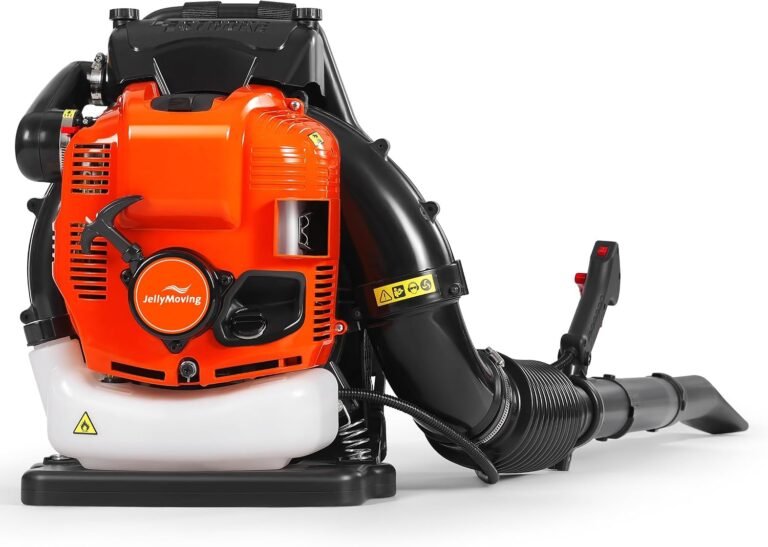
Gas blowers are the big dogs of the leaf-clearing world. They deliver serious power. They never run out of battery mid-job. They can go all day if you keep feeding them fuel. This is the choice for professionals and large-acreage owners.
The downsides are real, though. They are loud, heavy, and need regular maintenance. You have to mix oil and gas (for most models). You also deal with fumes. But when you have wet, heavy leaves covering a full acre, nothing else works as well.
Two-Stroke vs. Four-Stroke Engines
Two-stroke engines are lighter and have more power-to-weight ratio. They require you to mix oil into the gas. Four-stroke engines are heavier, run on regular gas, and are generally simpler to maintain.
We found that most homeowners prefer a two-stroke for the weight savings. If you are looking at a backpack blower, two-stroke is the standard. Just remember you have to store that fuel mix safely away from your house.
Comfort and Ergonomics: Don’t Ignore Your Back
You will carry this machine for hours. A great blower with a bad grip is a terrible experience. We found that comfort is often the difference between a tool you love and one you hide in the shed.
Pay attention to the weight, the handle design, and how the weight is distributed. A heavy blower can cause fatigue and strain. Your shoulders and wrists will thank you for choosing wisely.
Handheld vs. Backpack vs. Wheeled
Handheld blowers are the most common. They are easy to store and simple to use. For a small to medium yard, this is the way to go.
Backpack blowers put the weight on your hips and back. This makes a heavy gas engine feel much lighter. They are better for large properties where you are working for hours.
Wheeled blowers are the heavy lifters. They look like a small push mower. They are great for huge surfaces like long driveways or commercial lots, but totally unnecessary for a home. People often overestimate their needs and buy a backpack when a handheld is plenty.
Testing the Balance Before You Buy
Try to lift the blower in the store. Feel the weight in your hands. We found that the weight is often listed on the box, but that dry spec doesn’t tell you how it feels. The balance matters just as much as the number on the scale.
Look for a handle that is well-padded and easy to grip. A variable speed trigger is also a huge plus. You want to dial the power down for delicate jobs and crank it up for the big clears.
Noise Levels and Neighborhood Etiquette
Nobody likes a noisy neighbor. Gas blowers can hit 100 decibels or more. That is loud enough to cause hearing damage over time, according to the National Institute on Deafness and Other Communication Disorders. You should always wear ear protection with any gas model.
Battery and corded blowers are significantly quieter. They still make noise, but they are much easier on the ears and the nerves of the person next door. If you like to do chores early on a Saturday, a quieter machine is a polite choice.
Why Quieter Is Often Better
We found that many neighborhoods have noise ordinances that restrict using gas blowers during certain hours. A battery blower rarely triggers those complaints. It is easier to use one without feeling like a nuisance.
Your own comfort matters too. Wearing bulky ear muffs in the heat is a hassle. A quieter blower might mean you actually skip the hearing protection, which is better for your long-term health.
Your Pre-Purchase Checklist
You are almost ready to make a smart decision. Before you reach for your wallet, run through this quick checklist. It covers the most common mistakes people make when they buy a blower.
- Measure your yard: Know the square footage or just guess the acreage honestly.
- Check for a power outlet: If you have a corded blower, know your reach.
- Check your battery platform: Buy the same brand as your other tools if you can.
- Weigh the machine: Lift it in the store and see if you can hold it comfortably.
- Read the noise rating: Look for decibels (dB) on the box if quiet matters to you.
- Think about storage: Backpack blowers take up more shelf space than handhelds.
Taking a few extra minutes to plan will save you from buyer’s remorse. We found that people who skip this list often end up buying a second blower later.
Conclusion
Picking the right leaf blower comes down to your yard size, the debris you fight, and your own comfort. You do not need the most expensive or the most powerful model. You need the one that fits your Saturday routine without making you dread it.
We hope you feel ready to check the specs and lift a few machines in person. Start with your lot size. Then match the power source to your patience for cords, charging, or fuel. A quick pre-purchase checklist will keep you on track and save you from buying twice.
Your next step is simple: measure your yard, test a blower’s weight, and make your choice. You have all the tools to pick a winner.
Frequently Asked Questions
Is a leaf blower worth it or should I just use a rake?
A leaf blower saves you serious time and spares your back. Raking takes hours on a medium lawn, while a blower can finish the same job in minutes. If you have trees or a large yard, the investment pays off fast.
What is a good CFM for a leaf blower for a residential yard?
For most homes, you want at least 350 CFM. That handles dry leaves on grass and patios without struggling. If you have heavy tree cover or wet debris, bump that up to 500 CFM or more for easier clearing.
Can I use a leaf blower on wet leaves?
Yes, but you need more power. Wet leaves are heavy and stick to surfaces. Look for a blower with high MPH to blast them loose, plus enough CFM to keep them moving. Gas models handle wet piles best.
How long do battery leaf blowers last on a full charge?
Most battery blowers run between 20 and 40 minutes under normal use. That covers a typical medium yard if you work efficiently. You will likely need a second battery for larger properties or heavy jobs.
Are backpack leaf blowers better than handheld ones?
Backpack blowers are better for large yards because they shift the weight to your back and hips. Handheld models are lighter and easier to store. If you clear a standard lot, a handheld is almost always enough.