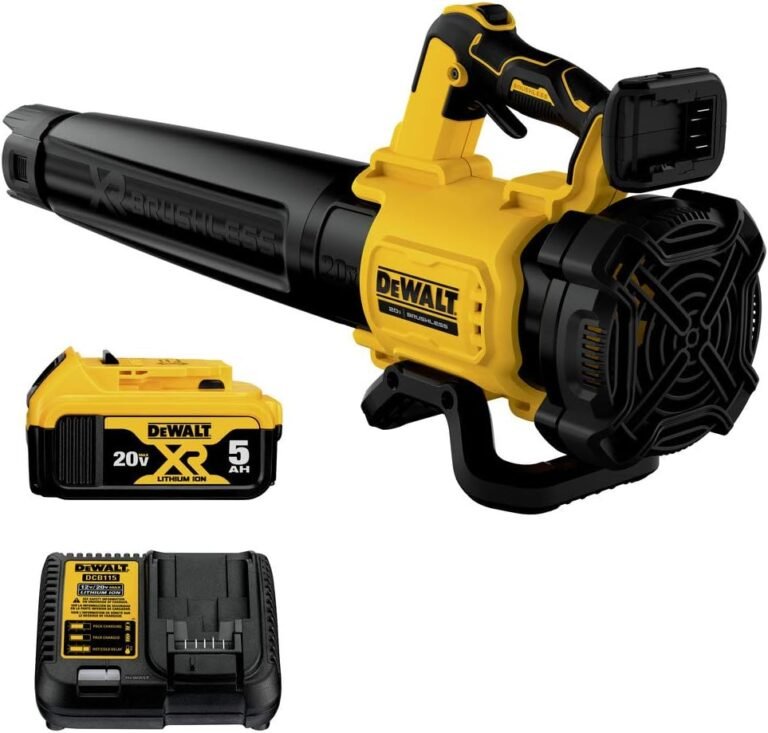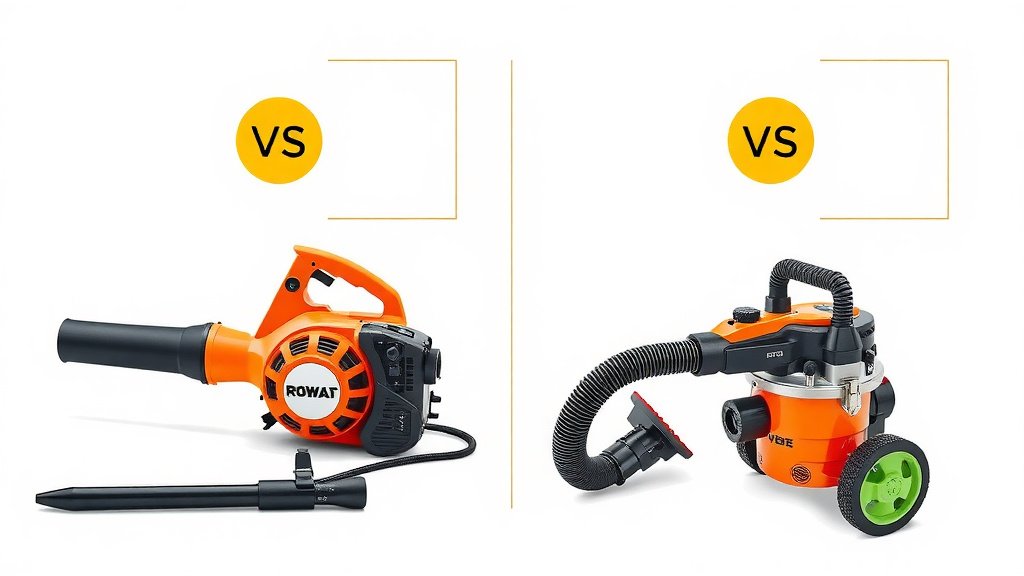
Leaf Blower vs Vacuum: What’s the Real Difference
The main difference between a leaf blower and a leaf vacuum is simple: a leaf blower pushes air out to move leaves, while a leaf vacuum sucks air in to collect them. You use a blower to gather debris into a pile. You use a vacuum to pick that pile up and usually shred it into a bag. It really comes down to whether you want to move the mess or make it disappear.
We found that many people buy a blower first and then realize they still have to rake or scoop everything up. That is where a vacuum saves your back. Many of today’s models are 2-in-1 machines that switch between blowing and vacuuming with the flip of a lever. This makes them a smart choice for tackling both cleanup jobs with one tool. You get the speed of a blower and the convenience of a bag.
- Core job: A blower moves debris; a vacuum collects and bags it.
- Best for: Blowers are best for large lawns and clearing grass; vacuums are best for patios, driveways, and garden beds.
- Mulching power: Most vacuums shred leaves into mulch, which is great for compost.
- Bag capacity: Vacuums have bags that need emptying; blowers do not.
- Weight and cost: Vacuums tend to be heavier and slightly more expensive than standard blowers.
Below, we break down the key differences in power, portability, and price so you can pick the right tool for your yard. Let’s walk through exactly how to decide which one you actually need.
Leaf Blower vs. Leaf Vacuum: What Each Tool Actually Does
The fastest way to understand these tools is to watch your driveway after a windy day. A blower is like a strong, directed breeze on a stick. It moves leaves where you want them to go. A vacuum is more like a portable garbage disposal. It pulls leaves into a bag and chews them up in the process.
We found that this one difference changes everything about how you work in the yard. Blowers are about speed and reach. Vacuums are about cleanup and finishing the job. Think of a blower as the broom and a vacuum as the dustpan. You often need both to get the job done right.
How a Leaf Blower Works
A leaf blower has a fan that spins very fast. That fan pulls air in from the side and pushes it out through a narrow tube. The narrow tube makes the air move much faster. That focused air stream is what moves debris across your lawn or patio.
The job of a blower is simple: move stuff. You blow leaves into a pile. You blow grass clippings back onto the lawn. You blow dirt off a driveway. It does not collect anything. It just pushes the mess somewhere else.
We found that most people use a blower to gather leaves into a central pile. Then they either rake the pile onto a tarp or use a vacuum to pick it up. That is the standard workflow in many yards.
How a Leaf Vacuum Works
A leaf vacuum reverses the process. It pulls air in through a wide intake tube. Leaves and small twigs get sucked up with that air. They pass through a spinning blade or impeller inside the machine. That blade shreds the leaves into tiny pieces.
The shredded material lands in a collection bag. You empty the bag when it gets full. Many models will reduce the volume of leaves by a huge amount. We found that a full bag of loose leaves often becomes a quarter of that volume after shredding.
This shredding action is a huge advantage. It means you empty the bag far less often. And the shredded leaves are perfect for a compost pile or garden mulch (University of Vermont Extension).
Power and Performance Differences You Should Know
Power matters, but not in the way you might think. A blower needs high airspeed to move heavy wet leaves. A vacuum needs strong suction to pull debris off the ground. Both use similar engines, but they apply power differently.
We found that air volume and airspeed are the two numbers to look at. Airspeed is measured in miles per hour (MPH). Air volume is measured in cubic feet per minute (CFM). A blower with high MPH pushes leaves hard. A blower with high CFM moves a wide swath of leaves.
Gas vs. Cordless Electric vs. Corded Electric
You have three main power options. Each one has a trade-off between power and convenience. We break down how they compare for both blowing and vacuuming.
Gas-Powered Machines
Gas models are the strongest. They deliver the highest airspeed and the longest run time. You can blow through wet, heavy leaves without bogging down. The downside is weight, noise, and maintenance. You need to mix oil and gas, and you have to pull a cord to start them.
For vacuuming, gas power is helpful. Sucking up wet leaves takes a lot of energy. We found that gas vacuums handle this better than most electric models. But they are heavy to carry on a shoulder strap for an hour.
Cordless Battery Models
Cordless models have improved a lot in recent years. Modern lithium-ion batteries deliver solid power for most residential yards. They are quiet, light, and start instantly. The main limitation is run time. You often get 15 to 30 minutes of full power per charge.
Many battery models work as 2-in-1 machines. You flip a lever to switch from blowing to vacuuming. This is super convenient, but the vacuum mode drains the battery faster. We found that you should buy an extra battery if you plan to vacuum a large yard.
Corded Electric Models
Corded models give you unlimited run time. You plug in and keep working until the job is done. They are lighter than gas models and quieter too. The trade-off is the cord. You have to manage it around trees, flower beds, and wet grass.
We found that corded vacuums are a great budget option. They offer good suction for small to medium yards. The cord can be annoying, but the lower price and low maintenance make up for it for many homeowners.
Portability, Weight, and Ease of Use
Carrying a machine on your back or in your hands changes how long you can work. We found that weight is one of the biggest complaints from users. A heavy machine causes shoulder and back fatigue quickly.
Standard leaf blowers are lighter. A handheld blower weighs around 5 to 10 pounds. A backpack blower spreads the weight across your shoulders and back, which feels lighter even if it weighs more. For a closer look at comfortable high-power options, see our roundup of the best backpack leaf blowers.
Vacuums are heavier for a simple reason: they carry a bag. The bag adds weight as it fills up with shredded leaves. A full bag can add 10 to 15 pounds of extra weight. That makes a vacuum noticeably harder to handle as you work.
Bag Capacity and Emptying Frequency
Nobody likes stopping to empty a bag every two minutes. The size of the vacuum bag matters a lot. Smaller bags hold about 1.5 to 2 bushels. Larger bags hold up to 2.5 bushels or more. The shredding ratio helps here, so you get more use before emptying.
We found that a good rule is to look for a bag that is easy to remove and empty. Some bags have a zipper or a quick-release strap. Look for a bag with a wide opening. Narrow openings clog easily with wet leaves.
Price, Maintenance, and Long-Term Costs
Your budget matters, but so does the cost of upkeep. We compared typical price ranges so you know what to expect before you shop.
| Feature | Leaf Blower | Leaf Vacuum |
|---|---|---|
| Average Price (Corded) | $40 – $80 | $60 – $120 |
| Average Price (Cordless) | $100 – $250 | $150 – $300 |
| Average Price (Gas) | $150 – $400 | $200 – $500 |
| Maintenance Needs | Minimal | More (bag cleaning, clogs) |
| Run Time | Longer | Shorter (bag fills up) |
We found that gas machines need the most care. You have to change spark plugs, air filters, and fuel stabilizer. Electric machines are nearly maintenance-free. You just keep the vents clean and the battery charged. If your machine acts up, our leaf blower troubleshooting guide covers the most common fixes.
Vacuums need a bit more attention. The impeller blade can get clogged with wet leaves or twigs. You have to clear jams regularly. The bag also needs cleaning to prevent mold and odors. It is not hard work, but it is more than a blower requires.

Noise Levels and Neighborhood Etiquette
Yard work is noisy, but some tools are worse than others. We found that gas blowers are the loudest, often reaching 90 to 100 decibels. That is loud enough to cause hearing damage with prolonged exposure (CDC). You should always wear hearing protection.
Cordless and corded electric models are much quieter. They run around 60 to 75 decibels. That is closer to a normal conversation or a dishwasher. Many neighborhoods have noise ordinances that restrict gas blower use. Check your local rules before you buy.
If you have close neighbors, a quieter machine is a thoughtful choice. Starting a loud gas blower at 7 AM on a Saturday is a good way to make enemies. We found that electric models let you work earlier without causing friction.
Which One Do You Really Need?
The honest answer depends on your yard size and the mess you deal with. We found that many homeowners benefit from a 2-in-1 machine. It gives you both functions in one purchase. But if you have a very large property, a dedicated blower might be better.
Go With a Blower If…
- You have a large lawn with many trees.
- You only need to move leaves, not collect them.
- You prefer a lighter tool that is easy to carry.
- You already have a rake and tarp for cleanup.
- You want the lowest possible price for a yard tool.
Go With a Vacuum If…
- You have small yards, patios, or driveways.
- You want to remove leaves completely, not pile them.
- You want shredded mulch for your garden beds.
- You hate raking and want to save your back.
- You have flower beds where a blower scatters mulch.
We found that a 2-in-1 machine is the best compromise for most people. You get the blowing power for open areas and the vacuum function for cleanup. The switching mechanism is usually simple and reliable. Many models just require you to flip a lever or swap the tube.
Smart Buying Checklist Before You Purchase
Before you spend your money, run through this quick checklist. We put it together to help you avoid common buying mistakes.
- Measure your yard size and count the number of trees.
- Check local noise ordinances for gas vs. electric rules.
- Look for a 2-in-1 model if you want both functions.
- Compare CFM and MPH numbers for blowing power.
- Check bag capacity and ease of emptying on vacuums.
- Consider the weight and how long you will carry it.
Many experts say that buying the cheapest model is often a false economy. A mid-range tool lasts longer and works better. You also get better customer support and replacement parts. We found that spending a little more up front saves money in the long run.
Think about your storage space too. A 2-in-1 machine takes up about the same space as a single tool. You do not need to store two separate machines. That is a nice bonus for small garages or sheds.
Conclusion
Choosing between a leaf blower and a leaf vacuum comes down to one simple question: do you want to move the mess or make it disappear? A blower gives you speed for open lawns. A vacuum gives you a finished look with shredded mulch you can actually use. Most homeowners we talked to end up happiest with a 2-in-1 machine. You get both functions without buying two tools.
Take a quick look at your yard size and the type of mess you deal with each fall. If you have a big lawn with lots of trees, start with a blower. If you have patios, driveways, or flower beds, a vacuum will save you hours of raking. Pick the tool that matches your biggest cleanup job, and you will not regret the purchase.
Frequently Asked Questions
Can I use a leaf blower to clean gutters?
Yes, you can. Many blowers come with a gutter attachment kit that extends your reach. You stand on the ground and blow debris out of the gutters without climbing a ladder. Just make sure you point the blower away from your face and wear safety glasses.
Do leaf vacuums work on wet leaves?
Some do, but most struggle with heavy, wet leaves. Wet leaves clump together and clog the intake tube quickly. Gas-powered vacuums handle wet leaves better than electric models. If you have a lot of wet leaves, wait for them to dry or stick with a blower to push them into piles.
Will a leaf vacuum pick up small rocks and acorns?
A leaf vacuum will pick up small acorns and tiny pebbles. The shredding blade can handle them without much trouble. But larger rocks, sticks, and pine cones can damage the impeller. You are better off raking those up by hand before you start vacuuming.
How often do I need to empty the leaf vacuum bag?
It depends on your yard size and how many leaves you have. Most bags hold about 1.5 to 2.5 bushels. The shredding action compacts the leaves, so you get more use before emptying. On a typical suburban lot, you will probably empty the bag 3 to 5 times per cleanup session.
Is a leaf vacuum worth it if I already have a blower?
If you are tired of raking piles into a tarp, yes. A vacuum turns that final cleanup step into a one-pass job. Many people buy a 2-in-1 model and just keep the vacuum function attached. It saves your back and turns leaves into useful mulch for your garden.