How Often to Clean Gutters with a Leaf Blower
You should clean your gutters with a leaf blower every three to four months, or at least twice a year in the spring and fall. This simple schedule keeps water flowing away from your home and stops expensive damage before it starts. How often to clean gutters with leaf blower really depends on your trees, but this is the sweet spot for most homes.
Cleaning gutters is one of those chores that’s easy to put off, but it’s also one of the easiest to tackle when you have the right tool. A leaf blower can make the job much faster than scooping out muck by hand. We found that using a leaf blower works best when the debris is dry, so timing your cleaning after a few sunny days makes a big difference.
- General rule: Clean gutters every 3-4 months, or at least twice a year.
- Best seasons: Do a thorough cleaning in late spring and late fall.
- Tree factor: Homes with many overhanging trees may need a clean every 6-8 weeks.
- Pro tip: Only use the blower when the gutter debris is dry—wet leaves clump and stick.
- Watch for: If you see water spilling over the sides, it’s time to clean no matter the schedule.
Below, we’ll break down the exact signs your gutters need attention and how to use your leaf blower safely and effectively. Let’s walk through the simple routine that keeps your home safe all year long.
Finding Your Perfect Gutter Cleaning Rhythm
You already know the basic schedule: every three to four months, or at least twice a year. But let’s be honest. Life gets busy, and gutters are easy to forget until something goes wrong.
We found that the right cleaning frequency depends on a few things you can actually control. Your trees, your local weather, and even the type of roof you have all play a part. Let’s break down how to find your home’s ideal schedule so you never have to deal with a surprise overflow.
Why a Fixed Schedule Beats Waiting for Problems
Waiting until you see water spilling over the edge means the damage is already happening. That water ends up seeping into your foundation or rotting your fascia boards. Both are pricey fixes.
A regular schedule is like brushing your teeth. You do it before problems start, not after. Many experts say that a simple twice-a-year cleaning prevents the vast majority of gutter-related home damage.
This proactive approach saves you money in the long run. It also keeps your gutters looking good from the street.
How Your Trees Change the Math
This is the biggest factor in how often you’ll fire up that leaf blower. Homes sitting under large oak, maple, or pine trees have a much heavier workload.
We found that homes with several overhanging trees need a cleaning every six to eight weeks during peak shedding seasons. That might sound like a lot, but a leaf blower makes it a quick ten-minute job.
If your yard has no trees close to the house, you can stretch that three-month window to four or even five months. You’re mainly fighting dust, shingle grit, and the occasional wind-blown leaf.
Take a quick look at your roof line right now. How many branches hang directly over the gutters?
Deciduous Trees vs. Pine Trees
Deciduous trees (the ones that lose leaves in fall) dump everything at once. That makes late fall your most critical cleaning time. You need the gutters clear before winter rain and snow arrive.
Pine trees are a different story. They shed needles year-round. Those needles are tiny and slippery. They slide right into downspouts and cause clogs faster than big leaves.
If you have pines nearby, plan for a monthly check-in. You might not need a full blowout every time, but keeping the needles from accumulating is key.
Seasonal Timing for Leaf Blower Success
When you clean matters almost as much as how often you clean. We found that using a leaf blower works best when the gutter debris is completely dry. Wet leaves turn into a heavy, slimy paste that resists blowing.
Plan your cleaning for a day that follows a few days of sunshine. The drier the debris, the easier it lifts out and flies over the edge. This simple timing trick saves you a ton of arm fatigue.
The Spring Cleanout Routine
Late spring is your first big cleaning event. By this point, your gutters have collected all the pollen, seeds, and twigs that fell during early spring blooms. This is also when you might find a bird’s nest or two. Gently remove those before they become permanent residents.
Spring cleaning also preps your gutters for the heavy rainstorms that hit most of the US in early summer. Clear gutters channel rainwater safely away from your foundation.
The Fall Cleanout Routine
Late fall is the most important cleaning of the year. Leaves are down, and winter is coming. Frozen water trapped in a clogged gutter can expand and crack the metal or PVC. That leads to leaks and sagging sections.
We found that doing a thorough fall cleaning before the first hard freeze prevents ice dams. Ice dams are those heavy chunks of ice that form at the roof edge and can cause water to back up under your shingles. That’s a serious headache.
What About Summer and Winter?
Summer is usually a lighter season. You might just need a quick blowout after a big windstorm. Keep an eye on the downspouts, though. Summer thunderstorms dump a lot of water fast.
Winter cleaning is tricky. If snow is on the ground, debris is usually frozen solid. Many experts recommend skipping winter cleanings unless you spot a sagging gutter full of ice. It’s safer to wait for a thaw.
Signs Your Gutters Are Begging for a Cleaning
Sometimes you don’t need a calendar. Your house will tell you when it needs help. You just need to know what to look for. We found that catching these signs early prevents the messy overflow situations.
Here are the top signals that you should grab your leaf blower right now:
- Water spilling over the sides during even a light rain. This is the most obvious red flag.
- Plants or grass growing out of the gutter. That means there’s enough dirt for roots to take hold.
- Sagging gutter sections. The weight of wet debris is pulling the gutters away from the roofline.
- Visible debris from the ground. If you can see leaves sticking over the top, the inside is probably packed.
- Small insects or birds nesting near the roofline. They love clogged, damp gutters.
- Paint damage or rust spots on the outside of the gutter. Trapped moisture is eating away at the metal.
Don’t ignore these signs. A quick blowout now beats a ladder session in the pouring rain later.
The Smart Way to Use Your Leaf Blower on Gutters
Using a leaf blower for gutters is fast, but you have to do it right. The goal is to push debris out one end without making a giant mess of yourself. We found that a little strategy goes a long way.
Gutter Blower Attachments Are Worth It
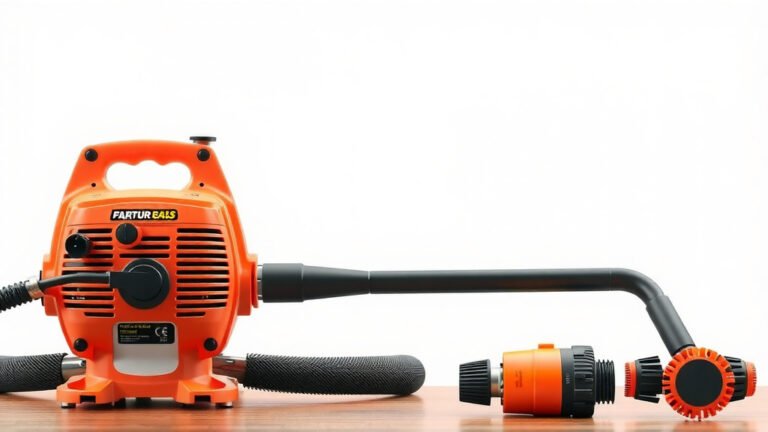
Most leaf blower brands sell a gutter cleaning attachment kit. These are curved plastic tubes that attach to your blower’s nozzle. They let you stand safely on the ground while directing the air right into the gutter. No ladder gymnastics needed.
We found these attachments also add extra length, so you can reach the center of your roof’s run without stretching. This is a safer and much more comfortable way to work.
The Dry Debris Rule of Thumb
Remember, dry is your friend. If you just had rain, wait two to three sunny days. The lighter the leaves, the farther they’ll fly. Wet debris will stick to the gutter walls no matter how strong your blower is.
Start at the downspout end and work backward. This way, you push the loose stuff away from the opening that needs to stay clear. It prevents re-clogging the downspout while you work.
A Practical Checklist for Blower Cleaning Sessions
We’ve developed a simple routine that works on most homes. Follow these steps each time you clean and your gutters will stay in great shape.
- Check the forecast. Pick a day that’s been dry for at least 48 hours.
- Clear the downspout first. Blow air up from the bottom to break any stubborn clog.
- Work from the far end toward the downspout opening.
- Use a firm angle. Aim the air slightly downward to lift the debris and push it out.
- Inspect the seams. While you’re out there, look for gaps where water could leak.
- Finish with a water test. Run a garden hose for a minute to check the flow.
This whole process takes about 15 minutes for an average-sized home. That’s a small time investment for major home protection.

Comparing Cleaning Methods and Their Timing
Leaf blowers are great, but they aren’t the only tool. Sometimes you might need to mix methods, especially if you’ve let the gutters go for a while. Here’s how the common methods stack up.
| Method | Best For | Ideal Timing |
|---|---|---|
| Leaf Blower | Dry, light debris and routine maintenance | Every 3-4 months |
| Gutter Scoop by Hand | Wet, packed, or muddy debris | As needed after heavy storms |
| Pressure Washer | Deep cleaning and removing stuck grime | Once a year in spring |
| Professional Service | High roofs, complicated gutter systems, or physical limitations | Twice a year |
We found that most homeowners rely on the leaf blower for their regular schedule. They save the hand scooping for spring, when the debris is often wet and clumpy. You can also use a shop vac with a wet/dry filter if you want to collect the debris instead of blowing it onto the lawn.
Protecting Your Home All Year Round
Sticking to a routine is the whole game. Whether you choose every two months or stick to the standard twice-a-year rule, consistency beats perfection.
Think of your gutters as the umbrella for your house. When that umbrella works, everything underneath stays dry and safe. When it leaks, the whole party gets ruined. A clean gutter system routes water away from your foundation, prevents basement flooding, and stops wood rot.
Your leaf blower is the perfect tool to keep that umbrella in working order. Just match your cleaning frequency to your tree situation and the season.
Set a reminder on your phone for late spring and late fall. If you have heavy tree cover, add that extra six-week check. Your future self, and your home’s foundation, will thank you.
Conclusion
Cleaning your gutters with a leaf blower is one of the fastest home maintenance wins you’ll find. Stick to a three to four month schedule, and always add extra cleanings if you have heavy tree cover. The dry-debris rule is your best friend. Wait for a few sunny days, then blow everything out toward the downspout end.
You don’t need to overthink this. Set two reminders on your phone: one for late spring and one for late fall. If you see water spilling over the edge, don’t wait for the calendar. Grab your blower and handle it right then. Fifteen minutes of work now saves you from thousands in foundation repairs later.
Frequently Asked Questions
Can I clean gutters with a leaf blower if the leaves are wet?
You can, but you’ll fight a losing battle. Wet leaves clump together and stick to the gutter walls like glue. Wait for two or three dry days before you start. If you absolutely must clean wet gutters, use a gutter scoop first, then finish with the blower.
Do I need a special attachment to blow leaves out of gutters?
You don’t need one, but it helps a lot. A gutter cleaning attachment lets you stand safely on the ground instead of balancing on a ladder. Most major blower brands sell them for under $30, and they snap on in seconds. We found they make the job about twice as fast.
Will a leaf blower damage my gutters or roof shingles?
No, not when you use it correctly. Keep the nozzle angled slightly downward and avoid pointing it up under the shingles. The air pressure is strong enough to move leaves but not strong enough to dent metal or crack PVC. Just avoid jamming the nozzle against the gutter walls.
How do I unclog a downspout with a leaf blower?
Start from the bottom and blow upward. This breaks up the clog and pushes it back into the gutter where you can blow it out. If that doesn’t work, use a garden hose with a high-pressure nozzle to flush it through. You may need to do this a couple of times if the clog is packed tight.
Is it better to blow gutter debris onto the ground or collect it?
Blowing it onto the ground is fine for most homes. You can rake it up afterward or leave it as mulch if it’s just leaves. For pine needles or heavy debris, consider using a shop vac with a wet/dry filter. That way you collect everything in one pass without raking.