Leaf Blower Comparison: 7 Key Specs to Check
To compare leaf blowers, you need to focus on four key specs: **air volume (CFM), air speed (MPH), power source, and noise level**. Air volume moves piles of leaves, while air speed cleans stuck-on debris and wet leaves off hard surfaces. We found that matching the blower to your yard size is the smartest first step before looking at any features.
You have three main power options today: **corded electric, battery-powered, and gas**. Each one trades off weight, power, and convenience. Battery power is great for small to medium yards, while gas still leads for heavy-duty cleanup. Your budget, your yard, and your tolerance for noise all play a part in the final decision.
- CFM (air volume) matters most for moving big piles of loose leaves on grass.
- MPH (air speed) matters most for clearing wet leaves, dirt, and debris from patios and driveways.
- Battery blowers are quiet and light, but run times are usually 15 to 30 minutes on high.
- Gas blowers offer maximum power and mobility, but they are heavy, loud, and need more maintenance.
- Corded blowers are cheap, light, and powerful, yet the cord limits your range.
Let’s walk through each spec and comparison point so you can pick the perfect leaf blower for your property, your neighbors, and your back.
Comparing Leaf Blowers the Smart Way
You can compare leaf blowers like a pro by looking at three numbers and one big question. The numbers are CFM, MPH, and decibels (dB). The big question is: where does the power come from?
Once you know what those specs mean for your yard, the choice becomes much easier. You will not need to be an engineer to figure it out.
Why CFM and MPH Matter More Than Horsepower
Forget about engine size or motor wattage for a second. The two numbers that tell you how a blower performs are CFM and MPH. We found that these two specs work together like a garden hose and your thumb.
CFM (cubic feet per minute) is the volume of air moving. Think of it as the amount of water coming out of the hose. High CFM means you can push a giant pile of oak leaves across the grass without stopping.
MPH (miles per hour) is the speed of that air. Think of it as the pressure when you cover the hose with your thumb. High MPH helps you blast wet leaves off a patio or clean out a flower bed crack.
You want a balance of both. A blower with high CFM but low MPH will struggle with stuck-on debris. One with high MPH but low CFM will just blow a narrow stream and take forever on a big lawn.
The 10:1 Rule for Yard Size
Many experts say a good rule of thumb is to match your blower to your yard size. For a small city lot, you do not need a commercial-grade machine.
- Small yard (under 1/4 acre): Look for 350 to 400 CFM.
- Medium yard (1/4 to 1/2 acre): Look for 400 to 500 CFM.
- Large yard (over 1/2 acre): Look for 500+ CFM and higher MPH.
This simple starting point saves you money and back pain. You only buy the power you actually need.
Weighing Your Power Source Options
Your choice of power source decides everything else: weight, noise, and how long you can work. There is no single best option for everyone. It depends on your tolerance for cords, batteries, and fumes.
Battery-Powered Leaf Blowers
Battery blowers are the fastest-growing category in the market. We found that most homeowners prefer them because they start instantly and need zero maintenance. No gas, no oil, no pull cords.
The trade-off is run time. Most battery blowers run for 15 to 30 minutes on high speed. If you have a big yard, that means buying a second battery or two.
Battery voltage matters, but not the way you think. A 40V blower is not automatically better than a 20V one. Look at the CFM and MPH numbers instead of the voltage sticker.
Best for: Small to medium yards, quiet neighborhoods, and anyone who hates engine maintenance. They are also the lightest option, which helps your arms and shoulders.
Runtime Reality Check
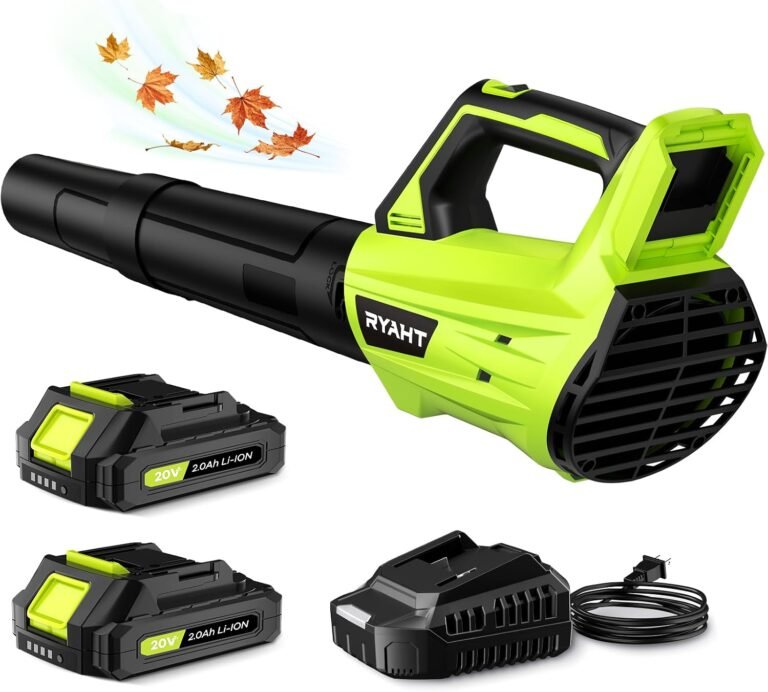
Here is a common mistake we see: people buy a battery blower with a great CFM rating, but the battery dies in 12 minutes. Check the amp-hour (Ah) rating on the battery too.
A 2.0 Ah battery will die much faster than a 5.0 Ah battery. If you have a medium yard, look for a kit that includes a larger battery. Or budget for an extra one.
Corded Electric Leaf Blowers
Corded blowers are the budget-friendly workhorses. They deliver consistent power as long as you are within reach of an outlet. No battery anxiety, no gas fumes, and they cost much less than their battery cousins.
The cord is the catch. You will fight with it around trees, fences, and flower beds. You will also need a heavy-duty extension cord rated for outdoor use.
Best for: Small yards close to the house, patios, garages, and driveways. If you only need to blow off a deck and a small front walkway, this is your cheapest reliable option.
Gas-Powered Leaf Blowers
Gas blowers still lead in raw power and run time. If you have a large property with lots of trees, a gas backpack blower can save you hours of work. They also let you roam anywhere without a cord or a charging station.
The downsides are real. Gas blowers are heavier, louder, and require regular maintenance. You will mix oil and gas (for 2-stroke models), replace spark plugs, and deal with ethanol fuel going bad.
Many guidelines point to the noise issue as a big factor for neighbors and local ordinances (CDC). Some cities have even restricted gas blower usage during certain hours.
Best for: Large yards, heavy wet leaves, and professional-grade cleanup. If you have an acre of oak trees, a gas backpack blower is still the king of the hill.
Noise Levels: A Real Neighbor Problem
Leaf blowers are loud. That is not an opinion; it is a measured fact. We found that gas blowers often hit 90 to 100 decibels, while battery blowers typically run between 55 and 70 decibels.
Hearing damage happens with prolonged exposure to sounds above 85 decibels (CDC). That means running a gas blower for an hour without hearing protection is genuinely risky for your ears.
Noise is also the number one reason neighbors complain. If you live in a tight neighborhood, a quiet battery blower might save you from awkward conversations at the fence line.
Look for the decibel rating (dB) on the box. Many manufacturers now list it clearly. A difference of 10 dB sounds like twice as loud to your ears, so pay attention to that number.
Weight and Ergonomics: Your Back Will Thank You
Leaf blowers can weigh anywhere from 4 pounds to over 20 pounds. That weight matters a lot when you hold it for an hour. We found that most people underestimate how tiring a heavy blower is.
Battery handheld blowers usually weigh 5 to 7 pounds. Corded blowers are often similar or slightly lighter. Gas handheld blowers push 10 to 12 pounds. Gas backpack blowers put the weight on your shoulders, which is easier on your arms but still adds up.
Try the “one-hand test” in the store. If you cannot comfortably hold the blower with one hand for 30 seconds, it will feel terrible after 30 minutes of work.
Look for padded handles and vibration dampening. These features reduce fatigue and keep your hands from going numb. Your back and wrists will appreciate the investment.
Comparing the Key Specs Side by Side
When you are staring at two similar blowers, put them in a simple comparison. Here is a quick table to help you evaluate what matters most for your situation.
| Feature | What It Does | What to Look For |
|---|---|---|
| CFM (Air Volume) | Moves piles of loose leaves | 400+ for medium yards |
| MPH (Air Speed) | Cleans wet leaves and debris | 120+ for hard surfaces |
| Decibels (dB) | Noise level | Under 70 dB for quiet use |
| Weight | Fatigue factor | Under 8 lbs for handheld |
| Run Time (Battery) | How long you can work | 20+ minutes on high |
Use this table when you are comparing two models side by side. Write down the numbers and be honest about what you value most.
Extra Features Worth Paying For
Not every feature is a gimmick. Some add real convenience and save you time. Others are just marketing fluff that bumps the price.
Variable Speed Triggers
A variable speed trigger lets you control the airflow with your finger. This is great for delicate jobs like blowing leaves off flower beds or cleaning out a garage without scattering everything.
Many experts say this feature is worth the extra money. It gives you precision that a fixed-speed blower simply cannot offer.
Turbo Boost Mode
Some blowers have a turbo button that gives you a short burst of maximum power. It is perfect for dislodging that one stubborn wet leaf stuck to the driveway. Just remember that turbo mode drains batteries fast.
Flat Nozzle vs. Round Nozzle
Flat nozzles concentrate the air into a wider, flatter stream. They are excellent for sweeping debris off hard surfaces like sidewalks and patios. Round nozzles are better for deep piles of leaves.
Some blowers come with both nozzles included. If you have a mix of grass and paved surfaces, that is a nice bonus.
Vacuum and Mulch Attachments
If you want to clean up leaves instead of just moving them, look for a blower that converts to a vacuum. These attachments shred the leaves into mulch that you can collect in a bag for compost.
This feature adds weight and complexity, but it replaces a separate leaf vacuum. If you have a small yard with many flower beds, this 2-in-1 option might be perfect.
Your Pre-Purchase Comparison Checklist
Before you buy, run through this quick checklist. It keeps you honest and prevents you from falling for flashy marketing.
- Measure your yard and estimate your cleanup time.
- Check your city’s noise ordinances for gas restrictions.
- Write down the CFM and MPH of each candidate model.
- Confirm the battery run time matches your yard size.
- Lift the blower in the store to test the weight.
- Check if you already own batteries from other tools.
That last point is a big one. If you already have a drill or trimmer from a brand like Ryobi, DeWalt, or EGO, buying a blower that uses the same battery saves you a lot of money.
Matching the Blower to Your Specific Yard
Your yard has unique challenges. Think about what you are actually cleaning up every week before you compare specs.
Do you have large oak trees that drop thousands of leaves? You need high CFM to move those piles efficiently. Do you have a long concrete driveway that gets covered in pine needles? You need high MPH to blast them off the hard surface.
Do you have narrow spaces between fences and shrubs? A lighter, more maneuverable blower will serve you better than a heavy monster with more power.
We found that asking these simple questions first makes the spec sheet much easier to read. You will know which numbers to prioritize and which ones you can ignore.
Take your time and compare the numbers. A little research now saves you a lot of frustration (and aching arms) later.
Conclusion
Comparing leaf blowers comes down to matching the specs to your yard. You now know that CFM moves piles, MPH cleans hard surfaces, and the power source shapes your daily experience.
Start with your yard size to set a target CFM range. Then choose a power source that fits your tolerance for noise, cords, and maintenance. Write down the numbers for your top two models and compare them side by side.
Your next step is simple. Measure your yard, check your local noise rules, and test the weight of a few blowers at your local hardware store. A little effort now means easier cleanup all season long.
Frequently Asked Questions
Is a higher CFM always better for a leaf blower?
Not always. Higher CFM moves more air, which helps with big piles of leaves on grass. But a very high CFM blower is often heavier and drains batteries faster.
Match the CFM to your yard size. You want enough power to get the job done, but not so much that you are carrying extra weight or paying for power you will not use.
What is the difference between a leaf blower and a leaf vacuum?
A leaf blower pushes air out to move leaves. A leaf vacuum pulls leaves in and shreds them into a collection bag. Many 2-in-1 models switch between both functions.
If you want to collect leaves for compost or disposal, a vacuum attachment is useful. If you just want to clear your lawn, a standard blower is lighter and easier to handle.
Can I use a leaf blower on wet leaves?
Yes, but you need a blower with high MPH. Air speed is what dislodges wet leaves from hard surfaces like patios and driveways. High CFM alone will not do the trick.
For wet leaves on grass, you may need to wait for them to dry. Wet leaves are heavy and clump together, making them hard for any blower to move efficiently.
How long should a leaf blower battery last?
Most battery blowers run 15 to 30 minutes on high speed. The runtime depends on the battery’s amp-hour (Ah) rating. A 5.0 Ah battery lasts much longer than a 2.0 Ah battery.
For a medium yard, look for a kit that includes a larger battery. You can also buy a spare battery so you can swap them out and keep working.
Do I really need hearing protection for a leaf blower?
Yes, especially with gas blowers. Many gas models reach 90 to 100 decibels, which can damage your hearing with prolonged exposure. Battery blowers are quieter, often under 70 decibels.
Wearing ear protection is a smart habit. Even with a quieter battery blower, protecting your ears is better than risking long-term hearing loss.