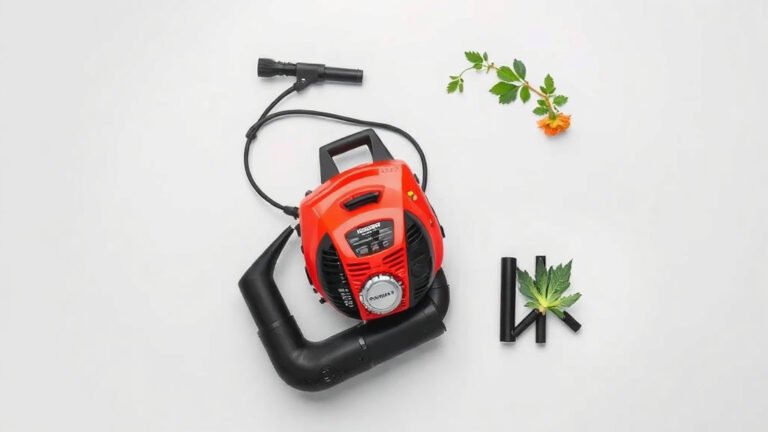
How to Start an Echo Leaf Blower: Easy Steps
The fastest way to start an Echo leaf blower is to slide the choke lever to the cold start position (or full choke), press the primer bulb 5 to 10 times until fuel is visible, and then pull the starter cord firmly. Once the engine sputters or tries to start, move the choke to the run position and give it another pull. Follow this exact sequence for a reliable start every time.
Echo makes some of the most reliable gas leaf blowers on the market, but their starting procedure can feel tricky if you do not know the steps. The key is managing the choke and primer bulb correctly. We found that most starting problems come from skipping the primer or leaving the choke on too long. Whether you have an Echo PB-250, PB-580, or a newer model, the cold start process is very similar. Knowing these simple steps will save you time and frustration in the yard.
- Prime the engine: Press the primer bulb 5 to 10 times. You are done when you see gas moving inside the bulb.
- Set the choke: For a cold engine, move the choke lever to the fully closed (cold start) position.
- Pull the cord: Give the starter rope a few sharp pulls until the engine “pops” or tries to start.
- Adjust the choke: Slide the choke to the halfway or run position. Pull again to start the engine fully.
- Warm up: Let the blower idle for a few seconds to warm up before squeezing the throttle.
Below, we break down every step in detail, including what to do for a warm engine and how to fix common issues like flooding. Let us walk you through the process so you can get back to clearing leaves quickly.
Mastering the Cold Start on Your Echo Blower
Getting an Echo leaf blower started on a cold morning is all about the fuel and the choke. The engine needs a slightly richer fuel mixture when it is cold. The choke and primer bulb work together to create that mixture inside the carburetor. If you skip these steps, the engine simply will not fire up.
We found that the simplest way to think about it is like warming up a car in the winter. You need to give it a little extra gas to get going. The primer bulb pushes fuel into the carburetor. The choke blocks the air intake so the engine sucks in more gas and less air. Once it starts, you open the choke to let it breathe normally.
Locating the Controls on Your Specific Echo Model
Before you pull that cord, take a quick look at your blower. Even though the process is similar, the controls might be in different spots on different models. The choke is usually a small lever near the air filter cover. The primer bulb is a soft rubber button, often right next to the choke. On many Echo models, the choke positions are labeled with icons. You will see a closed circle for cold start and an open circle for run.
Some newer Echo blowers have a multi-function switch instead of a separate choke lever. This switch has three settings: Cold Start, Run, and Stop. If you have this type, simply rotate the switch to the Cold Start position. The process after that is exactly the same. Check your owner’s manual if you have trouble finding the controls on a specific model like the PB-250 or PB-580.
Pumping the Primer Bulb the Right Way
The primer bulb is your best friend on a cold morning. Press it down and release it firmly. This action pulls liquid fuel into the carburetor. You should see fuel moving through the little plastic lines connected to the bulb. That is how you know it is working.
For a truly cold engine, press the bulb 5 to 10 times. We found that pressing it exactly 7 times works well for most temperatures. If the weather is freezing, push it closer to 10 times. If it is just a bit cool, 5 presses might be enough. The goal is to see fuel in the bulb and in the lines. Do not overdo it, or you will flood the engine.
What Happens if You Skip the Primer?
If you skip the primer, you will be pulling that cord until your arm hurts. The carburetor will only have air, not fuel. The engine will not pop, and it will not start. It is the most common mistake we see with gas blowers. Always prime a cold engine. It takes two seconds and saves you a lot of frustration.
Setting the Choke to the Closed Position
Once the carburetor is full of fuel, engage the choke. Move the lever to the full cold start position. This closes the choke plate inside the carburetor. It restricts the airflow, creating a vacuum. That vacuum sucks extra fuel from the carburetor into the engine cylinder.
This rich fuel mixture is what the engine needs to fire when it is cold. Do not start pulling the cord with the choke in the run position. You will be pulling for a long time with no results. We recommend checking the choke position twice before you pull. It is easy to miss the detent on the lever and think you have it closed when you do not.
Pulling the Starter Cord for the First Fire
Now you are ready to pull. Grab the handle and give it a sharp, smooth pull. Do not yank it as hard as you can, and do not pull it out all the way. You want a quick, steady motion. The engine should “pop” or “sputter” after the first few pulls. This sound means the engine is trying to start, but the choke is still closed.
We found that you should pull the cord no more than 4 to 6 times before you adjust the choke. If it has not tried to start by then, stop, check the choke, and re-prime. Pulling too many times with the choke closed will flood the engine. That leads to a frustrating situation where you have to wait for the fuel to evaporate.
Moving the Choke to the Run Position
This is the trickiest step for most people. As soon as the engine pops, move the choke to the run position. On a standard lever, that is the open position. On a multi-function switch like the recommended start positions, slide it to the half-choke position first, then to run. If you leave the choke closed, the engine will start for a second and then die because it is getting too much fuel and not enough air.
After you adjust the choke, give the cord one or two more pulls. The engine should roar to life. If it does not, move the choke back to the cold start position and try again. Sometimes, especially in cold weather, it takes two attempts. Once it is running, let it idle for a few seconds before you squeeze the trigger.
Warming Up the Engine Before Heavy Use
Let the blower run at an idle speed for about 10 to 15 seconds. This allows the engine to reach a normal operating temperature. If you immediately squeeze the throttle to full speed, the engine might stall. We recommend letting it settle into a smooth idle first.
This warm-up period also helps with the lubrication. The oil in the gas mixture needs to circulate through the engine components. A short warm-up prevents excessive wear. It is a good habit to form, even in the middle of summer. You will find that the blower runs smoother and has more power if you let it warm up first.
Starting a Warm or Hot Echo Blower Quickly
If you just shut the blower off for a quick break, it is still warm. The starting procedure is almost the same, but the choke position is different. A warm engine does not need that extra rich mixture. The carburetor still has fuel in it from the last run.
We found that the fastest way to restart a warm Echo blower is to skip the full cold start position. Follow these simple steps for a quick restart.
- Do not press the primer bulb.
- Set the choke to the halfway position or the run position.
- Pull the cord two or three times firmly.
- If it does not start on the first pull, give it 3 or 4 more pulls.
If you set the choke to the run position and it does not start after 5 pulls, it might be cold after all. In that case, use the cold start procedure. It does not hurt to give the primer one or two presses to refill the carburetor.
The Half-Choke Trick for Restarts
Many Echo models have a half-choke setting. It is usually a detent between full cold and run. This setting is perfect for a warm engine that has cooled down a little. It provides a slightly rich mixture without flooding the engine. If your blower has this setting, use it for your first pull after a break.
We have found that using the half-choke position cuts down on the number of pulls needed. It balances the air and fuel well. If you have been running the blower for a while and it dies, this is the setting you want. It revives the engine quickly without the hassle of the full cold start process.
Troubleshooting a Flooded Echo Leaf Blower
We all do it. You press the primer too many times. Or you pull the cord 10 times with the choke closed. The engine is now flooded. This means there is too much liquid fuel and not enough air in the cylinder to ignite. The spark plug gets wet, and the engine is physically unable to fire.
Here is the bad news: you cannot just pull harder. You have to clear the excess fuel. The fix is simple, but it requires patience. Follow this process to clear a flooded engine.
Clearing the Flood Quickly and Safely
Set the choke to the full run position. This opens the choke plate completely, allowing maximum airflow. Next, hold the throttle trigger all the way down. Many Echo models have a throttle lock, so you can lock the trigger in the wide-open position. This is crucial for clearing the cylinder.
Now, pull the starter cord 10 to 15 times. You are not trying to start it yet. You are just pumping air through the engine to dry out the spark plug and push out the liquid fuel. We found that after this, it is best to stop and wait a few minutes. Let the fuel evaporate from the cylinder walls.
After a short wait, take out the spark plug if you can. Check if it is wet. If it is, dry it off with a clean rag. Put the plug back, keep the throttle locked open, and pull the cord 5 to 6 times. It should start. If it does not, the plug might be fouled beyond saving, and you may need a replacement.
How to Prevent Flooding in the Future
Prevention is easier than the fix. You just need to watch your technique. We recommend counting your primer pumps out loud. It sounds silly, but it stops you from overdoing it while you are rushing. Stick to the recommended 5 to 10 pumps.
Also, respect the “pop”. The moment the engine pops, change the choke. That is the signal. If you ignore it and keep pulling, you are asking for trouble. The engine is trying to tell you it is ready. Listen to it, and you will rarely have a flooded blower.
Quick Start Checklist for Your Echo Blower
Here is a quick checklist to keep in mind. Print this out or save it to your phone. It covers the essentials for both cold and warm starts. You will be starting your blower like a pro in no time.
- Fuel Check: Ensure you have fresh 50:1 gas mixed with quality 2-cycle oil.
- Switch Position: Verify the power switch is in the “ON” or “I” position.
- Primer Bulb: Press the bulb 5 to 10 times until fuel appears in the lines.
- Choke Closed: Move the choke lever to the cold start position for a cold engine.
- Pull to Pop: Pull the cord 4 to 6 times until you hear the engine sputter.
- Choke to Run: Slide the choke to the run position and pull again to start.
Understanding Different Echo Models and Settings
Echo makes a wide range of blowers, from the light PB-250 to the backpack PB-580 and the heavy-duty PB-770. The basic start procedure is the same across the lineup. However, we found that some specific models have unique quirks that are worth knowing about before you start pulling.
For example, the PB-580 has a large engine and can handle a higher primer count. The PB-250, being a smaller engine, needs less fuel in the carburetor to start. It makes sense if you think about the size of the engine. A bigger engine cylinder needs a bigger squirt of fuel to get going.
i-30 Starting System vs. Traditional Choke
If you have a newer Echo model, it might have the i-30 starting system. This is a decompression valve that releases pressure in the cylinder. It makes pulling the cord much easier. The effort reduction of up to 30% means you do not need to pull as hard. This system is a no-brainer for anyone with less upper body strength or who struggles with pull cords. It also reduces the chance of the rope kicking back and hurting your shoulder.
If your model does not have this feature, the Pull and Go system is not present. You will just have to use proper technique. Make sure you are pulling in a smooth, straight line. Do not pull the cord at an angle. Pulling at an angle causes friction on the pulley and makes the pull harder than it needs to be. Always keep the cord aligned with the guide.
Adjusting the Choke Lever Positions
On models with a dedicated choke lever, you will notice distinct clicks as you move it. The click at the end is full cold start. The next click down is half-choke. The final click is the run position. We recommend using these detents to your advantage.
By using the intermediate half-choke setting, you can fine-tune the fuel mixture as the engine warms up. Start with the full choke, move to half-choke right after it pops, and then to run. This gradual process allows the engine to build up enough heat to run smoothly on a normal air-to-fuel ratio.
Conclusion
You now have the complete system for starting your Echo leaf blower. The process boils down to three simple actions: prime the bulb, close the choke for a cold engine, and pull until it pops. Then you switch the choke to run and fire it up. That sequence works for nearly every model, from the PB-250 to the PB-580. For a broader look at top-performing models, our guide to the best backpack leaf blowers covers the leading options.
We want you to walk away feeling confident, not frustrated. There is no mystery to it. For a warm restart, skip the primer and use half-choke. If you flood it, open the throttle and pull until it clears. Take this knowledge and get out there. Your yard is not going to rake itself. Grab that blower and give that cord a confident pull. You have got this.
Frequently Asked Questions
Why does my Echo leaf blower start then die immediately?
This usually means you left the choke closed after the engine popped. The engine fires, but then it chokes itself out from too much fuel and not enough air. Move the choke to the run position as soon as you hear it sputter. If it still dies, check that your fuel is fresh and properly mixed at 50:1.
How many times should I pull the cord on a cold Echo blower?
You should hear the engine pop or try to start within 4 to 6 pulls. If you hit 7 pulls with no sign of life, stop and check your settings. You might not have primed enough, or the choke might not be fully closed. Pulling more than that with the choke closed will flood the engine.
Can I use starting fluid on an Echo leaf blower?
You should avoid using starting fluid on any 2-cycle engine. Echo blowers rely on a specific oil and gas mix for lubrication. Starting fluid washes that oil off the cylinder walls, which can cause serious damage. If your blower will not start, it is a fuel, spark, or choke issue. Fix the root cause instead of masking it with starting fluid.
Why does my Echo blower only run with the choke half closed?
That is a classic sign of a clogged carburetor or dirty air filter. When the choke is closed, it creates a richer mix that masks the fuel starvation. The engine needs that extra fuel to compensate. We recommend cleaning the air filter first. If that does not help, the carburetor likely needs to be cleaned or rebuilt.
Should I squeeze the throttle while pulling the starter cord?
For the initial cold start, keep your hand off the throttle. The choke and primer do the work for you. Squeezing the throttle during the first pull opens the carburetor and ruins the vacuum you need. Once the engine is running and warmed up, you can use the throttle freely.