Leaf Blower Power Guide: What CFM and MPH Do You Need
For most yards, a leaf blower with 400 to 600 CFM (air volume) and 90 to 110 MPH (air speed) is all you need. That power level handles dry leaves on small to medium properties without tiring you out. If you have a huge yard with wet, heavy leaves, you will want to step up to a commercial-grade model with over 700 CFM.
Choosing the right power isn’t just about the numbers on the box. It is about matching the tool to your specific yard size, the type of debris you deal with, and whether you prefer a corded, battery, or gas model. We found that buying too much power wastes money and makes the blower heavier, while buying too little means you will be fighting the machine all season.
- Yard size matters most: Under 1/4 acre? A 400 CFM handheld works fine. Over 1 acre? Look for 600+ CFM.
- Air speed vs. volume: Speed (MPH) moves wet leaves; volume (CFM) moves piles of dry leaves. Balance both.
- Battery limits power: Cordless models top out around 450 CFM for handhelds, so you may need a backpack for more.
- Wet leaves are heavier: Plan on needing at least 100 MPH to shift damp debris effectively.
- Your comfort is key: A 20-pound backpack blower is easier on your arms than a 12-pound handheld.
Below, we break down the exact power specs for every yard type, plus a simple checklist to help you pick the right blower in minutes. Let’s get your yard clean without the guesswork.
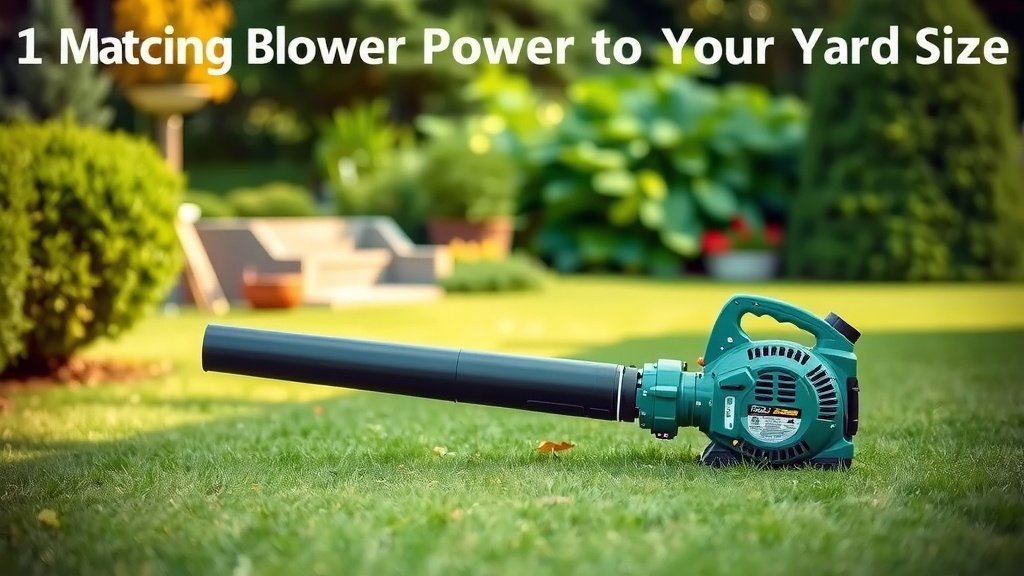
Matching Blower Power to Your Yard Size
The quickest way to figure out the power you need is to look at your lawn. We found that yard size is the single best predictor of the CFM and MPH you should shop for. A small patio needs a different machine than a multi-acre property.
Think of it like a garden hose. A small nozzle can spray water far, but it cannot fill a pool quickly. A big hose moves lots of water, but the stream is softer. Leaf blowers work the same way with air.
Small Yards Under a Quarter Acre
If you have a townhome or a small city lot, you do not need a monster machine. A handheld blower with 350 to 450 CFM is plenty. This power level easily moves leaves off a driveway, patio, and small grass strip.
You will also enjoy the lighter weight. Most blowers in this range weigh between 6 and 9 pounds. You can finish the job in 15 minutes without breaking a sweat.
For this yard size, a corded electric model works great. You never worry about battery life. You just plug in and go. Many experts say corded models also give you consistent power without fading (Consumer Reports).
Medium Yards Between a Quarter and Half Acre
This is the most common yard size in the US. For this space, you want 450 to 550 CFM and 100+ MPH. This power handles dry leaves on grass and hard surfaces with ease.
Battery-powered handhelds shine here. Modern 40V and 60V models from major brands deliver this power range. You get freedom from cords and enough runtime for a typical session.
We found that most homeowners in this category are happy with a brushless motor. It lasts longer and gives you more torque. Look for a blower with at least a 2.5 Ah battery so you do not run out halfway.
Large Yards Over Half an Acre
Here is where you need serious power. A backpack blower with 600 to 800 CFM is your best friend. The backpack design spreads the weight across your shoulders and back, so you can work longer.
Gas models dominate this category. They produce the raw power needed to move wet leaves and heavy debris. You will also appreciate the variable throttle control for delicate areas like flower beds.
Battery backpack blowers are catching up fast. Some now hit 700 CFM with dual batteries. They cost more upfront but save you money on fuel and maintenance over time.
Air Speed Versus Air Volume
You will see two numbers on every box: CFM and MPH. Both matter, but they do different jobs. Understanding the difference saves you from buying the wrong tool.
CFM (Cubic Feet per Minute) measures air volume. This number tells you how much air the blower pushes. Higher CFM means you can move big piles of leaves quickly.
MPH (Miles per Hour) measures air speed. This number tells you how fast the air moves. Higher MPH helps you dislodge wet leaves stuck to the ground or debris wedged in cracks.
When MPH Matters More
Wet leaves are heavy and cling to grass. You need at least 110 MPH to break them loose. The speed creates a focused jet of air that lifts and separates the leaves.
You also want high MPH for cleaning hard surfaces. Think driveways, sidewalks, and patios. The fast air blasts dirt, grass clippings, and small stones out of crevices.
One thing we noticed: many affordable blowers advertise high MPH but low CFM. That is fine for small jobs. But for large piles, you will get frustrated with the slow progress.
When CFM Matters More
For moving big piles of dry leaves, CFM is the king. The sheer volume of air acts like a bulldozer. It sweeps leaves across the lawn in wide swaths.
Think of CFM as the width of your push broom. More CFM means a wider sweep with each pass. This cuts your work time significantly on open grass areas.
Many professionals recommend a ratio of roughly 4:1 for CFM to MPH. A blower with 600 CFM and 150 MPH is well-balanced. It handles both dry piles and stubborn wet spots.
Power Source Limits You Should Know
Your choice of power source affects how much power you can actually get. Each type has a ceiling. We found that knowing these limits prevents disappointment at the store.
Corded Electric Blowers
Corded models offer unlimited runtime but limited mobility. They typically max out around 400 CFM and 130 MPH. That is enough for small and medium yards.
The big advantage is consistent power. You never deal with a dying battery or a fading motor. The trade-off is dragging a cord around trees and bushes.
If you buy a corded blower, get a 12-gauge extension cord. Thinner cords lose power over distance. A 50-foot cord gives you decent reach without voltage drop.
Battery Powered Blowers
Battery technology has improved a lot. Modern handheld models reach 450 to 500 CFM easily. Backpack models now hit 700 CFM with larger batteries.
The main limit is runtime. Most batteries last 20 to 40 minutes under heavy load. If you have a big yard, buy a second battery or choose a dual-battery system.
Cold weather also drains batteries faster. Research from the Department of Energy shows lithium-ion batteries lose capacity in freezing temperatures. Plan for shorter runtimes in winter.
Gas Powered Blowers
Gas still wins for raw power. Handheld models deliver 500 to 600 CFM. Backpack models go up to 900 CFM. No battery can match that output yet.
The downsides are real though. Gas blowers are louder, heavier, and need more maintenance. You also deal with fuel mixing for two-stroke engines.
If you have over an acre or deal with heavy wet leaves, gas is the practical choice. The power difference is dramatic on tough jobs.
Debris Type and Seasonal Conditions
Your specific debris changes your power needs. Light pine needles are easy. Heavy oak leaves in November are a different story. Match the tool to your worst-case scenario.
Light Debris Like Grass and Dust
For grass clippings, dust, and light pine needles, 300 to 400 CFM is enough. You mainly need to sweep surfaces clean. High speed helps here more than volume.
This is where corded blowers really shine. They give you steady power for quick touch-ups. You can clean the driveway in minutes without gassing up.
Many people use a blower for garage and workshop cleaning too. A compact model with a concentrator nozzle works great for reaching corners and shelves. For more on using your blower beyond the yard, see our guide to cleaning gutters with a leaf blower.
Dry Leaves and Acorns
Dry leaves need moderate volume. Aim for 450 to 550 CFM. This range lets you push large piles without exhausting yourself.
Acorns and small twigs require higher speed to knock loose. Look for at least 100 MPH. The fast air dislodges them from grass and gravel.
We found that a variable speed trigger is essential here. You want full power for piles but lower speed for delicate areas. This control prevents damage to mulch and flowers.
Wet Leaves and Heavy Debris
Wet leaves can double or triple in weight. Research from the Arbor Day Foundation confirms that wet foliage clumps and sticks together. You need serious power to break the clumps.
Go for 600+ CFM and 110+ MPH if wet leaves are common in your area. Backpack gas blowers are ideal. The extra weight and power make short work of soggy piles.
If you must use a battery blower for wet leaves, pick the most powerful one you can find. You will need every bit of that motor to get the job done.
Ergonomics and Weight Considerations
Power is useless if you cannot hold the machine. A heavy blower causes fatigue and strain. Your comfort should be part of the power equation.
Handheld blowers weigh between 6 and 12 pounds. Holding that weight at arm’s length gets tiring fast. Your arms and shoulders take the brunt of the load.
Backpack blowers distribute weight across your back and hips. A 20-pound backpack feels lighter than a 10-pound handheld. This design lets you work longer without pain.
Research from the National Institute for Occupational Safety and Health (NIOSH) warns about repetitive strain from extended tool use. The right ergonomics reduce your injury risk.
Handheld Blowers for Short Sessions
If you spend under 20 minutes blowing leaves, a handheld works fine. The weight is manageable for short bursts. You also get easier storage and lower cost.
Look for models with padded grips and anti-vibration features. These small touches make a big difference in comfort. Test the weight in the store before buying.
Backpack Blowers for Extended Use
For 30 minutes or more of continuous work, go backpack. The design spreads the load so you can work all day. Professional landscapers rarely use anything else.
Backpack blowers also offer better balance. The weight sits close to your body, reducing strain on your arms. This means less fatigue and better control.
Noise Levels and Neighborhood Etiquette
Blowers are loud. Gas models can hit 100+ decibels. That is enough to cause hearing damage with prolonged exposure. The CDC recommends hearing protection above 85 decibels.
Battery and corded blowers are significantly quieter. Most operate around 60 to 70 decibels. That is about the level of a normal conversation or a dishwasher.
Check your local noise ordinances. Many cities restrict blower use to certain hours. Early morning or late evening use can earn you fines from the city.
Simple Power Checklist Before You Buy
Use this quick checklist when you are comparing models. It covers the essential specs and features you should verify before spending your money.
- Yard size match: Confirm the CFM rating fits your square footage. Small yards need 400 CFM; large yards need 600+.
- MPH for wet leaves: Choose at least 100 MPH if you deal with damp debris or hard surfaces.
- Battery runtime: Check the advertised runtime and buy extra batteries if you have a big yard.
- Weight and balance: Hold the blower and test the weight. Choose a backpack model for longer sessions.
- Noise level: Look for the decibel rating and pick a quieter model if you have close neighbors.
- Warranty and support: Verify the warranty covers the motor and battery for at least two years.
Power Comparison Table
This table summarizes the ideal power ranges for common scenarios. Use it as a quick reference when you shop.
| Scenario | CFM Range | MPH Range | Recommended Type |
|---|---|---|---|
| Small patio or balcony | 200-350 | 90-110 | Corded handheld |
| Small yard (under 1/4 acre) | 350-450 | 90-110 | Corded or battery handheld |
| Medium yard (1/4 to 1/2 acre) | 450-550 | 100-120 | Battery or gas handheld |
| Large yard (over 1/2 acre) | 600-800 | 110-140 | Backpack gas or battery |
| Wet leaves and heavy debris | 600+ | 110+ | Backpack gas |
Making Your Final Decision
Conclusion
You do not need the most powerful blower on the shelf. You need the right one for your yard. Match the CFM and MPH to your property size, the debris you face, and how long you plan to work.
For most homeowners, a handheld blower with 400 to 550 CFM gets the job done. Upgrade to a backpack model with 600+ CFM if you have a large yard or deal with wet leaves. Remember to balance power with weight and noise.
Your next step is simple. Measure your yard, check the specs on a few models, and test the weight in person. Pick the blower that feels comfortable and fits your worst-case cleanup job. That is the one you will actually enjoy using all season.
Frequently Asked Questions
Is a 400 CFM leaf blower strong enough?
Yes, for most small to medium yards. A 400 CFM blower moves dry leaves off driveways, patios, and small lawns without trouble. You will only struggle with large piles of wet leaves or extended use on big properties.
What is the difference between 500 CFM and 600 CFM?
The 100 CFM difference gives you roughly 20% more air volume. That extra power moves leaves faster and handles slightly wetter debris. It also lets you work from farther away, so you do not have to walk as close to the pile.
Does higher MPH mean a better leaf blower?
Not always. High MPH helps dislodge wet leaves stuck to grass, but low CFM with high MPH makes slow work of big piles. You want a balanced blower with both numbers in a sensible range for your yard size.
Can I use a leaf blower for snow?
Yes, but only light, fluffy snow. You need a blower with at least 400 CFM and 100 MPH to move powder effectively. Heavy or wet snow will stall most handheld blowers, so a snow shovel is still the better tool for those days.
How long should a leaf blower battery last per charge?
Most batteries run 20 to 40 minutes under full load. Light duty around a patio can stretch that to an hour. If you have a medium yard, buy a second battery or look for a dual-battery backpack model so you do not run out halfway.