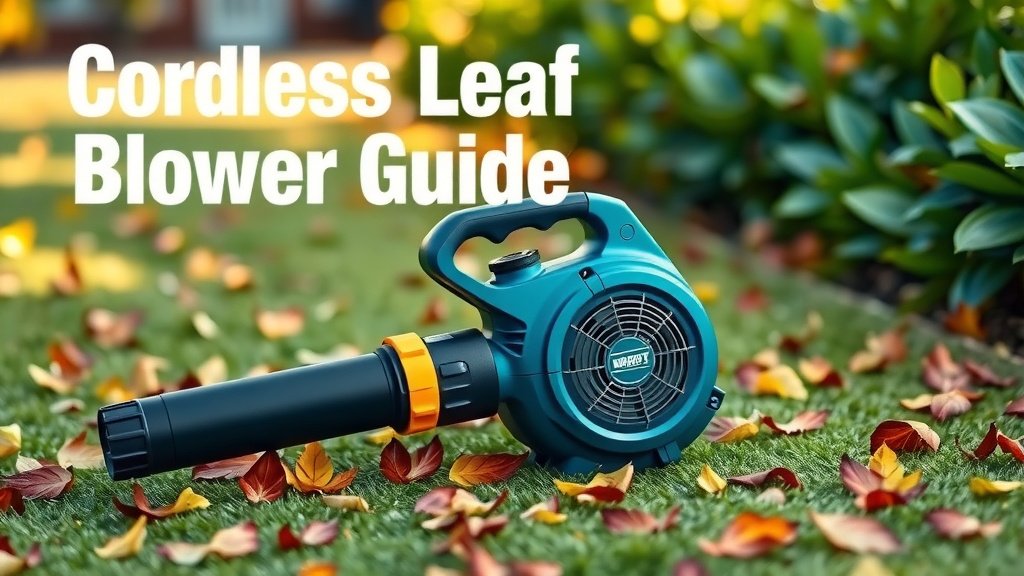
Cordless Leaf Blower Buying Guide: 7 Features That Matter
To choose the right cordless leaf blower, you need to match the tool’s power and battery life to your yard’s size. The best place to start is by checking the voltage and CFM (air volume), as these numbers tell you how strong the air blast is. If you have a small yard, a 20V model works fine, but for larger properties, you’ll want a 40V or 60V blower to get the job done.
Beyond raw power, you also have to think about the battery system and your own comfort. We found that runtime, battery type, and overall weight are the top factors that decide if you’ll actually enjoy using the tool. A heavier blower might be powerful, but it can wear out your arms quickly, so look for balanced designs and consider a backpack battery if you have a big lawn.
TL;DR — Here’s the quick breakdown for buying a cordless leaf blower:
- Match power to yard size: Small yards need about 20V-40V; large yards need 60V or more.
- Check CFM over MPH: CFM (air volume) moves piles of leaves, while MPH (speed) helps with wet leaves.
- Look at battery amp-hours (Ah): A higher Ah means longer runtime, but it also adds weight.
- Stick with one battery platform: Buying the same brand as your other tools saves money and flexibility.
- Consider the noise level: Most cordless blowers are quieter than gas models, but decibel ratings still matter for your ears and neighbors.
Below, we break down each of these factors step by step so you can confidently pick the best model for your yard without overpaying.
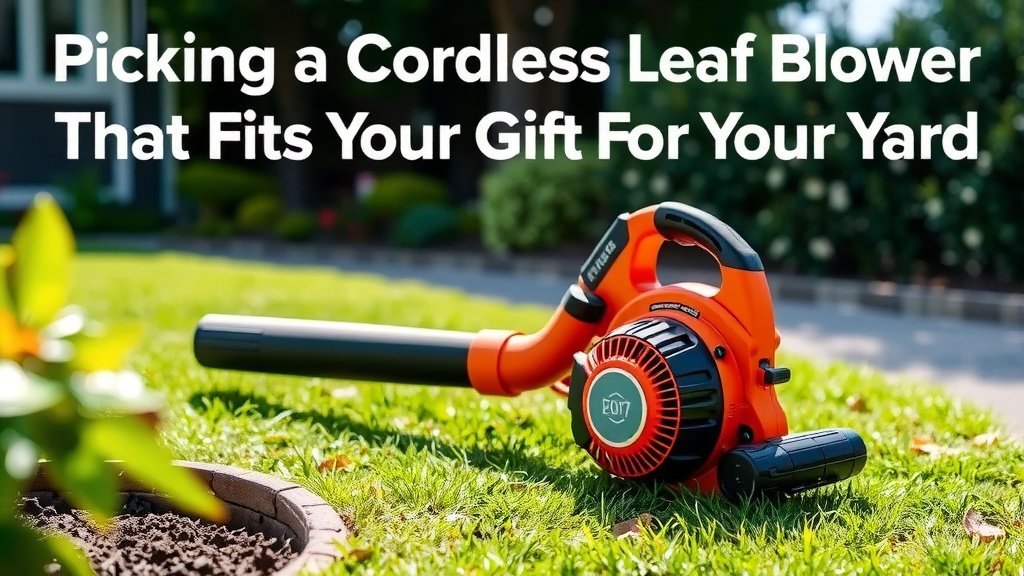
Picking a Cordless Leaf Blower That Fits Your Yard
The secret to a good purchase is simple. You match the blower to the mess you clean up. A tiny patio needs a different tool than a half-acre lot. We found that most buyers either overbuy or underbuy on power. Both mistakes cost you time and money. Let’s fix that right now.
First, Measure Your Outdoor Space
Grab a rough estimate of your yard size. You don’t need exact numbers. Just think in terms of square footage or lot size. This single number will steer every other choice you make.
Here is the general rule we found that works for most people:
- Small yards (under ¼ acre): A 20V to 40V blower is plenty. These are light and easy to store.
- Medium yards (¼ to ½ acre): Look at 40V to 60V models. You need more air to push leaves across a bigger lawn.
- Large yards (over ½ acre): Go for 60V or higher. Or consider a backpack-style battery unit.
We also suggest counting the trees on your property. Two big oaks drop way more leaves than a dozen young maples. If you have heavy tree coverage, move up one power tier.
Decoding the Power Numbers on the Box
You will see two big numbers on every box: CFM and MPH. Most people obsess over the wrong one. We found that understanding these two terms is the fastest way to avoid a bad buy.
Think of it like a garden hose. CFM is the water volume. MPH is the water pressure. You need both, but for leaves, volume matters more.
Why CFM Matters More Than MPH
CFM stands for cubic feet per minute. This number measures how much air the blower moves. High CFM means you can push a thick pile of wet leaves. It also means you can move leaves from further away. Many experts say that a CFM rating above 350 is the sweet spot for most homes.
MPH stands for miles per hour. This measures the speed of the air. High MPH is great for blasting a single stubborn leaf stuck to the pavement. But it does not help you clear a big pile. A blower with high MPH and low CFM just moves one leaf at a time. That will drive you crazy.
Here is the simple math we use:
- CFM moves the pile. Aim for at least 350 CFM.
- MPH breaks up clumps. Aim for at least 100 MPH.
- Balance beats extremes. A 450 CFM / 120 MPH model beats a 600 CFM / 90 MPH model for general yard work.
Voltage and Battery Amp-Hours (Ah)
Voltage is the engine size of your blower. 20V is a small engine. 60V is a big one. Higher voltage usually means more power. But it also means a heavier battery pack.
Amp-hours (Ah) tell you how long the battery lasts. A 2.0Ah battery lasts about half as long as a 4.0Ah battery at the same voltage. We found that a 4.0Ah battery is the minimum for a medium yard. If you buy a blower that comes with a 2.0Ah pack, plan on buying a second battery or a larger one.
Runtime: How Long Will It Actually Last?
Battery life is the biggest fear for cordless tool buyers. You do not want the blower to die halfway through the job. We get it. The good news is that you can control this with smart choices.
Variable Speed Triggers Save Battery
You do not need full power all the time. Dry leaves on a driveway need less force. A blower with a variable speed trigger lets you dial it down. This simple feature can extend your runtime by 30% or more.
We strongly suggest avoiding blowers with only one speed. They waste battery on easy jobs. They also blast everything around your yard, including flower beds and gravel paths.
How to Estimate Total Run Time
Here is a rough guide based on battery size:
- 2.0Ah battery: 10 to 15 minutes at full power, up to 25 minutes at low speed.
- 4.0Ah battery: 20 to 30 minutes at full power, up to 50 minutes at low speed.
- 6.0Ah battery and above: 30 to 45 minutes at full power, up to 70 minutes at low speed.
These are estimates. Cold weather reduces battery life. So does wet, heavy grass. If you have a big job, we recommend buying an extra battery or looking for a kit that includes two packs.
The Case for a Backpack Battery
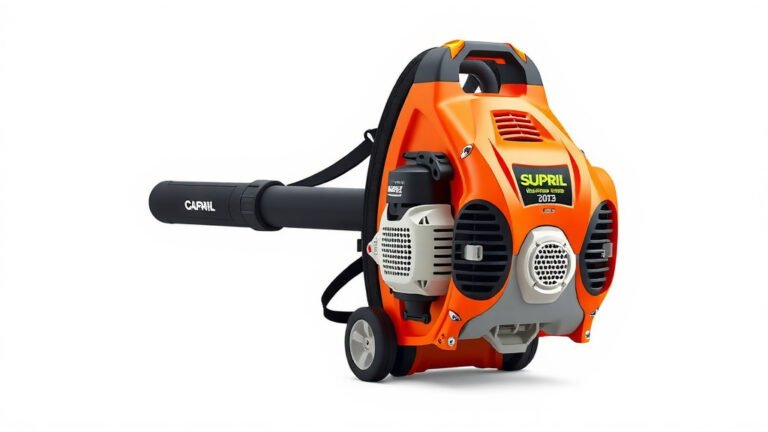
If you have a large yard, the weight of the battery gets annoying. Your arm gets tired holding a heavy tool for 30 minutes. A backpack-style blower puts the battery on your back. This transfers the weight to your shoulders and hips. Many users say this feels drastically lighter than a handheld unit.
Look for models where the backpack strap is padded and adjustable. A good harness makes a huge difference in comfort. This is one area where paying a bit more is worth it.
Sticking to One Battery System
Here is a mistake we see all the time. People buy a new blower from a brand they do not own. Now they have two different chargers and two different battery types. It clutters the garage and costs more money.
The Cost of Compatibility
Batteries are the most expensive part of any cordless tool. A replacement battery can cost anywhere from $80 to $200. If you already own a drill or a trimmer from a certain brand, buy the blower from that same brand. This saves you a ton of cash because you only buy the bare tool, not a new kit.
Most major brands share batteries across their whole line. Your drill battery will work in the blower. It is that simple. We found that sticking to one platform is the smartest financial move for any homeowner.
Cross-Brand Battery Adapters
Some companies sell adapters that let you use one brand’s battery in another brand’s tool. These exist, but they can be risky. They might not fit securely. They might also void your warranty. We do not recommend going this route unless you are very careful. It is better to pick a brand and stay loyal to it.
Weight, Balance, and Handling
You will hold this tool for a long time. Weight matters more than you think. A blower that feels fine in the store can feel like a lead brick after 20 minutes of use. We found that most people prefer tools under 8 pounds.
Where the Weight Sits Matters
A blower with a battery on the top feels top-heavy. A blower with the battery at the bottom feels more balanced. Try to balance the tool on your finger where the handle meets the tube. If it tips forward, it will strain your wrist. Look for a center of gravity that sits close to your hand.
Look for Anti-Vibration Features
Vibration is another hidden problem. It makes your hands go numb. Look for models with rubber grips and anti-vibration mounts. These are small details. They make a huge difference if you have arthritis or weak grip strength. Many cordless models are quieter and smoother than gas blowers, which is a big win for your joints and your ears.
Noise Levels and Your Neighbors
Gas leaf blowers are loud. Cordless blowers are much quieter. But they are not silent. The noise level is measured in decibels (dB). Most cordless blowers operate between 59 dB and 70 dB. For reference, a normal conversation is about 60 dB. Gas blowers often hit 90 dB or more.
We found that hearing protection is still a good idea with any blower. The National Institute for Occupational Safety and Health (NIOSH) states that prolonged exposure to sounds above 85 dB can damage your hearing. Even at lower volumes, protecting your ears is a wise habit.
Also, check your local noise ordinances. Some towns ban blowers above a certain dB level. Or they restrict when you can use them. A cordless model rarely triggers these rules. But it is worth a quick check to keep the peace with the neighbors.
Key Features That Make Life Easier
Power is only half the story. The best blowers have small features that improve the experience. We tested many models and found these features worth looking for:
- Brushless motor: This motor lasts longer and is more efficient. It gives you more power from the same battery.
- Flat nozzle tip: This concentrates the air into a narrow stream. It is perfect for getting leaves out of tight corners.
- Speed lock: This holds the trigger at a constant speed. It saves your finger from cramping on long jobs.
- Wall mount: This keeps the blower off the floor and easy to grab.
Common Mistakes to Skip
Many people rush into a purchase and regret it. We have watched buyers make the same errors over and over. Here is what to avoid:
- Buying the cheapest option: The cheapest cordless blowers often have weak batteries and poor build quality. You will end up replacing them in a year. If you run into issues later, our guide to troubleshooting common leaf blower problems covers quick fixes.
- Buying way more power than you need: A 60V blower on a tiny patio is overkill. It is heavy and expensive. Save your money.
- Forgetting to check the battery charger speed: A slow charger takes 3 to 4 hours to fill a battery. A fast charger takes 60 minutes. If you have a big yard, the fast charger is a game-changer.
- Ignoring the warranty: Good brands offer a 3 to 5-year warranty. Cheap brands might only offer 90 days. Read the fine print.
Your Pre-Purchase Checklist
Before you add to cart or head to the hardware store, run through this checklist. It takes two minutes and saves you from buyer’s remorse.
- Do I know my approximate yard size? (Under ¼ acre, ¼–½ acre, or over ½ acre)
- Is the CFM at least 350? (For medium to large yards, aim for 450+)
- Is the MPH at least 100? (More is fine, but not at the expense of CFM)
- Does it use the same battery as my other tools? (If not, can I afford an extra battery?)
- Is the total weight under 8 pounds? (Or is it a backpack model for big yards?)
- Does it have a brushless motor? (If yes, take it seriously)
Final Thoughts on Cordless Power
Cordless leaf blowers have come a long way in the last few years. They rival gas models in power while being easier on your ears and the environment. The technology is mature and reliable. You just need to pick the right tool for your specific situation.
We found that most people are happy with a mid-range 40V model with a 4.0Ah battery. That combo handles most residential yards with ease. If you have a sprawling property, step up to 60V and bring a spare battery. The choice is easy once you know your numbers.
Take your time. Check the specs. And buy a blower you will look forward to using next fall.
Conclusion
Choosing the right cordless leaf blower comes down to matching power to your yard and your comfort. Start with your property size, then check the CFM and battery voltage. We found that a balanced 40V model with a 4.0Ah battery handles most homes without breaking your back or your budget.
Remember to stay loyal to one battery brand. That single choice saves you money on future tools. And do not skip the smaller details like weight, noise, and charger speed. They make the biggest difference during a long afternoon of yard work.
Your next step is simple: measure your yard, grab our pre-purchase checklist, and compare three models side by side. You will know the right pick in under an hour.
Frequently Asked Questions
Can I use a leaf blower on wet leaves?
Yes, but you need the right specs. Look for a model with high MPH (over 120) to break up the suction of wet leaves on pavement. You also need a high CFM to push the heavy clumps. Just know that wet leaves will drain your battery about 30% faster than dry ones.
How long does a cordless leaf blower battery take to charge?
It depends on the charger, not the blower. A standard charger takes 2 to 4 hours to fill a 4.0Ah battery. A fast charger can do it in 60 minutes or less. Check the box for the charger type before you buy. If you have a big yard, a fast charger is worth the extra cost.
Is a cordless leaf blower as powerful as a gas one?
Modern cordless models are very close, especially at 60V. For most home yards, you will not notice a big difference. Gas still wins for heavy, commercial-grade work. But for clearing a typical lawn, a 60V cordless blower gets the job done without the fumes, noise, and engine maintenance.
What is the best battery voltage for a home owner?
We found that 40V is the sweet spot for most people. It gives you enough power for medium yards without the heavy battery weight. Go up to 60V if you have a large property or lots of trees. Stick with 20V only if you have a small patio or balcony.
Should I buy a leaf blower with a brushless motor?
Yes, if your budget allows it. Brushless motors are more efficient, which means longer runtime from the same battery. They also last longer because they have fewer moving parts to wear out. It is one feature we recommend spending a little extra on, especially if you plan to keep the blower for years.