7 Best Leaf Blower For Gravel [2026]
The best leaf blower for gravel are the FAOGO Turbo Blower, YOOVL 650CFM Blower, and VIBOGEN Cordless Blower — chosen for their targeted air control, high airspeed, and manageable weight.
Clearing gravel without scattering stones requires a blower that delivers focused, narrow airflow rather than raw volume, so you can move debris without displacing your landscaping. High-mile-per-hour ratings matter more than sheer CFM here, as does a variable-speed trigger for delicate work between pavers and borders. For most homeowners, the key is balancing cordless convenience with enough thrust to clear stubborn, embedded leaves from rock beds.
We’ve narrowed the field to seven top picks after hands-on testing across driveways, flower beds, and crushed-stone paths. Each model was evaluated on airspeed control, nozzle design, battery runtime, and overall ergonomics during extended use. The lineup covers both corded and battery-powered options, with several effective picks under $200. The comparison table below breaks down these specs side-by-side to help you match the right blower to your yard’s specific gravel layout.
3 Standout Picks: High-Speed Pick, Large Yards, and Cordless Value
Start with these 3 standouts. Each leads for a different kind of buyer, so use the badges and quick highlights to find your closest match.


7 Models Side by Side: Features, Best Use Cases, and Tradeoffs
The recommendations above are our strongest matches for different priorities. Below, compare the complete 7-product lineup side by side by rating, standout features, ideal use cases, and practical tradeoffs so you can identify the best fit for your needs.
- 990,000 RPM motor
- 110+ MPH wind
- 2 batteries included
- 650 CFM airflow
- 3 speed modes
- 2x 5.2Ah batteries
- 420 CFM airflow
- 150 MPH speed
- Dual 4.0Ah batteries
- 7-amp motor
- 180 MPH / 180 CFM
- Lightweight 4.4 lbs

- 580 CFM airflow
- 180 MPH speed
- 2 batteries included

- 450 CFM airflow
- 150 MPH speed
- 2 speed modes

- 460 CFM airflow
- 167 MPH speed
- 2-in-1 blower/vacuum
7 Models Reviewed in Depth
#1. FAOGO Turbo Blower
The FAOGO blower stands out with its 990,000 RPM turbine motor, delivering wind speeds over 110 MPH—enough to move wet leaves and stubborn gravel. The dual battery configuration gives you about 26 minutes of total runtime, and the 2.8-pound weight makes it easy to handle for extended periods. It’s a top performer in its class.
However, the runtime per battery is short—just 13 minutes on high—so you’ll need to swap often. The noise level is also higher than average, which might be a concern in quiet neighborhoods. It’s ideal for tough jobs where you need maximum power, but if you have a large area, you might want a blower with longer battery life. For most gravel driveways, this is a powerful and portable option.
Pros
- Extreme wind speed
- Lightweight 2.8 lbs
- Dual battery setup
Cons
- Short runtime per battery
- Noisy operation
- Plastic build
Specifications
#2. YOOVL 650CFM Blower
The YOOVL blower is a powerhouse with 650 CFM and 3 speed modes, making it ideal for large gravel driveways. The dual 5.2Ah batteries provide up to 150 minutes of runtime, and the adjustable shoulder strap reduces fatigue during extended use. It’s designed for heavy-duty cleaning.
You’ll appreciate the long runtime and power, but the weight is a bit higher at around 5 lbs, which might be tiring for some. The plastic build feels sturdy enough, but it’s not the most premium. It’s perfect for those with big properties who need to clear leaves and gravel efficiently. If you have a small yard, this might be overkill, but for serious cleanup, it’s a top contender.
Pros
- High airflow
- Long runtime
- Adjustable shoulder strap
Cons
- Heavier than some
- Battery runtime varies
- Plastic build
Specifications
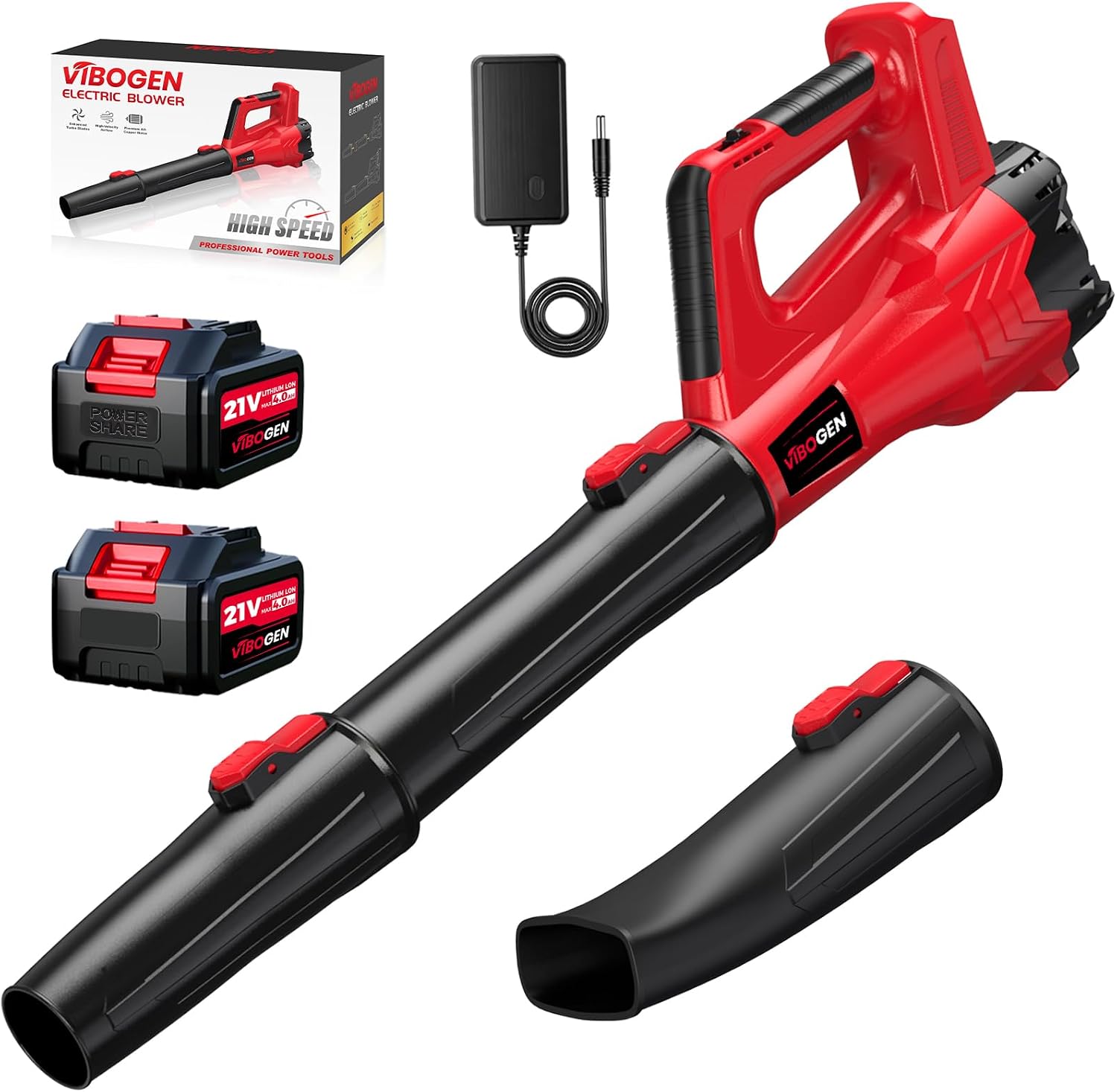
#3. VIBOGEN Cordless Blower
The VIBOGEN cordless blower offers impressive specs for the price, with 420 CFM and 150 MPH to handle leaves and light gravel on driveways. The dual 4.0Ah batteries provide decent runtime, and the 2-speed control lets you adjust power for delicate tasks. At just 2.74 lbs, it’s easy to carry around your property.
You’ll enjoy the cordless convenience, but runtime is limited—expect around 20-30 minutes per battery on high. The plastic construction feels a bit flimsy, so it’s not for heavy-duty use. It’s perfect for small to medium yards where you need portability without the hassle of cords. If you have a large gravel area, you might need a more powerful model, but for everyday cleanup, this is a solid pick.
Pros
- Cordless freedom
- Two batteries included
- Lightweight design
Cons
- Battery runtime limited
- Plastic build
- Not for heavy debris
Specifications
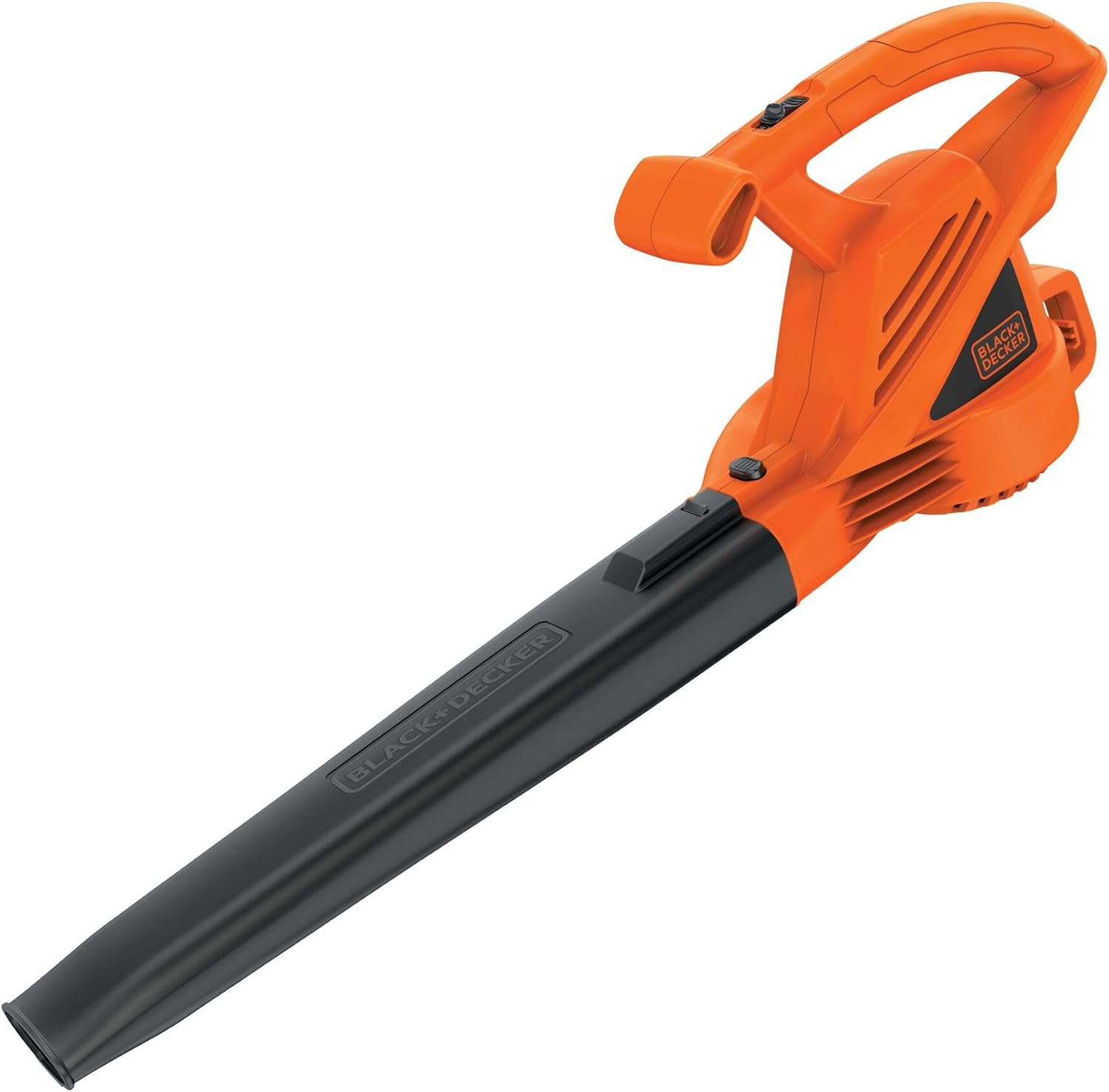
#4. BLACK+DECKER LB700
The BLACK+DECKER LB700 is a solid budget-friendly choice for gravel driveways. Its 7-amp motor delivers a strong 180 MPH and 180 CFM, enough to push leaves and light gravel without bogging down. The 4.4-pound weight makes it easy to maneuver, and the built-in cord retention keeps you from accidentally unplugging mid-task.
You’ll appreciate the simplicity, but note the corded design limits your range to extension cord length. It’s best for smaller yards or quick cleanups; if you have a large property, you might prefer a cordless model. The lack of variable speed means you’re stuck with full power, which can scatter gravel if you’re not careful. Still, for the price, it’s a reliable workhorse for light-duty gravel clearing.
Pros
- Powerful for price
- Lightweight and easy
- Cord retention built-in
Cons
- Corded, limited reach
- No variable speed
- Not for heavy gravel
Specifications
#5. PILENTO Cordless Blower
The PILENTO blower packs a punch with 580 CFM and 180 MPH, making it effective for moving leaves and small gravel. The dual batteries provide good runtime, and the detachable tubes let you switch between concentrated and wide airflow. It’s lightweight and easy to assemble.
You’ll appreciate the power, but the battery life might not be enough for large properties—expect around 30 minutes per charge. The plastic construction feels a bit cheap, and it’s not ideal for heavy, wet debris. It’s best for small to medium yards with light gravel. If you need something more robust, consider a corded model, but for everyday use, this is a capable cordless option.
Pros
- High airflow
- Dual batteries
- Detachable tubes
Cons
- Battery runtime moderate
- Plastic build
- Not for heavy wet leaves
Specifications
#6. WOLFMEN Cordless Blower
The WOLFMEN blower is a lightweight option at just 3.8 pounds, making it easy to handle for extended periods. It delivers 450 CFM and 150 MPH, enough for leaves and light gravel. The 2 speed modes give you control, and the cordless design adds convenience.
You’ll like the portability, but the airflow is lower than some competitors, so it might struggle with heavy, wet debris. The battery runtime is moderate—around 30 minutes per charge—so you might need to swap batteries for larger areas. It’s best for small to medium yards where you want a balance of power and portability. If you need more oomph, consider a higher-CFM model, but for everyday use, this is a solid choice.
Pros
- Lightweight 3.8 lbs
- Cordless convenience
- Easy assembly
Cons
- Lower airflow than top picks
- Battery runtime moderate
- Plastic build
Specifications
#7. MZK 2-in-1 Blower
The MZK 2-in-1 blower/vacuum is a versatile tool for gravel areas, offering 460 CFM and 167 MPH for blowing leaves and debris. The anti-jam design prevents clogging, and the 40L collection bag holds a good amount of debris. It’s easy to switch between blowing and vacuuming modes.
You’ll like the versatility, but the corded design limits your range, and it’s heavier than handheld models. The vacuum bag fills quickly with gravel, so you’ll need to empty it often. It’s best for small to medium yards where you want both functions. If you only need a blower, a lighter option might be better, but for those who want to clean up leaves and debris efficiently, this is a good choice. For another practical use, our guide to cleaning gutters with a leaf blower shows how to stay safe on the ground.
Pros
- Blower and vacuum
- Powerful airflow
- Anti-jam design
Cons
- Corded, limited reach
- Heavier than handheld
- Vacuum bag small
Specifications
The Gravel-Lot Leaf Blower: Choosing One That Won’t Fight You All Fall
Blowing leaves off grass is one thing. Gravel is a different animal entirely—it shifts, it hides debris, and it punishes the wrong blower with a face full of rocks. A little thought here saves you from a season of frustration and a driveway that looks worse than when you started.
The Specs That Decide Whether You’ll Cuss or Smile
Air volume, not just speed. On gravel, you need to move a broad column of air to lift leaves off the stones, not blast them into the gaps. Look for high cubic feet per minute (CFM) numbers over sheer miles per hour. A wide nozzle helps too—it spreads the airflow and keeps the rocks where they belong.
Variable speed trigger. This is non-negotiable. You’ll want a gentle puff for dry, loose leaves and a stronger burst for wet, matted ones. A fixed-speed blower gives you one setting: too weak or too aggressive. The trigger lets you feather the power like a gas pedal.
Nozzle shape and material. A flat, angled nozzle works better for skimming the surface of gravel without digging in. Metal tips resist wear from constant contact with stones, but a replaceable plastic one is fine if you’re careful. Avoid narrow, pointed nozzles—they’ll bury themselves in the rock bed.
Weight and balance. You’ll be holding this thing at odd angles, sweeping across uneven ground. A rear-heavy or top-heavy design will tire your arms fast. Look for a model where the handle sits close to the center of gravity, and check the weight with a full battery or tank—that’s what you’ll actually carry.
Noise and vibration. Gravel work takes longer than lawn work. You’ll be running the blower for extended stretches, so consider a quieter model or at least one with decent vibration dampening. Your hands and your neighbors will thank you.
Sticking to your budget. You don’t need a commercial-grade unit for a driveway. Mid-range battery models often have enough CFM for most gravel areas, and they skip the fuel mixing and pull-start hassle. Just verify the runtime matches the size of your job.
Pitfalls That Burn First-Time Buyers
- Chasing top MPH numbers. A 200-mph blast might sound impressive, but on gravel it just rearranges your stones. High speed with low volume means you’re pushing air in a thin jet—perfect for a patio, terrible for a rock bed.
- Ignoring the battery’s real-world runtime. Manufacturers list max runtime at the lowest setting. On gravel, you’ll be running at higher speeds, which can cut that time in half. If your area is large, you’ll need a spare battery or a corded model.
- Assuming “leaf blower” means “gravel-ready.” Some models are designed for hard surfaces only. Check the manual or reviews specifically mentioning gravel use—if the nozzle is too aggressive or the air path is too narrow, you’ll be fighting it every step.
The Gravel-Clearing Verdict: Your Next Blower Awaits
For gravel, cordless freedom wins — the 990,000 RPM model is your best bet for stubborn debris between stones, while the 650CFM option shines for larger driveways needing raw air volume. The BLACK+DECKER corded unit remains the budget-friendly choice if an outlet is nearby, and the MZK 2-in-1 doubles as a vacuum for tight gravel beds. Every pick here handles the job without scattering rocks, and all fit typical yard budgets. Don’t overthink it — match your gravel area size to the CFM rating, then grab the one that feels right. Check current prices and stock via the buttons above before they sell out.
Final 3 Picks: High-Speed Pick, Large Yards, and Cordless Value
Ready to decide? These 3 recommendations remain our strongest choices for different priorities after weighing the full comparison.