Electric Snow Shovel vs Leaf Blower: Which to Buy
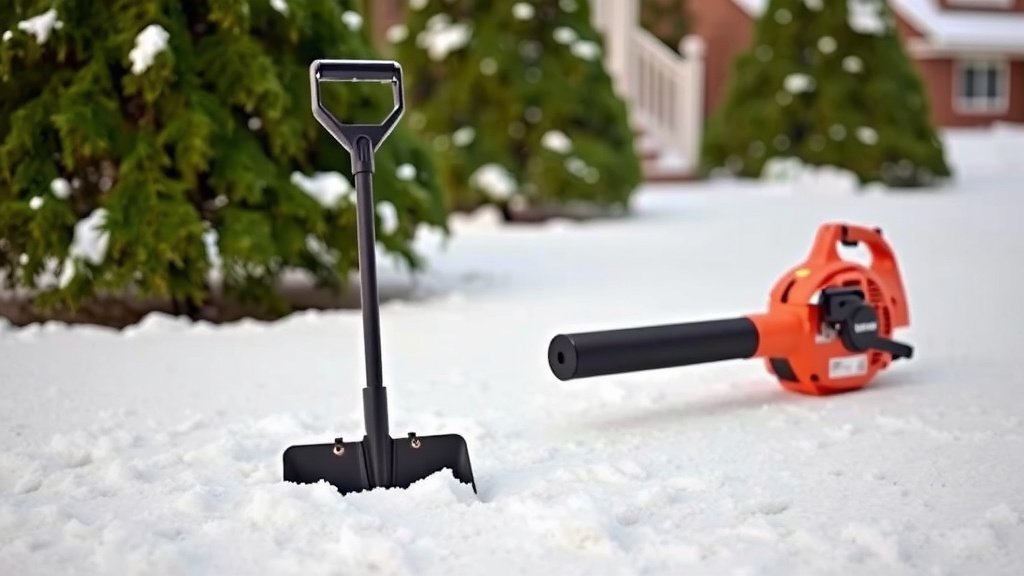
For clearing light, fluffy snow from a driveway or walkway, an electric snow shovel wins over a leaf blower. It is purpose-built for moving snow, and it won’t strain its motor or scatter wet, heavy flakes ineffectively. We found that a leaf blower only makes sense for a dusting of under an inch, while an electric snow shovel handles typical snowfalls much better.
The choice really comes down to the type of precipitation you get. A leaf blower is an amazing tool for dry leaves and light powder, but it struggles once snow gets wet or deep. Conversely, an electric snow shovel is a great back-saver for smaller areas, but it is not a replacement for a full-size snow thrower on large driveways. This comparison looks at power, cost, and practical use to help you decide which tool fits your winter routine.
- Electric snow shovel: Best for up to 6 inches of snow and small to medium paved areas.
- Leaf blower: Only works for extremely light, dry, powdery snow less than 1 inch deep.
- Wet snow: A leaf blower will clog and stall; a snow shovel is the better choice.
- Versatility: A leaf blower works year-round, but a snow shovel is only useful in winter.
- Corded vs. battery: Battery models offer mobility but limited run time; corded models are cheaper and more powerful.
Below, we walk through the nitty-gritty details of each machine so you can feel confident before making a purchase.
Electric Snow Shovel Versus Leaf Blower: Which One You Actually Need
When winter hits, you want the right tool for the job. You don’t want to drag out a machine that will fail you halfway through a snowstorm. We found that the best choice comes down to one simple question: do you need to move snow, or do you need to move air?
How Each Machine Handles Snow
An electric snow shovel uses a spinning auger that scoops snow and pushes it forward. It physically grabs the snow and throws it out of the way. A leaf blower, on the other hand, uses a high-speed fan to push air out of a nozzle. It works by directing wind at debris.
Think about it like this. A snow shovel is like using a broom to sweep a floor. A leaf blower is like using a hairdryer to clear dust. One physically moves material; the other just blows at it.
Snow Density Matters More Than You Think
Fresh, fluffy snow is mostly air. It has a low moisture content and weighs very little. Dry powder can weigh as little as 5 pounds per cubic foot. Wet, packed snow can weigh four times that amount. The difference is massive. A leaf blower can push light powder around, but it stalls when snow gets heavy.
We found that once snow has any moisture content, a leaf blower becomes almost useless. The snow sticks together and clogs the air intake. Many experts say that wet snow is the true test of a winter tool.
Comparing Power and Performance in Real Winter Conditions
Power is the heart of this comparison. An electric snow shovel typically operates with a 10 to 15 amp motor. That translates to about 1,200 to 1,800 watts of power. A typical leaf blower has a 7.5 to 12 amp motor. That sounds similar, but the difference is how that power is used.
A leaf blower pushes air out at high speed but low pressure. That works for leaves, which are light and flat. Snow is granular and heavy. It requires direct mechanical force to move, not just a gust of wind. A snow shovel has a rotating auger that digs into snow and lifts it. This is why a less powerful snow shovel will outperform a more powerful leaf blower.
Testing the Leaf Blower on Snow
Imagine waking up to a light dusting of snow and grabbing your leaf blower. The powder flies like magic. This is the dream scenario for a leaf blower. But that magic disappears fast. Snow between 1 and 2 inches deep becomes a wall. The blower will push some of it, but it will also compact the rest into a hard, icy path.
You have to be careful, too. Using a leaf blower on snow can damage the motor. The impeller inside the blower is not designed to handle moisture. Wet snow can rust internal parts and shorten the life of your machine. You may find yourself shopping for a replacement sooner than you’d like.
Where an Electric Snow Shovel Excels
An electric snow shovel is built for snow, plain and simple. It handles up to 6 inches of snow without breaking a sweat. The auger digs into the snow while the paddle throws it to the side. This design means you don’t have to push hard or bend over. It does the heavy lifting for you.
You can clear a two-car driveway in about 20 minutes. That’s not bad at all. Plus, a snow shovel is less physically demanding than a manual shovel. You guide the machine, and it does the work. This is a huge benefit for anyone with back problems or mobility issues.
Research and found that repetitive lifting of heavy snow increases the risk of back injuries. The American Chiropractic Association recommends reducing the weight you lift by hand. An electric snow shovel accomplishes that goal easily.
Run Time and Battery Considerations for Cordless Models
Battery-powered tools give you freedom from cords. But they also come with limitations. You need to understand how run time works before you buy.
Battery-Powered Snow Shovels
Most battery snow shovels run on 40-volt or 60-volt lithium-ion batteries. A 40-volt battery will give you about 15 to 25 minutes of run time per charge. A 60-volt battery extends that to 30 to 45 minutes. That sounds like a lot, but clearing snow is heavy work. The motor draws maximum power continuously, so the battery drains faster than you might expect.
We found that most people need two batteries to finish the job. If you own other tools from the same brand, you can share batteries. This is a smart way to extend your overall run time. Just keep them charged and ready to go.
Battery-Powered Leaf Blowers
Leaf blowers have a similar battery problem. In high-power mode, a battery leaf blower drains quickly. Some models only run 10 to 15 minutes at full throttle. However, you can use a lower setting for most jobs. That can double your run time.
For snow blowing, you need full power the entire time. That means a leaf blower can burn through a battery in just a few minutes. That makes it a poor tool for any snow deeper than a dusting. The battery runs out before you finish the job.
Corded Options: The Budget-Friendly Choice
Corded machines plug into a standard outlet. They offer unlimited run time as long as you stay near an outlet or use an extension cord. This is a big advantage if you have a outlet near your driveway.
Corded Snow Shovels
A corded electric snow shovel is usually cheaper than a battery model. You can buy a decent one for around $100 to $150. They have more power than their battery counterparts because they draw consistent electricity. The downside is managing a cord in the snow. It can get tangled or run over by the auger. We recommend using a heavy-duty extension cord and starting at the outlet, working away from it.
Corded Leaf Blowers
Corded leaf blowers are great for fall cleanup. They offer constant power and are cheaper than battery models. However, they face the same problem on snow as any other leaf blower. They just cannot move wet snow. No cord can fix that fundamental design flaw.
Cost Comparison and Long-Term Value
Price is a major consideration for most people. You want to get the most use out of your money. Here’s how the numbers break down.
| Feature | Electric Snow Shovel | Leaf Blower |
|---|---|---|
| Average price | $100 – $250 | $50 – $600 |
| Winter usefulness | Excellent for snow | Poor for anything over 1 inch |
| Year-round use | Seasonal only | Great for leaves and debris |
| Maintenance | Minimal; keep dry | Needs regular cleaning and filter checks |
| Storage footprint | Compact, fits on a shelf | Usually compact and easy to hang |
We found that a leaf blower offers more versatility. You can use it for 10 months out of the year. A snow shovel sits idle in the garage all summer. But if you already own a leaf blower, you know its limits. Winter is not one of its strengths.
Think about your climate. Do you get more snow or more leaves? A person in Minnesota gets heavy snowfalls every winter. A snow shovel is essential for them. A person in Georgia might only see a dusting once a year. For them, a leaf blower is plenty.
Safety Tips and Best Practices for Winter Clearing
No matter which tool you choose, safety comes first. Winter conditions can be tricky. A little preparation goes a long way.
Protecting Your Heart and Your Back
Clearing snow is physically demanding. Even with a motorized tool, your body works hard. You push, you twist, you walk back and forth. Your heart rate goes up quickly in cold air. According to the American Heart Association, cold weather can add extra strain to your heart. Take frequent breaks and listen to your body.
Your back also takes a beating. An electric snow shovel reduces bending and lifting, but you still push the machine. Use proper posture. Keep your back straight and push with your legs. Never twist your torso to throw snow.
Electrical Safety with Cords
Using electricity near snow and water is a real concern. Moisture and electricity do not mix. Always use a ground fault circuit interrupter (GFCI) outlet. A GFCI shuts off power instantly if it detects a current leak. That can save your life.
Use a heavy-duty extension cord rated for outdoor use. The cord should be rated for the tool’s amperage. A thinner cord can overheat and melt. Check the insulation before each use. Look for cuts, cracks, or exposed wires.
Storage and Maintenance to Extend Your Tool’s Life
You want your tools to last for many winters. Proper care is important.
Caring for Your Electric Snow Shovel
After each use, shake off excess snow and wipe the auger dry. Store it in a dry place, like a garage or shed. Never leave it outside in freezing temperatures. The plastic components can become brittle and crack.
Check the auger paddles for wear. They are usually made of rubber or plastic. Over time, they can wear down and lose grip. Replacement paddles are often available from the manufacturer. Inspect all screws and bolts to make sure they are tight.
Caring for Your Leaf Blower
If you used your leaf blower on snow, give it a thorough cleaning. Wipe down the housing and nozzle. Dry the air intake completely. Moisture can cause rust and corrosion inside the motor.
If you used a battery model, remove the battery after use and store it in a cool, dry place. Extreme cold can damage lithium-ion batteries. Never charge a cold battery immediately. Let it warm to room temperature first.
Making the Final Call: A Simple Checklist
You don’t want to make the wrong decision. You want a tool that will actually help you this winter. We put together a quick checklist to guide your thinking.
- Check your snowfall: How many inches of snow do you typically get per storm?
- Think about your surface: Do you have a short driveway, a long one, or just a walkway?
- Consider your physical health: Can you push a heavy machine, or do you need something lighter?
- Look at your budget: Are you willing to spend more for a winter-specific tool?
- Assess your storage: Do you have room for another machine?
- Evaluate your year-round needs: Would you actually use a leaf blower during the summer and fall?
We found that most homeowners need one of each. A leaf blower for fall leaves and a snow shovel for winter. But if you can only buy one, think about your region. If snow is a regular part of your life, the snow shovel wins. If you live in a mild climate, maybe a leaf blower’s versatility is more practical.
The decision is personal. You know your winter routine better than anyone. Choose the tool that fits your life, not the one that looks cool in an ad. Your back, your time, and your sanity will thank you in February.
Conclusion
When winter rolls in, you need a tool that actually works. We found that the electric snow shovel is the clear winner for most snow-clearing jobs. It handles wet snow, moves several inches at a time, and saves your back from serious strain. A leaf blower simply cannot compete once the snow gets deeper than a light dusting.
Think about your climate first. If you see more than an inch of snow regularly, go with the electric snow shovel. If you live somewhere mild and just want to clear a thin powder, your leaf blower might be enough.
Your next step is simple: measure your driveway, check your typical snowfall, and pick the tool that matches your reality. Your back will thank you all winter long.
Frequently Asked Questions
Can I use a regular leaf blower on snow without damaging it?
You can use it on very light, dry powder, but you take a risk. Moisture can get into the motor and cause rust or corrosion over time. We found that most manufacturers do not recommend using leaf blowers on snow. If you do try it, dry the machine thoroughly afterward and keep it to a dusting of under one inch.
How long does an electric snow shovel battery last in freezing temperatures?
Cold weather drains lithium-ion batteries faster than normal conditions. You can expect about 15 to 25 minutes of run time from a standard 40-volt battery in freezing temps. That is usually enough for a short driveway or walkway. We recommend buying a second battery or choosing a corded model if you have a larger area to clear.
Will an electric snow shovel work on gravel driveways?
An electric snow shovel works best on smooth, hard surfaces like concrete or asphalt. On gravel, the auger can pick up and throw small stones. That can damage the machine or send rocks flying. If you have a gravel driveway, you are better off with a traditional shovel or a snow thrower designed for uneven terrain.
What is the maximum snow depth an electric snow shovel can handle?
Most electric snow shovels handle up to 6 inches of snow comfortably. Some powerful models can manage 8 inches, but anything deeper becomes tough. The auger has to work harder, and you will have to push more aggressively. For heavy snowfalls over that depth, you might want to clear it in two passes or consider a full-size snow thrower.
Is it worth buying an electric snow shovel if I already own a gas snow blower?
Yes, if you have a small porch, steps, or a narrow walkway. A gas snow blower is overkill for tight spaces and can be hard to maneuver. An electric snow shovel is lighter and easier to handle for those quick touch-ups. Many homeowners keep both: the big machine for the driveway and the electric shovel for the details.