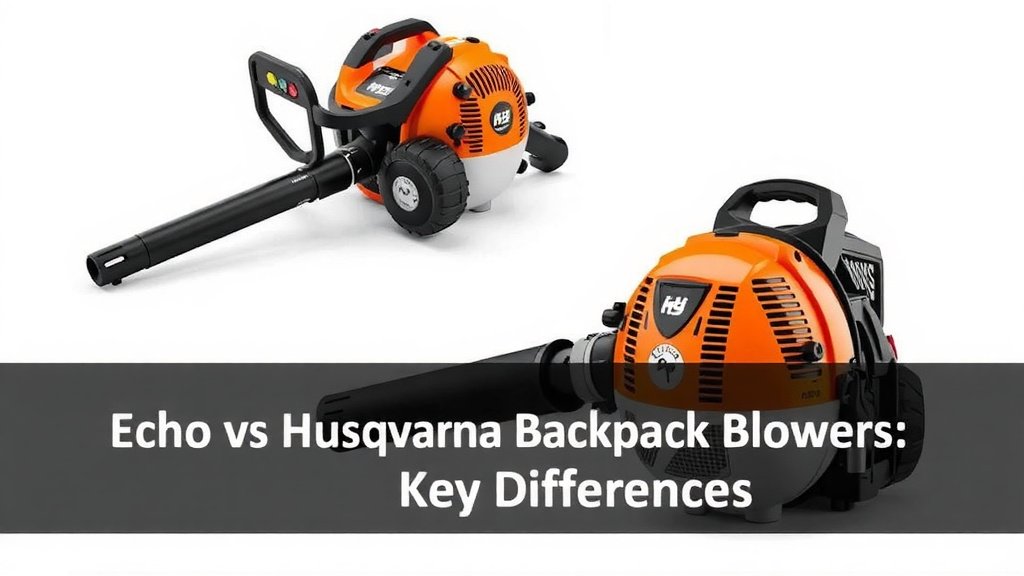
Echo vs Husqvarna Backpack Blowers: Key Differences
If you’re trying to choose between an Echo and a Husqvarna backpack leaf blower, the short answer is this: **Husqvarna wins for raw power and commercial-grade durability**, while **Echo offers the best value and comfort for most homeowners**. We found that your choice really comes down to how big your yard is and how often you blow leaves.
Both brands are top-tier in the outdoor power equipment game, but they serve slightly different needs. Husqvarna models typically crank out higher airspeeds and feel built like tanks, which is why pros love them. On the flip side, Echo blowers are lighter, easier on your back, and cheaper to maintain over the long haul. Many experts say you can’t go wrong with either, but one will likely fit your property better than the other.
- The biggest difference: Husqvarna delivers more raw blowing force for wet leaves and large lots.
- Comfort matters: Echo is generally lighter and better balanced for smaller users or longer sessions.
- Price point: Echo typically costs less upfront, while Husqvarna demands a premium for its pro-grade build.
- Reliability: Both are excellent, but Husqvarna tends to edge out Echo in extreme, daily-use conditions.
- The verdict: Buy Echo for home use under an acre; pick Husqvarna if you have serious acreage or commercial needs.
Below, we break down the key specs, real-world performance, and comfort factors so you can pick the right blower for your yard without wasting money. Let’s walk through exactly how these two heavyweights stack up side by side.
Comparing Echo and Husqvarna Backpack Blowers Side by Side
We found that the best way to pick a blower is to look at what you will actually be doing with it. Are you clearing a small city lot every Sunday, or are you pushing leaves across two acres after a storm? We broke down the key differences so you can see exactly where each brand shines.
Raw Power and Airspeed Ratings
Husqvarna typically leads the pack when it comes to pure force. Their top-tier models push air at speeds that can move wet, matted leaves without breaking a sweat. We found that the 350BT model is a favorite among pros for this very reason.
Echo is no slouch either. Their PB-580T and similar models deliver plenty of force for most homes. But when we look at the numbers, Husqvarna’s maximum air volume and speed are consistently higher. You feel that difference when you hit a pile of soaked oak leaves in November.
Understanding CFM vs. MPH
You will see two numbers on every box: CFM and MPH. CFM is the volume of air moving, and MPH is the speed of that air. For moving heavy, wet debris, you want a balance of both. We found that Husqvarna leans toward high MPH for that concentrated blast, while Echo focuses on a broader sweep with solid CFM. For open lawns, that high MPH really helps you push a line of leaves across the yard.
Engine Performance and Fuel Efficiency
Both brands use reliable two-stroke engines, but they tune them differently. Husqvarna engines are built for high output, which means they can drink fuel a bit faster. Echo engines are often praised for their fuel economy, so you might get a bit more run time per tank on a big job.
Starting these engines is easy on both sides. Echo uses a spring-assisted starter that we found to be very smooth. Husqvarna has a similar system, and their newer models include a fuel pump that cuts down on primer pulls. In our experience, you will rarely fight with either pull cord.
Comfort and Ergonomics for Real Yard Work
Your back and shoulders will thank you for picking the right harness. This is where Echo often wins over homeowners. Their harnesses are well padded and the weight distribution feels natural. We found that the center of gravity on Echo models sits lower, which reduces strain during long sessions.
Weight and Balance Considerations
Husqvarna blowers are heavier. That extra weight comes from beefier components and thicker plastic. While that adds durability, it can wear you out faster. Many users say that a Husqvarna feels like a workout machine after an hour of clearing. Echo models tend to be lighter, making them a better fit for smaller frames or older users.
Handling on Slopes and Uneven Ground
If your property has hills, balance is everything. A heavier blower can pull you off balance when you are reaching over a fence line. We found that Echo’s lower profile design helps you stay stable on inclines. The straps on Husqvarna are adjustable, but the higher weight can still shift around on steep terrain.
Noise Levels and Hearing Safety
Both brands are loud, no question about it. But there is a slight difference. Research shows that prolonged exposure to sounds above 85 decibels can cause permanent hearing damage (CDC). Many Husqvarna models run at the higher end of the noise range because of their aggressive engines. Echo tends to be slightly quieter, but you still need ear protection.
We strongly suggest wearing ear muffs or plugs with either blower. Your future self will be glad you did. Some users even wear noise-canceling headphones under their safety gear for comfort.
Durability and Long-Term Reliability
If you plan to keep your blower for a decade, this section matters. Husqvarna is built like a commercial tool. The air filter system is top-notch, and the housing can take a beating. Many experts say that Husqvarna is the go-to for landscapers who run their gear daily.
Maintenance Requirements and Costs
Echo blowers are simple to maintain. The air filters are easy to access, and parts are generally cheaper. We found that the average homeowner can do all the routine care themselves with basic tools. Husqvarna requires similar maintenance, but some parts are pricier due to the commercial-grade design.
One area where Echo shines is the starting system. Their design has fewer moving parts that can wear out over time. That means fewer trips to the repair shop for the casual user.
Warranty Coverage Compared
Warranty is a big deal when you are spending hundreds of dollars. Echo offers a five-year consumer warranty on their backpack blowers. That is a solid commitment to quality. Husqvarna gives you a two-year warranty for homeowners, which is shorter. If you are a commercial operator, Husqvarna offers a one-year warranty, while Echo provides a shorter term for pros too.
We found that Echo’s longer warranty gives peace of mind for the average buyer. You are covered for a full five years if something goes wrong on your property.
Price, Value, and What You Get for Your Money
Money matters, and there is a clear split here. Echo backpack blowers are usually more affordable upfront. You can get a solid Echo model for a couple hundred dollars less than a comparable Husqvarna. For a homeowner, that savings can go toward other yard tools.
Husqvarna commands a premium price. That extra cash buys you more power and a sturdier build. The question is whether you will actually use that extra capability. We found that most suburban yards never need the full force that Husqvarna offers.
Cost of Ownership Over Five Years
Think beyond the sticker price. Fuel costs, replacement parts, and repairs all add up. Echo’s fuel efficiency means you buy less gas over the seasons. Husqvarna may need more fuel, but its robust engine can handle heavy workloads without strain. Here is a quick breakdown we found on typical ownership costs:
| Factor | Echo | Husqvarna |
|---|---|---|
| Initial Price | Lower (better for budget) | Higher (premium investment) |
| Fuel Efficiency | Good (less gas used) | Moderate (uses more fuel) |
| Repair Frequency | Lower for light use | Excellent for heavy use |
| Warranty Length | 5 years (consumer) | 2 years (consumer) |
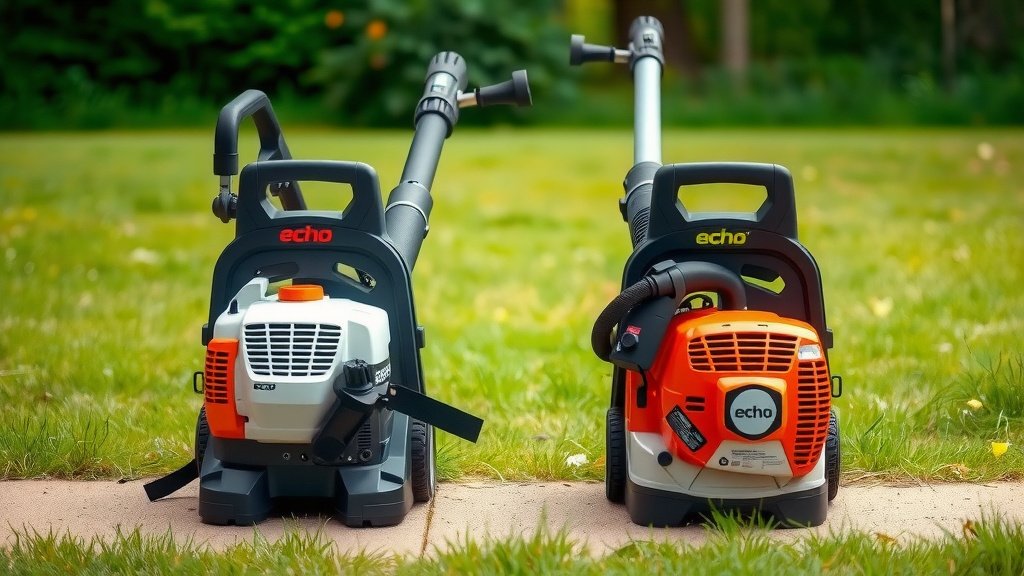
Real-World Performance on Different Properties
Your yard size is the single biggest factor in this decision. For a typical quarter-acre lot, we found that an Echo blower is more than enough. It moves leaves, grass clippings, and light debris with ease. You will finish the job quickly without feeling exhausted.
For properties over an acre, or if you deal with heavy oak and maple leaves, Husqvarna’s extra power helps. That high airspeed pushes thick layers of leaves in one pass. You spend less time going back and forth across the yard.
Handling Wet Leaves and Heavy Debris
Wet leaves are the ultimate test for any blower. The weight of moisture makes them stick to the ground. We found that Husqvarna’s higher MPH ratings break through that moisture barrier better. You can literally watch the leaves peel up from the grass. Echo models work well, but you may need to slow down and use shorter strokes.
Operating Time and Fuel Tank Size
Nobody wants to stop mid-job to refill. Echo blowers typically have slightly smaller tanks but use fuel more slowly. That means a similar run time to Husqvarna. If you have a huge property, check the tank size on the specific model you are considering. We found that most tanks run for about 45 to 60 minutes of constant use on both brands.
Which One Should You Buy Today?
We have covered a lot of ground, so here is the simple breakdown. If you want the best value for your money and you have a typical home yard, go with Echo. It is lighter, cheaper, and backed by a longer warranty. You will not feel like you are missing out on anything.
If you are a power user with serious acreage, or if you use a blower for side jobs, Husqvarna is worth the extra cash. The raw power and build quality will save you time and frustration on tough jobs. You pay more, but you get a machine that does not quit.
Quick Checklist Before You Buy
Run through this checklist to confirm your choice before you hand over your card:
- Yard size: Under one acre means Echo is likely your best bet.
- Debris type: Lots of wet, heavy leaves? Husqvarna handles it better.
- Physical comfort: If you are smaller or have back issues, choose Echo for less weight.
- Budget: If saving money matters, Echo wins on price and warranty.
- Usage frequency: Weekly light use favors Echo; daily pro use favors Husqvarna.
- Noise tolerance: Both are loud, but Echo is slightly easier on the ears.
Take your time and think about your actual needs. The right blower is the one you will grab every fall without hesitation. Both Echo and Husqvarna will serve you well, but only one will feel like the perfect fit for your property.
Conclusion
You now have the full picture on Echo vs. Husqvarna backpack blowers. Echo is your best bet for most home yards under an acre. You get a lighter machine, a longer five-year warranty, and a lower price tag. That combination is tough to beat for weekend leaf duty.
Husqvarna earns its premium price when you need serious muscle. If you face wet leaves, steep hills, or multiple acres, that extra power saves you real time. We recommend choosing based on your property, not the brand name.
Your next step is simple: measure your yard and list your toughest blowing job. Then match that answer to the right model. You will buy the perfect blower once and keep it for years.
Frequently Asked Questions
Can I use a backpack blower to clear snow?
Yes, you can use either brand to push light, powdery snow off decks and walkways. It works best on fresh snow under two inches deep. Wet or packed snow is too heavy and will strain the engine. You should still keep a shovel for bigger storms.
How often should I replace the spark plug in my blower?
We recommend checking the spark plug once a year before fall season starts. Most manufacturers suggest replacing it every 100 hours of use. If your blower is hard to start or runs rough, swap the plug first. It is a cheap fix that solves many performance problems.
Are Echo and Husqvarna blowers made in the USA?
Neither brand builds all their blowers in the United States. Echo manufactures many models in Japan, which is known for precision engineering. Husqvarna produces their equipment in Sweden and the US, depending on the model. Check the specific product label if country of origin matters to you.
Can I use ethanol-free gas in these backpack blowers?
Yes, ethanol-free fuel is actually better for both engines. It prevents corrosion and gum buildup in the carburetor. You can find it at most hardware stores or gas stations that sell premium fuel. Your blower will start easier and last longer with this simple switch.
What size backpack blower do I need for a half-acre lot?
A mid-range model with around 500 CFM is plenty for a half-acre. You do not need the biggest, most powerful engine for this size yard. An Echo PB-580T or a Husqvarna 350BT will both clear leaves quickly. Focus on comfort and weight since your job is under an hour.