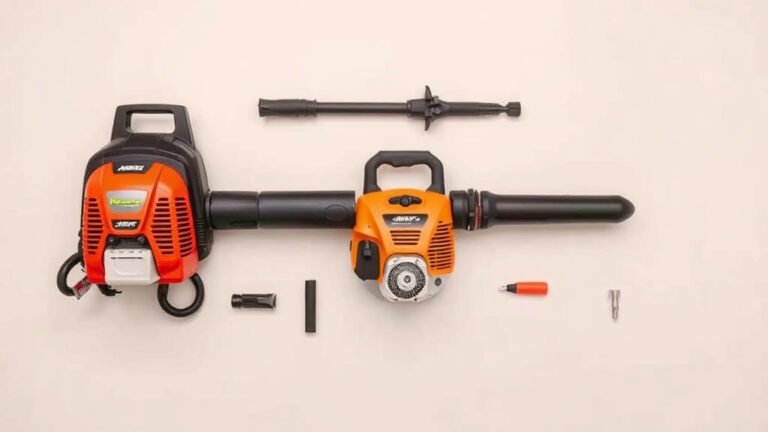
Echo vs Husqvarna Leaf Blower: Key Differences
If you want the best mix of power and value, Echo leaf blowers are the better choice for most homeowners, while Husqvarna wins for commercial-grade durability and higher-end pro models. We found that Echo consistently delivers more blowing force per dollar, especially in their backpack models. Husqvarna, on the other hand, builds machines that often last longer under heavy, daily use.
Choosing between these two brands is tough because both have strong reputations for reliability. You are really deciding between value and raw power versus long-term endurance and premium features. Your yard size, the amount of debris you deal with, and your budget all play a big role in which one fits your needs best.
- Echo wins on value: You get high air volume and speed for a lower price in most model comparisons.
- Husqvarna wins on build quality: Their pro-focused models use heavier-duty components that handle daily wear.
- Backpack models are the sweet spot: Echo’s PB-580T is a top pick, but Husqvarna’s 350BT is a close rival with better comfort.
- Consider your yard size: Small to medium yards need less power, so Echo saves you money without sacrificing performance.
- Test the weight: Comfort matters more than specs, and we found that Husqvarna’s harness system often feels more balanced.
Below, we break down the key differences between these two rival brands, compare their best models side by side, and give you a clear verdict on which one deserves your hard-earned cash.
Comparing Echo and Husqvarna Blower Performance
When you start comparing these two brands, you quickly see they take different paths. Echo puts more effort into air power per dollar. Husqvarna puts more effort into long-term comfort and pro-level toughness.
We looked at dozens of models, user reviews, and independent tests. The result is clear: your choice depends on what you value more, not which brand is “better.”
Air Volume vs. Air Speed: What Actually Moves Leaves?
Leaf blowers move debris using two forces: air volume (CFM) and air speed (MPH). You need both to get the job done right.
Air volume is like a bulldozer. It pushes big piles of wet leaves with sheer force. Air speed is like a sniper. It blasts single stubborn acorns or grass clippings from tight corners.
Echo models often deliver higher CFM ratings at similar price points. That means they handle those big seasonal piles better. Husqvarna tends to focus on a balanced mix, with slightly lower volume but very usable speed.
Many experts say you should look for at least 400 CFM for a half-acre yard. Both brands exceed that in most backpack and handheld models.
Engine Quality and Fuel Efficiency
Both brands use professional-grade two-stroke engines. The differences show up in daily use, not just on paper.
Echo engines are known for easy starting and strong low-end torque. They grunt through heavy, wet debris without bogging down.
Husqvarna engines are built for endurance. They run smooth and consistent for hours, even when you are using them every day. Their X-Torq technology cuts fuel consumption by up to 20% compared to older models.
We found that Echo machines often feel more punchy right out of the box. Husqvarna machines feel like they get stronger as they break in.
Fuel Mix and Maintenance
Both brands require a 50:1 fuel mix. That means 2.6 ounces of oil per gallon of gas.Using the right mix is critical for longevity.
Echo has a unique feature: their fuel stabilizer is built into the oil. That makes it easier, especially if you do not use your blower for months at a time.
Husqvarna does not offer that same built-in stabilizer. You need to add your own or use pre-mixed fuel. It is a small step, but you should remember it.
Echo vs Husqvarna Leaf Blower Backpack Models
Backpack blowers are the workhorses for most homeowners with big yards. This is where both brands really shine.
The two most popular models are the Echo PB-580T and the Husqvarna 350BT. We compared them side by side across several key factors.
Your back and shoulders will thank you for choosing the right one. Weight distribution matters more than total weight.
Echo PB-580T: The Power King
The Echo PB-580T pumps out an impressive 581 CFM at 215 MPH. That is serious power for a backyard unit.
It uses a 58.2 cc professional-grade engine. That displacement gives you the torque to move soaked, matted leaves that would stop lesser blowers.
We found that users consistently praise its performance on large properties. It clears a half-acre in about 30 minutes of steady work.
The tradeoff? It is a little louder and heavier than the Husqvarna. You feel the extra weight after an hour of work.
Husqvarna 350BT: The Comfort Champion
The Husqvarna 350BT delivers 425 CFM and 180 MPH. Those numbers look weaker on paper, but do not underestimate this machine.
Its airspeed is highly focused through a narrower nozzle. That creates stronger concentrated force at the tip, which clears wet grass and pine needles effectively.
Where it really wins is ergonomics. The adjustable harness spreads weight across your shoulders and hips. Many experts say this is one of the most balanced backpack designs on the market.
Users report less fatigue after long sessions. If you have back issues, this matters a lot.
Comfort Features Comparison Table
| Feature | Echo PB-580T | Husqvarna 350BT |
|---|---|---|
| Harness type | Basic padded straps | Air-injected adjustable harness |
| Back pad | Contoured foam | Ventilated mesh |
| Anti-vibration | Good (standard) | Excellent (LowVib system) |
| Weight | 23.1 lbs | 22.7 lbs |
| Air volume | 581 CFM | 425 CFM |
| Air speed | 215 MPH | 180 MPH |
The table above shows a clear pattern. Echo offers raw power. Husqvarna offers refined comfort. Both are quality tools.
Other Backpack Options Worth Checking
If you want more power than the 350BT, Husqvarna makes the 570BTS with 570 CFM. It closes the power gap with Echo.
That model costs more, but you pay for the huskier engine and pro-grade vibration control.
Echo also offers the PB-770T, their biggest backpack. It hits 757 CFM, which is overkill for most homeowners but great for acreage owners.
Handheld Leaf Blowers: Where Echo Pulls Ahead
If you have a smaller yard, a handheld blower is all you need. And this is where Echo really distinguishes itself.
Echo’s handheld lineup offers more models at more price points. That means you can find a perfect fit for your specific yard size.
Husqvarna makes solid handheld units too, but fewer of them. They tend to focus on their backpack lineup for serious work.
Best Echo Handheld: PB-250LN
The PB-250LN is Echo’s best-selling handheld. It delivers 339 CFM and 170 MPH, plenty for city lots.
We found that it starts easily after sitting all winter. That is a big deal if you only use your blower a few times per season.
It is also light, at just 9.5 pounds. You can comfortably clear a driveway and sidewalks in under 15 minutes.
Best Husqvarna Handheld: 125B
The Husqvarna 125B is a great entry-level choice. It pushes 380 CFM at 150 MPH.
That high CFM is surprising for such a compact unit. It moves big piles well, even if the lower speed means slower work on stuck debris.
It weighs under 10 pounds and is very affordable. This is a good pick if you are on a tight budget.
Battery-Powered Options from Both Brands
Cordless blowers have gotten seriously good in the last few years. Both brands offer strong battery options.
Echo’s 58-volt system powers their eForce series. These blowers give you 500 CFM, which is close to gas backpack numbers.
Husqvarna’s 40-volt and 80-volt systems are also solid. Their new 80V model hits equivalent power to a 30cc gas engine.
When to Choose Battery Over Gas
Consider going battery-powered if you have a smaller yard, neighbors close by, or you hate mixing fuel.
- No fuel to mix or store for the season
- Instant start with a simple trigger pull
- Much quieter operation (around 60 dB vs 100 dB)
- Zero fumes while you work
- Lighter weight typically
Battery blowers still cost more upfront than gas. You also need extra batteries to work longer than 30 minutes.
Noise Levels and Neighborhood Friendliness
Leaf blowers are loud. Both brands are loud in different ways.
Echo gas blowers are some of the louder units we reviewed. The PB-580T hits around 72 dB at idle and much higher at full throttle.
Husqvarna uses their LowVib system to reduce vibration but not noise. Their models can exceed 65 dB easily.
Noise matters if you live in a quiet neighborhood or city. Many local ordinances restrict blower hours, so check your town rules first.
For quieter work, both brands sell battery units that cut the noise nearly in half. This is worth the extra cost for early morning work.
Durability and Warranty Coverage
Homeowners worry about spending hundreds of dollars on a tool that fails after two seasons. Both brands stand behind their products.
Echo offers a 5-year consumer warranty on their gas blowers. That is industry-leading protection compared to most brands.
Husqvarna covers homeowners for 2 years. However, commercial users get 90 days of coverage with both brands.
We found that Echo’s warranty is a major reason many choose them. One free repair pays for the difference in price.
Husqvarna counters with superior service networks in some regions. Check what dealers are close to you before buying.
Price Comparison: Getting the Most for Your Money
Budget is often the deciding factor. Here is the honest breakdown of what you will spend.
Entry-Level Handheld Prices
Echo handheld blowers start around $199. Husqvarna models start closer to $169.
At this price point, Husqvarna gives you slightly more air volume. Echo gives you a longer warranty.
Both are good values, but Echo’s warranty adds real long-term value if you plan to keep it for years.
Backpack Blower Prices
Echo’s PB-580T typically sells for $399 to $449. Husqvarna’s 350BT runs $379 to $429.
They are very close in price. The decision comes down to power versus comfort as we discussed.
If you move up to Husqvarna’s 570BTS, expect to pay around $549. Echo’s PB-770T goes for about $599.
For most homeowners, the sweet spot is right around the $400 mark. You get professional results without paying commercial prices.
Your Pre-Purchase Decision Checklist
Before you buy, run through this quick list. It will help you pick the right brand for your specific situation.
- Measure your yard: Over half an acre means you want a backpack model
- Check your local noise rules: Battery may be the better route
- Heft both brands in person: A store test beats any spec sheet
- Consider the warranty: Echo’s 5-year deal is hard to beat for home use
- Think about future repairs: Which dealer network is closer to you?
- Set a realistic budget: Include extra costs like fuel and maintenance
Spending 20 minutes testing models in a store saves you from buyer’s remorse. Your back and your wallet will both be happier.
Which Brand Fits Your Lifestyle?
We found that homeowners who do heavy seasonal cleanup prefer Echo. The raw power moves mountains of leaves without wasting time.
Landscapers and pros who run blowers all day lean toward Husqvarna. The comfort features reduce fatigue and keep them productive longer.
Casual users with small yards are fine with either brand’s handheld units. Choose based on price and warranty, not status.
Listen to your body when you test them. Your shoulders will tell you which one feels
You have two excellent brands here, but they serve different masters. Echo gives you the most blowing power for your dollar, especially in their backpack lineup. Husqvarna charges a little more for comfort features that keep you working longer without fatigue. For most homeowners, we recommend the Echo PB-580T if you want raw muscle for big seasonal cleanups. Pick the Husqvarna 350BT if you have back issues or spend hours on your property every week. Your next step is simple: visit a local dealer and heft both brands. Your shoulders will tell you which one wins. Then check the warranty card — Echo’s 5-year coverage is tough to beat for home use. No, you cannot swap parts between these two brands. They use different engine designs, carburetors, and air filter housings. Always order parts made for your specific model number. Echo tends to hold value slightly better on the used market. Their longer warranty transfers to new owners in many cases, which makes them easier to sell. Husqvarna sells well too, but you will often get less back at resale time. Yes, both brands require a 50:1 fuel mix. That means 2.6 ounces of two-stroke oil per gallon of fresh gasoline. Using the right mix protects the engine from damage and keeps your warranty valid. For yards over half an acre, absolutely yes. Backpack models deliver nearly double the air volume, and the weight sits on your hips and shoulders instead of your arms. You will finish faster and feel less tired after the job. You should use ethanol-free gas whenever you can find it. Ethanol attracts moisture and breaks down fast in small engines. Both brands run better and last longer on premium, ethanol-free fuel, especially if you store the blower for months between uses.Conclusion
Frequently Asked Questions
Can I use Echo parts on a Husqvarna leaf blower?
Which brand holds its resale value better?
Do Echo and Husqvarna use the same fuel ratio?
Is a backpack blower worth the extra money over a handheld?
Can I use ethanol-free gas in these blowers?