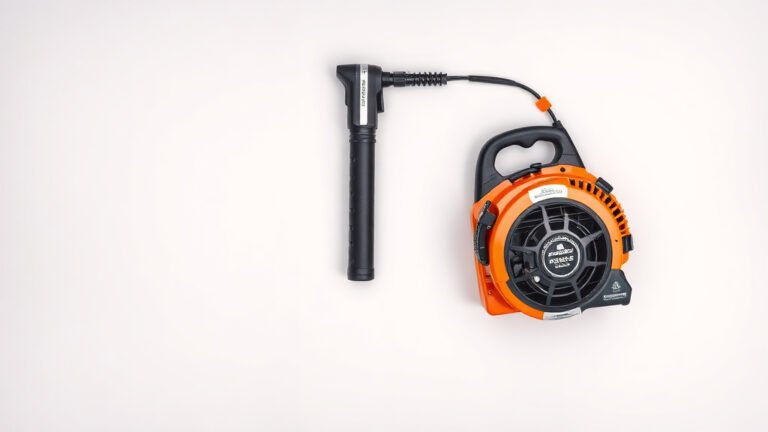

How to Choke a Leaf Blower: Easy Start Guide
The quickest way to choke a leaf blower is to flip the choke lever to the full choke position before you pull the starter cord. This restricts the air intake, which creates a richer fuel mixture that helps a cold engine fire up much faster. You only need to use it for a few seconds on startup.
We found that most leaf blower starting problems actually come from using the choke the wrong way. Many folks leave the choke on too long, which floods the engine, or they forget it entirely on a cold morning. Knowing the simple steps for a gas blower, an electric model, or a battery-powered unit saves you from yanking that cord until your arm hurts.
- Cold start: Push the choke lever to the full position for the very first pull.
- Warm start: Skip the choke, or use the half-choke position if your model has one.
- Listen for the sputter: When the engine tries to fire, quickly slide the choke to the run position.
- Flooded engine: If it won’t start, set the choke to run and pull the cord with the throttle wide open.
- Electric helper: On a battery blower, the choke function is automatic, so there are zero steps for you.
Below, we’ll walk you through the exact step-by-step process for different blower types, plus some common choke mistakes to avoid next time you’re out in the yard.
Mastering the Choke on Your Leaf Blower
Getting the choke right is the difference between a quick start and a sore shoulder. We found that most people overthink this simple little lever. It is just a tool to help a cold engine start by giving it more fuel and less air.
Think of it like this: a cold engine needs a stiff drink to wake up. The choke acts like that shot of espresso. Once the engine is warm, it wants to sip water, not espresso. Using the choke at the wrong time is what causes those frustrating no-start situations.
Why the Choke Lever Matters for Starting
Your small engine needs a specific mix of fuel and air to run. When it is cold, fuel does not vaporize well. The choke closes the air intake, which pulls in more liquid fuel and less air. This creates a richer mixture that is much easier to ignite on a cold morning.
The moment the engine fires, you need to open the choke. If you leave it closed, you will flood the engine with too much fuel. Research on small engine maintenance points to this flooding as the number one cause of starting trouble (Small Engine Manufacturers Association).
The Difference Between Choke and Primer
Many blowers have a rubber primer bulb in addition to the choke. They do very different jobs. The primer bulb shoots a tiny squirt of fuel directly into the carburetor. The choke lever changes the air-to-fuel ratio for the whole engine.
You usually press the primer bulb three to five times on a cold start. Then you set the choke. Some models use only a primer bulb. Some use only a choke. Check your blower to know which system you have before you start pulling.
Step-by-Step Guide to Choking a Gas Leaf Blower
Let us walk through the exact process for a standard gas-powered backpack or handheld blower. The steps are simple, but the timing is everything. We found that following this sequence exactly yields the best results. If you’re in the market, our guide to the best backpack leaf blower can help you choose a model with easy starting.
Before you touch the choke, make sure the blower has fresh fuel and is on a flat surface. A machine sitting on a hill can make the fuel slosh away from the pickup tube, which leads to dry starts.
The Cold Start Procedure for Gas Blowers
Here is the sequence we recommend for starting a cold engine. This is the most common scenario when you grab the blower from the garage on a Saturday morning.
- Set the choke lever to full. Look for a lever or a dial with a rabbit and a turtle icon. Push it to the closed position, often marked with a snowflake or a full dot.
- Press the primer bulb five times. This fills the carburetor with fuel. You should see fuel moving inside the clear bulb.
- Engine off switch on. Make sure the power switch is in the “on” or “run” position.
- Pull the starter cord firmly. Give it two to four strong pulls. The engine may cough or sputter. This sound means it is catching.
- Move the choke to the run position. As soon as you hear that cough, slide the lever to the open position, often marked with a sun or a line.
- Pull again to start. The next one or two pulls should fire the engine to life. Give it a few seconds to warm up before you give it full throttle.
How to Read the Engine’s Signals
The engine will tell you when to change the choke. That little cough or sputter is your signal. It is the engine saying, “I am getting fuel now, open the door for more air.”
If you pull the cord six or seven times and hear nothing, stop. Do not keep pulling. Check the choke position. If it is on full and you have primed it, you might be fighting a different problem like a dirty air filter or old gas.
The Warm Start Procedure
A warm engine does not need the rich mixture. If you just shut the blower off to move a branch or take a water break, skip the choke entirely. A warm engine needs the normal air-fuel balance.
Set the choke to the run position before you pull. If the blower has a half-choke position, you can use that. Pull the cord once or twice, and it should fire right up. We found that using full choke on a warm engine is the fastest way to flood it.
Using the Half-Choke Position
Some blowers come with a half-choke setting. This is a middle ground. It is perfect for a slightly warm engine or a cool morning where full choke seems too aggressive.
Use the half-choke if you have pulled the cord a few times with no luck on the run setting. It gives the engine a little extra fuel without drowning it. Remember to move to the run position the moment the engine stays running.
Handling Common Choke Problems
Even with perfect technique, things can go wrong. We found that most issues boil down to two main problems: flooding and not enough fuel. Here is how to fix both without a trip to the repair shop.
What to Do When You Flood the Engine
A flooded engine smells strongly of gas. The spark plug gets wet and cannot create a spark. It happens when you use the choke too long or over-prime the bulb. Do not panic, it is a common fix.
First, turn the engine switch to the off position. Next, set the choke lever to the run position. Then pull the starter cord about ten times with the throttle fully open. This clears the excess fuel out of the cylinder. Put the switch back on, and try a normal start without any choke.
Many guidelines from small engine repair forums support this clear-out method for flooded engines. It pushes fresh air through the system and dries out the spark plug.
Signs Your Blower is Flooded
- A strong, sharp smell of gasoline near the carburetor.
- The pull cord feels hard or stiff, as if the cylinder is full of liquid.
- The engine makes a “wheezing” sound when you pull.
- White smoke or a wet spark plug when you check it.
- Zero response after multiple pulls with the choke on.
Why Your Blower Only Runs with the Choke On
This is a classic symptom that confuses many homeowners. You start the blower with the choke, and it runs fine. The moment you push the choke in, it dies. This is not a choke problem. It is a fuel system problem.
When the engine only runs with the choke closed, it is starved for fuel. The choke is essentially forcing the engine to take in more fuel just to idle. This usually points to a dirty carburetor or a clogged fuel filter.
We found that a dirty carburetor is the most common culprit. The tiny jets inside the carburetor get gummed up with old fuel residue. Cleaning them with carburetor cleaner often fixes the issue. If that does not work, the carburetor diaphragm might need replacing.
Choking Electric and Battery Leaf Blowers
You might be wondering about newer models. Electric and battery-operated leaf blowers do not have a choke lever at all. The technology works differently. There is no fuel to mix, so there is no need to enrich the mixture for cold starts.
We found that many owners of gas blowers switch to battery models for this exact reason. It removes the guesswork and the maintenance headaches that come with carburetors and fuel lines.
Why Battery Blowers Do Not Need a Choke
Battery blowers run on a simple electric motor. It does not care about temperature the way a gas engine does. There is no vaporization process happening. The motor just spins when you give it power.
Many experts say that battery blowers are the most user-friendly option for those who hate dealing with small engine mechanics. You just insert the battery, press the trigger, and go. There is zero chance of flooding or pulling a cord for twenty minutes.
The Automatic Choke on Modern Gas Models
Some newer gas blowers feature an automatic choke system. These models use a thermal sensor to adjust the choke position based on engine temperature. You just pull the cord once, and the system handles everything.
If you have one of these, it is important to trust it. Do not fight the system by manually moving the choke. Just ensure the lever is in the “auto” or “start” position, prime the bulb as instructed, and pull.

A Quick Reference Table for Choke Positions
To make things even easier, we put together a quick reference table. It helps you decide which choke position to use based on the condition of your engine. Keep this in mind next time you are in the yard.
| Engine Condition | Choke Position | Number of Pulls Expected |
|---|---|---|
| Cold (sitting overnight) | Full Choke | 2 to 4 pulls |
| Cool (sat for an hour) | Half Choke | 1 to 2 pulls |
| Warm (just shut off) | Run Position | 1 to 2 pulls |
| Flooded (gas smell) | Run Position | 10 pulls with throttle |
Proper Choke Maintenance for Longevity
Your choke lever needs some basic care to keep working correctly. A stuck choke is a common failure point on older blowers. We found that regular maintenance prevents this issue from ever starting.
Take a look at the choke linkage each season. Make sure it moves freely without sticking. A little spray lubricant on the pivot points can keep it smooth. Also, check the air filter; a dirty one can affect how the choke performs.
Checking the Choke Plate and Linkage
The choke plate sits inside the carburetor. It is a round metal disc that closes off the air intake. Over time, carbon build-up can prevent it from closing completely. This makes the choke ineffective.
To inspect it, you may need to remove the air filter cover. Look down into the carburetor throat. Move the choke lever and watch the plate. It should fully close and fully open without hanging up.
The Right Way to Store Your Blower
Storing your blower properly helps the choke and carburetor last longer. The biggest enemy is old, stale fuel. It turns into a varnish-like substance that clogs everything it touches.
Many guidelines point to draining the fuel tank at the end of the season as a best practice. Run the blower dry until it shuts off on its own. This pulls the fuel out of the carburetor and leaves it clean for spring.
Your 5-Item Choke Checklist for Next Time
Before you head outside, run through this quick mental checklist. It will save you time and frustration. We use this exact list every time we pull out a gas blower.
- Fresh fuel: Is the gas less than 30 days old? If not, drain it and refill.
- Air filter: Is it clean enough to see light through it? A dirty filter suffocates the engine.
- Full choke for cold: Always start with the full choke position on a cold engine.
- Listen for the cough: Move the choke to run the second you hear the engine sputter.
- Primer bulb: Press it the recommended number of times, usually three to five.
- Dry the flood: If you smell gas, skip the choke and pull with the throttle open.
Mastering the choke is really about building a rhythm. You pull, you listen, and you react. Once you get that rhythm down, your blower will start on the first or second pull every time. No more sore arms or wasted weekends. You have got this. Once your blower starts reliably, you can also use it for cleaning gutters with a leaf blower.
Conclusion
Getting the choke right comes down to one simple habit: listen to your engine. You use full choke for a cold start, then flip it to run the second you hear that sputter. Leave it on too long, and you will flood the machine. Skip it on a warm engine, and you will yank the cord forever.
You now know the exact steps for cold starts, warm restarts, and flooded engines. You also know when to check your carburetor or fuel filter if the blower only runs with the choke closed.
Here is your next step: grab your blower right now and check where the choke lever sits in each position. Feel how it moves. Knowing your specific model takes ten seconds and saves you a whole season of frustration. You have got this.
Frequently Asked Questions
How long should I leave the choke on a leaf blower?
Only leave the full choke on for the first two to four pulls. The moment you hear the engine cough or sputter, move the choke to the run position immediately. Leaving it on any longer risks flooding the engine with too much fuel.
Should I use the choke if my leaf blower has a primer bulb?
Yes, you use both on most gas models. The primer bulb pushes a small shot of fuel into the carburetor, and the choke enriches the air-fuel mixture for cold starts. Press the bulb three to five times, then set the choke to full before your first pull.
Why does my leaf blower start with choke but dies when I turn it off?
This usually points to a fuel delivery problem, not a choke issue. When the blower only runs with the choke closed, it means the engine is starved for fuel. Check the fuel filter and clean the carburetor jets with carburetor cleaner.
Can I use starting fluid instead of the choke?
You can, but it is not the best habit. Starting fluid can wash away the thin layer of oil on your cylinder walls, which leads to extra wear over time. Rely on the choke and primer bulb for normal starts, and save starting fluid for troubleshooting a stubborn engine.
What position should the choke be in when storing a leaf blower?
Always store your blower with the choke in the run or open position. This keeps the choke plate from sticking in the closed position over the off-season. It also allows air to flow through the carburetor and keeps the internal parts from getting gummed up.