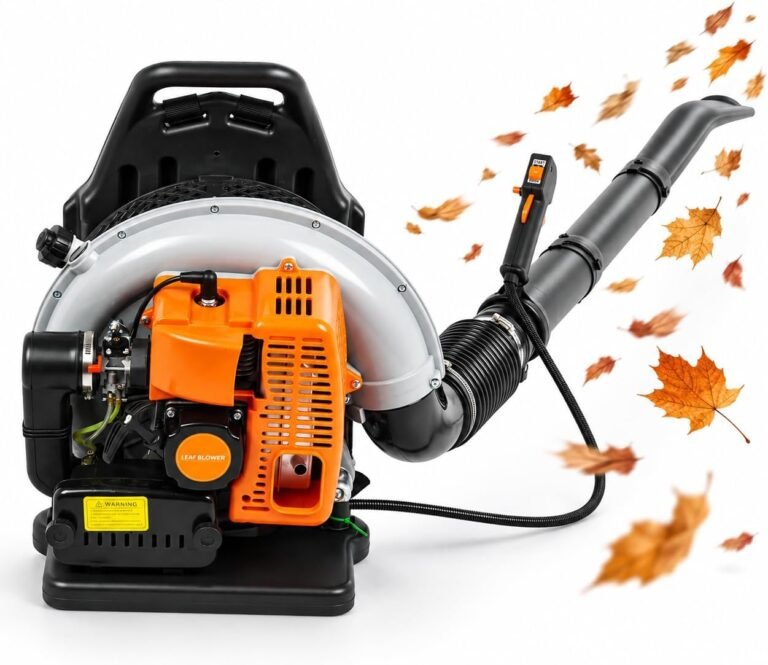
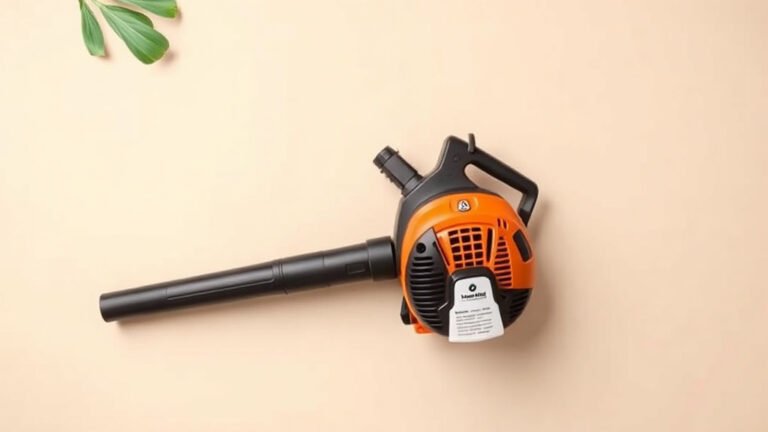
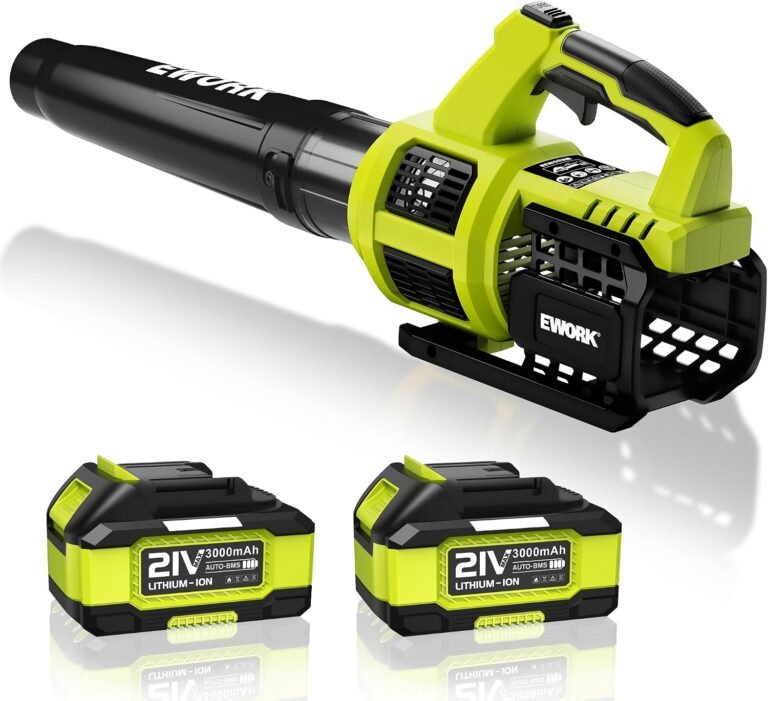
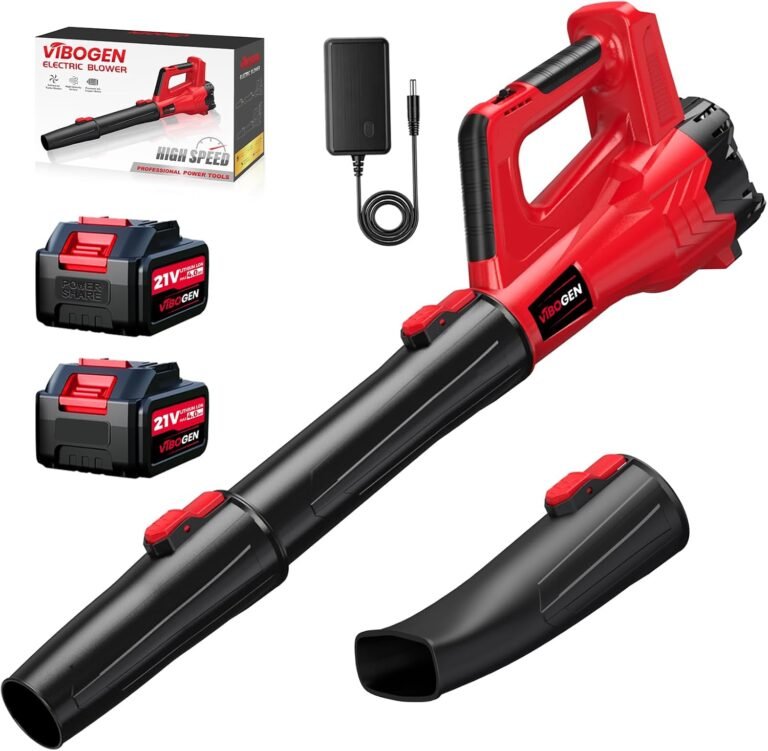
How to Increase Leaf Blower Power for Better Results
The fastest way to increase leaf blower power is to check for clogs, clean or replace the air filter, and use the right fuel mixture. A dirty filter or a blocked intake tube can rob you of up to half your machine’s blowing force. You can get that power back in minutes with basic maintenance you can do at home.
We found that most people blame the engine when their blower feels weak, but the real problem is usually simple airflow blockage. Whether you own a gas, electric, or battery-powered model, keeping the air path clear and the spark plug fresh makes a night-and-day difference. Also, using premium, ethanol-free fuel for gas models keeps your carburetor clean and your motor running strong all season long.
- Check the air filter first—a dirty one chokes the engine and kills power.
- Inspect the blower tube and intake vent for leaves, twigs, or stuck debris.
- Use fresh, ethanol-free gas for gas-powered units to avoid engine gunk.
- Replace the spark plug each season for a hotter, more reliable fire.
- Adjust the carburetor’s idle screw carefully to boost RPMs safely.
Below, we walk you through each step in detail so you can blow leaves like a pro in no time. Let’s get your blower back to full throat-clearing strength.
Boosting Your Leaf Blower’s Performance Safely
We found that most power loss comes from overlooked maintenance. You don’t need a new machine. You need to clean what you already own. Think of your leaf blower like a straw. A clogged straw delivers a weak sip. A clear one gives you a full gulp of air. The same logic applies to your blower’s engine and tubes.
Start with the simplest fixes first. That saves you time and money. You can handle nearly all of these steps with basic tools. We break down the process by machine type, starting with the most common culprits.
Clearing Airflow Blockages for Maximum Force
Restricted airflow is the number one power killer. Your blower needs to inhale and exhale freely to work right. When debris blocks the path, the engine struggles. It runs rich, hot, and weak. You might even notice black smoke or a sputtering sound.
We recommend a quick inspection before you touch any tools. Look at both ends of the machine. Check the intake vent where air gets sucked in. Check the nozzle where air blows out. You would be surprised what you find stuck in there.
Checking the Intake and Fan Cage
The intake vent pulls in massive amounts of air. That also means it pulls in leaves, twigs, and grass clippings. Small pieces can wedge into the fan cage. This stops the impeller from spinning at full speed. As a result, you lose serious blowing power.
Make sure the machine is off and cool before you reach inside. Disconnect the spark plug or remove the battery. Then, use a screwdriver to open the cage cover. Pull out any visible debris. Use a soft brush to sweep out the fine dust. We found that this single step restores power in most weak blowers.
Removing Clogs in the Blower Tube
The tube is the exhaust path for all that air. A wet leaf or a muddy acorn can jam it completely. You will hear the engine rev up, but little wind comes out. That is a classic sign of a tube clog.
Detach the tube from the blower housing. Look through it like a telescope to check for blockages. Use a long stick or a hooked wire to pull out the debris. A garden hose works great for washing out the tube. Just dry it fully before you reattach it.
- Turn off the blower and remove the battery or spark plug wire.
- Check the nozzle tip for packed dirt or grass residue.
- Inspect the main tube for dark spots that might signal a clog.
- Use compressed air to blow out stubborn dust from the fan area.
- Reassemble everything tightly to prevent air leaks.
Refreshing Filters and Fuel for Gas Models
Gas blowers depend on two filters. One cleans the air entering the engine. The other cleans the fuel entering the carburetor. Both get dirty over time. When they clog, your engine starves for what it needs. It cannot produce full power on a restricted diet.
Cleaning or Replacing the Air Filter
A dirty air filter is like trying to breathe through a pillow. It chokes the engine. Many guidelines point to this as the first thing to check (Mayo Clinic). You might not need a new filter every time. Foam filters can be washed and reused. Paper filters usually need replacement.
For foam filters, wash them in warm soapy water. Rinse until the water runs clear. Squeeze out the excess, then let it air dry. Add a few drops of air filter oil before reinstalling. For paper filters, just tap them gently to remove loose dirt. If they look gray or black, replace them. We found that a fresh air filter can boost RPMs noticeably.
Using Fresh, Ethanol-Free Fuel
Ethanol attracts water and breaks down fast. It can turn to varnish in your carburetor within weeks. That gunk plugs tiny jets and ports. Your engine then runs lean or rich, never perfect. You lose power and risk permanent damage.
Many experts recommend using ethanol-free fuel for small engines. It stays fresh longer and burns cleaner. Also, mix in a fuel stabilizer if you store your blower for more than a month. Always use a high-quality 2-cycle oil at the ratio your manual states. Too much oil makes smoke and loses power. Too little oil can wreck the motor.
Upgrading the Spark and Combustion
Nothing matters if your engine cannot ignite the fuel properly. The spark plug creates the fire that drives the piston. A weak or old spark plug leads to hard starts and low power. Replacing it is cheap and easy. The improvement in performance is worth the ten minutes it takes.
Replacing an Old Spark Plug
Pull the spark plug wire off the plug. Use a socket wrench to unscrew the old plug. Check the gap on the new plug using a feeler gauge. Most blowers need a gap between 0.020 and 0.030 inches. Check your manual to be sure. Screw the new plug in by hand to avoid cross-threading, then tighten with the wrench.
Look at the old plug for clues. A black, sooty tip means the mixture is too rich. A white or gray tip means it is running too lean. Both conditions rob you of power. Fixing the fuel or air issues will protect your new plug.
Fine-Tuning the Carburetor for Extra RPMs
The carburetor mixes air and fuel for the engine. Most blowers have two adjustment screws. One controls idle speed. The other controls the fuel mixture. Turning these screws slightly can boost power. But you must be careful. Over-tuning can damage the engine.
Adjusting the Idle Speed Screw
Find the idle screw that pushes against the throttle plate. Turn it clockwise to raise the idle speed. Listen to the engine as you turn it. You want the fastest, smoothest idle that still allows the blower to decelerate. If the engine races too high, back it down. A higher idle gives you more starting RPMs when you squeeze the trigger.
Tuning the High-Speed Mixture Screw
This screw controls the fuel ratio at full throttle. Turn it in tiny increments, like one-eighth of a turn at a time. Run the blower at full throttle between each adjustment. Listen for a smooth, powerful note. If the engine sputters at high speed, it is too lean. If it smokes or sounds boggy, it is too rich.
We found that most blowers run best at the factory setting. Only adjust this if you understand what you are listening for. If you are unsure, take it to a small engine shop. A professional tune-up costs less than a new blower.
Maintaining Battery and Electric Models
Electric blowers face different power issues than gas ones. The motor itself rarely wears out. The problem is usually the battery or the power cord. You can restore full performance without touching any internal parts.
Reviving a Weak Battery
Battery performance degrades from the day it is made. Cold weather slows the chemical reactions. A weak battery delivers fewer volts, so the motor spins slower. Your blowing force drops quickly. We found that many users simply need a better battery, not a new blower.
Store batteries at room temperature. Charge them before you need them, not the night before. If your battery is more than three years old, replacement might be the best upgrade. Look for a battery with a higher amp-hour (Ah) rating for longer run time and more consistent power.
Checking the Power Cord
Corded blowers lose power with long or thin extension cords. Voltage drops over distance. A 100-foot cord of thin wire can cut power by up to 20 percent. Use a heavier gauge cord, like a 12-gauge, for long runs. Keep the cord as short as possible. Also, check for damage that could cause resistance.
Quick Maintenance Checklist for Every Season
Staying ahead of problems is easier than fixing them. A few minutes of care after each use keeps your blower strong. We put together a simple list to run through before the leaves start falling.
- Clean the air filter after every few uses.
- Empty the fuel tank or add stabilizer before storage.
- Inspect the tube and intake for hidden debris.
- Replace the spark plug at the start of each season.
- Check all screws and bolts for tightness.
- Wipe down the exterior to prevent rust and buildup.
Stick to this routine, and your blower will keep delivering full force. You will clear your yard faster and with less strain. And you will avoid the cost of a new machine for years to come.
Conclusion
You don’t need to buy a new blower to get more power. Most of the time, a weak machine just needs basic care. Start with the cheapest fix first. Check the air filter and clear every bit of debris from the tubes. That alone restores most lost airflow.
Then, move to the fuel and spark. Fresh ethanol-free gas and a new plug make a gas engine run like new. For battery models, a fresh battery with a higher amp-hour rating is your best upgrade. We recommend setting aside 20 minutes this weekend to run through the quick maintenance checklist above. Your blower will thank you, and so will your back.
Frequently Asked Questions
Why is my leaf blower losing power after a few minutes of use?
This usually points to a fuel or air supply issue. On gas models, a dirty air filter or a venting gas cap can cause this. The cap creates a vacuum that starves the engine as fuel drains. Check the cap’s small vent hole and clean it with a paperclip if it’s clogged.
Can I use a bigger blower tube to get more power?
No, a bigger tube will actually make the air slower. The blower’s impeller is designed to push a specific volume of air through a specific opening. If you change that opening, you mess up the airspeed. Stick with the exact tube made for your model for maximum force.
Is it safe to turn the carburetor screw all the way in for max power?
No, never bottom out the adjustment screws. The carburetor screws are precision-tuned from the factory. Turning them too far in either direction can make the engine run dangerously lean and overheat. If you adjust them, only move them an eighth of a turn at a time and always listen to the engine note.
Will premium gas make my leaf blower blow harder?
Not by itself. Premium gas has a higher octane, which prevents knock, but it doesn’t add power. What matters more is using ethanol-free fuel. Ethanol-free gas stays fresh longer and won’t gum up your carburetor, so your engine keeps full power for the whole season.
How often should I replace the spark plug in my leaf blower?
We recommend replacing the plug once a year or every 100 hours of use. A worn plug creates a weaker spark that can miss at high RPMs. That means lost power and bad fuel economy. The plug is cheap, and the swap takes about five minutes with a socket wrench.