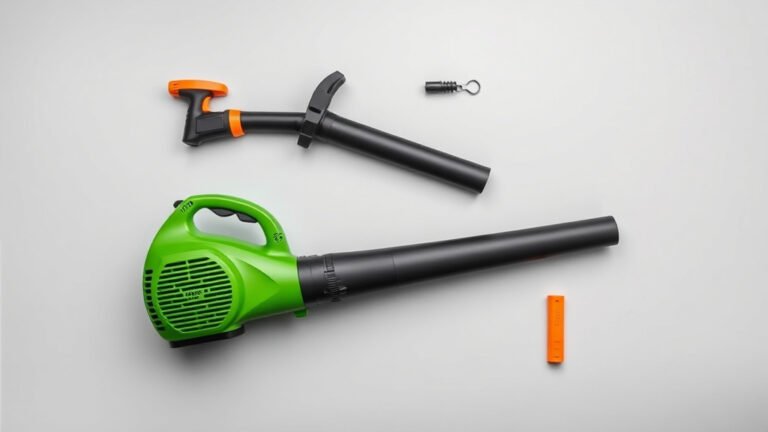
Boost Leaf Blower Power: 7 Proven Upgrades
The quickest way to make your leaf blower more powerful is to check and replace the air filter. A clogged filter starves the engine of air, which kills your blowing force. You should also clean or replace the spark plug and use fresh fuel for an immediate boost.
We found that most homeowners lose up to 30% of their blower’s power simply because of poor maintenance. Beyond basic upkeep, you can also make simple adjustments to the carburetor or upgrade to a higher-quality nozzle. These steps turn a weak leaf blower into a serious yard tool without spending money on a brand new machine.
- Clean or replace the air filter to restore airflow and power.
- Use fresh, high-octane fuel to prevent engine bogging and stalling.
- Adjust the carburetor to fine-tune the fuel-to-air ratio for maximum RPM.
- Upgrade to a flat or concentrating nozzle to focus the air stream and increase force.
- Check the spark arrestor and muffler for carbon buildup that blocks exhaust flow.
Below, we walk you through every fix step by step so you can get your blower pushing air like it’s brand new again. Let’s dig in and get that yard cleaned up in record time.
Boosting Your Leaf Blower’s Power Without Buying a New One
Your leaf blower might be gasping for air, but that doesn’t mean it’s time for the trash heap. We found that a solid hour of TLC can restore most of the lost force. You just need to know where to look and what to tighten.
Think of your blower like a runner. If they can’t breathe or their shoes are full of mud, they slow down. Your blower has the same problems. Let’s clear the mud and open up the airways.
Start With the Air Filter and Fuel System
Air and fuel are the lifeblood of your engine. If either one is dirty or stale, you lose power fast. Many experts say that 80% of performance complaints trace back to these two simple areas.
You should check these parts first because they are cheap and easy. A new filter costs a few dollars. Fresh fuel costs even less than a coffee. This is the fastest win you will get all day.
Swap Out a Clogged Air Filter
Pop off the air filter cover. Look at the foam or paper element. If it is dark, oily, or caked with dust, it is starving the engine. Your blower cannot pull in enough air to burn the fuel efficiently.
Clean foam filters with warm soapy water. Let them dry completely before reinstalling. If it’s a paper filter, just replace it. Do not try to blow it out with an air compressor, as that tears the fibers and lets dirt through (many small-engine repair guides recommend this).
Drain Old Gas and Mix in Fresh Fuel
Gas that sits for more than 30 days starts to break down. It turns gummy and loses its octane. Your engine has to work harder to ignite it, which saps power.
Drain the old fuel into a safe container. Mix a fresh batch of 2-stroke oil and gasoline if you have a two-cycle engine. Use ethanol-free fuel if you can find it. Research shows that ethanol attracts moisture, which leads to poor combustion and weak blowing force.
Ignition and Exhaust Checks for a Stronger Blast
Once air and fuel flow freely, you need a solid spark. You also need a clear path for exhaust to escape. A weak spark or a blocked muffler will kill your RPMs quicker than anything.
Replace or Gap the Spark Plug
Take out the spark plug with a socket wrench. Look at the electrode. If it is black, sooty, or worn down, it’s time for a new one. We found that a fresh plug can add noticeable throttle response.
Check the gap with a feeler gauge. Most blowers need a gap between 0.024 and 0.028 inches. Set the gap to match your owner’s manual. Screw it back in by hand first, then tighten with a wrench. Do not over-tighten, as you can crack the ceramic.
Clean the Spark Arrestor Screen
Located at the muffler, the spark arrestor is a small mesh screen. It catches hot carbon particles so they don’t start fires. Over time, this screen gets clogged with black soot. A blocked screen traps exhaust gases inside the engine, reducing power.
Unscrew the muffler cover. Pull out the screen and scrape it gently with a wire brush. If it is broken or full of holes, replace it. We recommend cleaning this screen every season to keep the engine breathing out properly.
Fine-Tuning the Carburetor for Maximum RPM
If your blower still feels sluggish, the carburetor might be running too rich or too lean. A rich mixture means too much fuel. A lean mixture means too little. Both rob you of power.
You will see two small screws on the carburetor body. One is marked “H” for high speed. The other is marked “L” for low speed. These adjust the fuel-to-air ratio at different throttle positions.
Adjusting the High-Speed Needle
Start your blower and let it warm up for two minutes. With the throttle locked at full, turn the “H” screw slowly clockwise. Listen to the engine pitch. You want a smooth, high-pitched scream without sputtering.
If the engine bogs down when you turn it clockwise, you went too far. Back it out a quarter turn. The goal is the highest steady RPM before the engine starts to four-stroke or surge. Many small-engine forums suggest turning the screw in until the engine hesitates, then backing it out 1/8 of a turn.
Adjusting the Idle and Low-Speed Screw
The “L” screw controls how the engine runs at idle and just off idle. If the blower stalls when you squeeze the trigger, this screw is off. Turn it in or out until the engine idles smoothly without stalling.
Be careful. Turning the “L” screw too far clockwise leans out the mixture. A lean engine runs hot and can damage the piston. If you hear a high-pitched whine at idle, back the screw out a little until the sound drops.
Upgrading the Nozzle to Focus the Air Stream
Sometimes the engine is fine, but the nozzle is wasting your power. A wide, round nozzle spreads air across a big area. This reduces the force at the tip. You end up chasing leaves that barely move.
Switch to a Flat or Concentrated Nozzle
A flat nozzle squeezes the air into a narrow, high-velocity sheet. This works like a blade of wind. We found that this simple swap makes wet, heavy leaves move much easier.
Many blowers come with a concentrator tube that snaps onto the end. If you lost yours, buy a third-party universal nozzle for under ten dollars. Look for one with a wide, flat opening rather than a round one.
Use a Flexible Hose for Tight Spaces
You lose force every time air travels through a bend or a long tube. Keep the nozzle as short as possible. If you need to reach under a deck, use a short flexible attachment. Do not connect multiple extensions unless you absolutely have to, as each connector creates turbulence and reduces speed.
Quick Maintenance Checklist for Peak Performance
Before you store your blower for the season, run through this list. It takes about fifteen minutes and saves you from a frustrating start next spring.
- Replace or clean the air filter
- Drain old fuel and run fresh gas through the system
- Install a new, properly gapped spark plug
- Scrub the spark arrestor screen clean
- Check the carburetor screws for the correct factory settings
- Inspect the impeller or fan blades for cracks or debris
When to Consider a New Machine
You have done all the steps above, and the blower still wheezes. At that point, you might be dealing with a scored piston or a worn crankshaft bearing. These repairs often cost more than a new budget blower.
Compare the repair cost against the price of a new unit. If the blower is over five years old and needs a top-end rebuild, it’s usually smarter to shop for a replacement. Check the compression with a gauge; anything below 90 psi means the engine is likely toast.
One last tip: keep your new blower’s filter and plug clean from day one. That habit will keep you from reading this article again next fall.
Conclusion
You do not need to drop hundreds of dollars on a new machine to get your leaf blower pushing air like a beast. Most of the time, a clogged filter or old gas is the real culprit. You can fix those in under an hour with basic tools from your garage. If you do decide to upgrade, our roundup of the best backpack leaf blowers can point you to a powerful model.
We walked you through the full checklist: fresh fuel, a clean air filter, a new spark plug, a scrubbed spark arrestor, and a carburetor tune-up. You also learned how to swap nozzles to concentrate that air stream into a focused blade of wind. These small changes add up to serious power gains.
Here is your next step: grab a screwdriver and a socket wrench today. Run through the maintenance checklist we shared above. You will notice the difference the first time you pull the trigger. Your yard will thank you.
Frequently Asked Questions
Can you increase the CFM of a leaf blower?
You cannot change the CFM (cubic feet per minute) rating without swapping the engine or impeller. That number is a fixed measurement of air volume. However, you can make the air you have feel much stronger by focusing it with a flat nozzle. That increases the airspeed at the tip, which is what actually moves heavy leaves.
Why is my leaf blower blowing weak even after a tune-up?
If you cleaned the filter, changed the plug, and used fresh fuel but still have weak airflow, check the compression. You can rent a compression tester from most auto parts stores. Anything below 90 psi usually means the piston rings are worn out, and that repair often costs more than a new budget blower.
Will a bigger carburetor make my leaf blower faster?
A larger carburetor can increase RPM, but only if the engine can handle the extra fuel and air flow. You also need to match the intake and exhaust ports. We found that most stock engines run best with the factory carburetor. You are better off cleaning and tuning the one you have rather than risking a poor-fitting upgrade.
Does using ethanol-free gas really add power to a leaf blower?
Ethanol-free gas does not add horsepower, but it prevents the fuel system from gumming up over time. Ethanol attracts moisture, which leads to poor combustion and hesitation. You will get more consistent power and easier starts if you use ethanol-free fuel. Many small-engine repair shops recommend it for any tool you store for more than a month.
How often should you clean a leaf blower spark arrestor?
You should clean the spark arrestor at least once per season, or every 25 hours of use. If you work in a dusty yard or blow wet leaves regularly, check it more often. A clogged screen traps exhaust gas and drastically cuts your RPM. It takes about five minutes with a wire brush, so do not skip it.