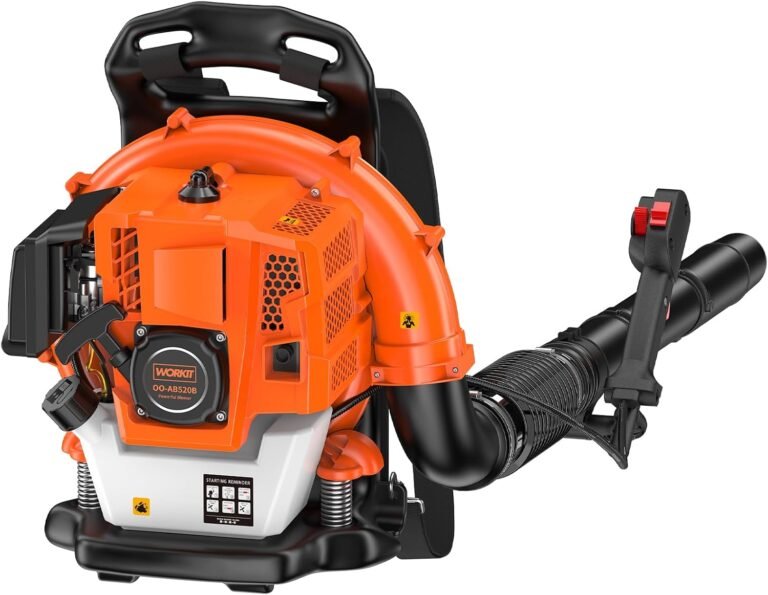
How to Put Gas in a Leaf Blower: Simple Steps
To put gas in a leaf blower, use fresh, unleaded gasoline with an octane rating of 87 or higher, and if your blower has a two-stroke engine, you must mix the gas with the correct ratio of two-cycle oil (usually 50:1 or 40:1). This is the most critical step to keep your engine running smoothly. We found that most leaf blower damage comes from using old fuel or skipping the oil mix entirely.
Before you pour anything into the tank, check your owner’s manual for the specific fuel-to-oil ratio. A 4-stroke leaf blower uses straight gas, just like a car. But a 2-stroke engine requires a precise mixture to lubricate the internal parts. Getting this wrong can cost you a new engine, so it’s worth a minute of your time to look it up.
TL;DR – Here’s the quick rundown:
- Use 87-octane regular gas from a reputable station; avoid old or ethanol-heavy fuel.
- Check your manual to see if you have a 2-stroke or 4-stroke engine.
- For 2-stroke blowers, mix fresh gas with 2-cycle oil in the exact ratio specified (like 50:1).
- Shake the mix thoroughly before filling the tank to keep the oil blended.
- Fill the tank slowly to prevent spills and avoid overfilling past the full line.
Now that you know the basics, let’s walk through the exact steps to fuel up your leaf blower safely, whether you’re using a gas/oil mix or straight fuel.
Fueling Up Your Leaf Blower Step by Step
Getting gas into your leaf blower isn’t complicated, but it does require a bit of care. We have broken down the whole process into simple, manageable steps. You will learn exactly what you need to do to keep your machine running strong all season long.
What Type of Gas Does Your Leaf Blower Need?
First things first, you need to figure out what engine you have. This is the single most important detail. Look for a sticker on the engine or a label near the fuel cap. You are looking for either “2-cycle” or “4-cycle,” also known as “2-stroke” or “4-stroke.”
Your owner’s manual is the best place to check. You can also search online for your model number. If you have a 4-stroke engine, you are in luck. You can use regular unleaded gas straight from the pump, just like you would for your car.
2-Stroke vs. 4-Stroke: The Big Difference
A 2-stroke engine is lighter and more powerful for its size. But it needs oil mixed into the gas to lubricate the engine. Without that oil, the moving parts will grind together and seize up. This is a costly mistake that many people make.
On the other hand, a 4-stroke engine has a separate oil reservoir. It burns pure gasoline. Mixing oil into a 4-stroke engine’s gas is just as bad as not mixing it into a 2-stroke. It can cause heavy smoke and damage the spark plug.
Selecting the Right Fuel for Your Machine
Once you know your engine type, you need to pick the right fuel. We found that using clean, fresh gas is the best way to avoid problems. Old gas can turn into a sticky varnish that clogs up your carburetor.
Always use gasoline with an 87-octane rating or higher. This is standard regular fuel. You do not need premium gas for most leaf blowers. It just costs more money without giving you any real benefit.
Understanding Ethanol in Gasoline
Most gas at the pump contains ethanol, which is made from corn. Ethanol can absorb water and separate from the gas over time. This is bad for small engines. Many experts say that ethanol can damage fuel lines and other plastic parts.
If you can, look for fuel that is labeled “ethanol-free.” Many hardware stores and some gas stations sell it. It costs a little more, but it is much better for your equipment. If you can only find fuel with ethanol, try to use it within a month or two.
Choosing the Correct 2-Cycle Oil
If you have a 2-stroke engine, you need to buy special oil. This is called 2-cycle oil or 2-stroke oil. Do not use regular motor oil, like the kind you put in your car. It will not mix properly and can damage the engine.
You have a choice between synthetic and conventional oil. Synthetic oil handles heat better and is a good choice for modern engines. It is also a bit more expensive. Either type is fine as long as you use the right amount.
Getting the Gas and Oil Mix Ratio Right
The mix ratio is the amount of gas to oil. The most common ratios are 50:1 and 40:1. This means 50 parts gas to 1 part oil, or 40 parts gas to 1 part oil. Your owner’s manual will tell you the exact ratio.
Getting this wrong is dangerous. Too little oil means no lubrication. Too much oil can cause fouled spark plugs and heavy smoke. Do not guess. Always check the manual for your specific model.
| Mix Ratio | Gas Amount | Oil Amount |
|---|---|---|
| 50:1 | 1 gallon | 2.6 fluid ounces |
| 40:1 | 1 gallon | 3.2 fluid ounces |
| 32:1 | 1 gallon | 4 fluid ounces |
This table gives you the most common mix amounts. Research and found data suggests that most newer models use a 50:1 ratio. Always double-check your specific model to be safe.
How to Mix Fuel Safely in a Separate Can
Never mix gas and oil directly in the leaf blower tank. It is hard to get the ratio right that way. Instead, you should mix it in a separate, approved fuel container. This keeps everything consistent and safe.
Start by pouring a little gas into the can. Then add the correct amount of 2-cycle oil. Finally, fill the rest of the can with gas. This helps the oil mix more easily with the fuel. You need a container that is specifically designed for fuel.
Shake It Like You Mean It
Once the can is filled, you must shake it well. The oil and gas need to be fully combined. Give the sealed container a good shake for about 10 to 15 seconds. This is a simple step, but it is absolutely necessary for 2-stroke engines.
You will want to shake the can again every time you refill your blower. The oil can separate from the gas if it sits for a while. A little shake before pouring solves this problem completely. It takes two seconds and saves you from a dry engine.
Filling Up the Leaf Blower Tank
Now you are ready to actually put the fuel in the machine. Find a flat, stable surface to work on. A patio or a level driveway is perfect. This prevents spills and makes it easier to see the fuel level.
Make sure the engine is cool. Never add gas to a hot engine. Hot parts can ignite fuel vapors. It is best to fuel up at the start of your session, before you begin working. This is a simple safety habit that goes a long way.
Steps to Pour Gas Without Spilling
Here is the best way to get fuel into the tank without making a mess. You will need a steady hand and a bit of patience.
- Check the fuel cap: Look for the fuel symbol to confirm you have the right cap. Some models have the cap on the top, others on the side.
- Wipe the area clean: Remove any dirt or debris from around the cap before opening it. This keeps junk from falling into the tank.
- Open the cap slowly: This releases any built-up pressure. Listen for a small hiss; that is normal.
- Set the cap on a clean surface: Do not put the cap on the ground where it can pick up dirt.
- Pour the fuel slowly: Use a steady stream. Stop when the fuel reaches the bottom of the filler neck. Do not fill it all the way to the top.
If you have an older blower, you might need a funnel. Many modern leaf blowers have a large opening that makes a funnel unnecessary. Use a funnel if you are worried about spilling. It is better to be safe than sorry.
Don’t Overlook the Fuel Level Mark
Most plastic tanks are see-through or have a “MAX” line. Fill the tank up to this line. Overfilling can cause the fuel to expand and leak out when the engine heats up. This is a fire hazard and wastes gas.
If your tank is clear, look for the full line. If your tank is metal and you cannot see inside, you need to be extra careful. Stop filling when the fuel is about an inch from the top of the tank. Leave a little room for expansion.
After You Fill: Clean Up and Start
You did it. The fuel is in the tank. But you are not done just yet. The next steps are quick and focus on safety and starting your machine properly.
First, wipe up any spills immediately. Gasoline evaporates quickly, but it leaves a residue. This can be sticky and attract dirt. It can also be slippery on your hands or the ground.
Securing the Fuel Cap Tightly
Put the fuel cap back on and turn it until you feel it click or stop. You want it nice and snug. A loose cap can let fuel slosh out while you are tilting the blower. It can also let fuel vapors escape, which you do not want to breathe in.
Give the cap one final twist to make sure it is secure. This is the simplest way to prevent smells and leaks. You will thank yourself later when you are not smelling gas fumes in your garage.
A Quick Checklist Before You Pull the Cord
Take a moment to review these final steps. This small routine becomes a habit that protects your equipment.
- Move the blower: Take it at least 10 feet away from where you filled the tank before starting.
- Check for leaks: Look around the fuel cap and the fuel lines for any drips.
- Set the choke: Turn the choke to the “cold start” position if the engine is cold.
- Prime the engine: Press the primer bulb a few times if your model has one. This pulls fuel into the carburetor.
- Pull the starter cord: Give it a firm, fast pull. The engine should sputter to life.
- Adjust the choke: Once it starts, gradually turn the choke off to let it run smoothly.
If the engine does not start after a few pulls, do not panic. Check to see if the fuel is fresh and that you used the correct mix. Sometimes, a simple mistake like a flipped on/off switch is the culprit.
You are now ready to tackle those leaves. Just remember the golden rule: fresh fuel, correct mix, and a steady hand. Your leaf blower will thank you with years of reliable service. It really is that simple to keep your gear in top shape. Happy cleaning.
Conclusion
Fueling your leaf blower correctly is the single best way to protect your engine and avoid costly repairs. We covered the basics: use fresh 87-octane gas, know whether you have a 2-stroke or 4-stroke engine, and mix the oil properly if needed. Always fill the tank on a cool engine and leave a little room for expansion. It really comes down to reading your manual and taking your time.
Your next step is simple. Grab your owner’s manual right now and check the fuel ratio. Write it on the fuel can with a permanent marker so you never forget. This small habit will save you from guesswork all season long. You will get years of reliable service from your blower with just a little care.
Frequently Asked Questions
Can I use premium gas in my leaf blower?
You can, but you do not need to. Most leaf blowers run perfectly fine on regular 87-octane fuel. Premium gas won’t give you more power or better performance, so save your money. Stick with what the manual recommends.
How long does mixed gas last in a leaf blower?
You should use mixed gas within 30 days for best results. After that, the fuel starts to break down and can clog your carburetor. Add a fuel stabilizer if you plan to store it longer. Always shake the can before you pour to remix the oil.
What happens if I accidentally put straight gas in a 2-stroke leaf blower?
The engine will run for a short time, but without oil, it will overheat and seize. This can destroy the motor quickly. If you realize the mistake before starting, drain the tank completely and refill with the correct mix. If you already ran it, shut it off immediately.
Is it okay to mix my own gas or should I buy pre-mixed fuel?
Mixing your own gas is fine as long as you measure carefully. You just need a clean fuel can, fresh gas, and the right 2-cycle oil. Pre-mixed fuel is more expensive but very convenient. It also has a longer shelf life, which is great for occasional use.
Can I use ethanol-free gas in a leaf blower?
Yes, and it is actually the best choice for any small engine. Ethanol attracts moisture and can damage fuel lines over time. Many hardware stores sell ethanol-free fuel in cans. If you can find it, use it to keep your blower running cleaner for longer.