Leaf Blower Ratings Explained: Key Specs to Compare
Leaf blowers are rated primarily by airflow (CFM) and air speed (MPH), and the best rating for you depends on the size of your yard and the type of debris you need to move. We found that CFM matters more for moving heavy, wet leaves, while MPH matters more for blasting stuck debris out of tight spaces.
When you compare models, you’ll also see ratings for noise level (decibels), engine power (for gas models), and battery voltage (for cordless models). The trick is knowing which numbers actually matter for your specific yard, and which ones are just marketing hype. That’s why understanding how leaf blowers are rated is the first step to buying the right one.
TL;DR — How Leaf Blowers Are Rated:
- CFM (Cubic Feet per Minute) measures the volume of air moved. Higher is better for raking large piles of leaves.
- MPH (Miles per Hour) measures the speed of the air. Higher is better for moving wet leaves or debris from cracks and flower beds.
- Decibels (dB) tell you how loud the blower is. Under 65 dB is quiet; anything above 70 dB requires hearing protection.
- Gas vs. Electric vs. Battery: Gas has more raw power, but battery rates better for convenience and weight. Voltage (like 40V or 60V) shows the power ceiling of a cordless blower.
- For most city lots, a handheld blower with 400–600 CFM and 120–170 MPH is plenty. Don’t overpay for top numbers you’ll never use.
Below, we’ll break down each rating number in plain English, so you can walk into any store and compare models like a pro.
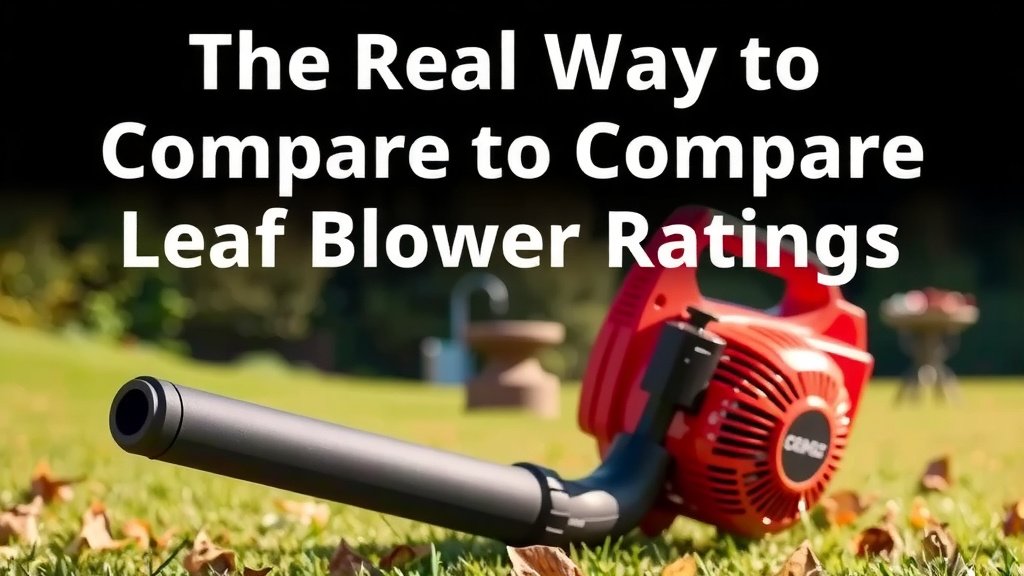
The Real Way to Compare Leaf Blower Ratings
Let’s be honest—shopping for a leaf blower can feel like reading a foreign language. You see numbers like 450 CFM and 150 MPH, and you have no idea if that’s good or terrible. The good news? The rating system is actually pretty simple once you break it down. We found that the two golden numbers are CFM and MPH, and you simply cannot judge a blower on one without the other.
Think of it like a garden hose. CFM is the volume of water flowing. MPH is the pressure shooting out of the nozzle. You can have a massive flow at low pressure, or a powerful jet with barely any water. The best blower matches those two numbers to your specific yard.
CFM: The Volume King
CFM stands for Cubic Feet per Minute. It measures how much air the blower pushes out every single minute. In plain English, this is your “moving power.” If you have a huge pile of dry oak leaves on a flat driveway, CFM is the number that clears that pile fast.
We found that most homeowners overestimate how much CFM they need. A heavy-duty backpack blower might hit 900 CFM, but unless you are a professional landscaper, that’s like driving a semi-truck to buy groceries.
How Much CFM Do You Actually Need?
Your yard size is the number one factor here. Here is a simple cheat sheet we use when rating yard needs:
- Small city lot (under ¼ acre): 350–450 CFM is plenty.
- Medium suburban yard (¼ to ½ acre): Look for 450–600 CFM.
- Large yard (½ acre or more): 600+ CFM will save you serious time.
- Wet, heavy leaves: Always lean toward the higher end of your range.
Here is the trick we found: if you live in a rainy area, do not buy a high-MPH blower with low CFM. You will be out there for hours. The volume of air is what scoops up the wet, soggy mess.
MPH: The Pressure Factor
MPH stands for Miles per Hour. This measures how fast the air is traveling when it leaves the nozzle. This is your “blast power.” If you need to dislodge leaves stuck under a bush, or blow grass clippings out of cracks in your driveway, MPH is your best friend.
We found that MPH is often overhyped by manufacturers because big numbers look great on the box. But very high MPH with low CFM often just moves leaves around in circles rather than clearing them away.
Balancing Speed and Volume
Many experts say that a ratio of roughly 1:10 to 1:15 (MPH to CFM) is a sweet spot for general use. For example:
| Blower Type | CFM Rating | MPH Rating | Best For |
|---|---|---|---|
| Light handheld | 400 CFM | 130 MPH | Patios and small lawns |
| Standard handheld | 500 CFM | 150 MPH | Suburban leaf cleanup |
| Backpack style | 700 CFM | 180 MPH | Large properties, wet leaves |
| Commercial grade | 900+ CFM | 200+ MPH | Professional landscaping |
If a blower promises 200 MPH but only puts out 350 CFM, walk away. You will blast one leaf across the yard while leaving the rest of the pile untouched. It is a classic marketing trap.
Noise Ratings: Don’t Ignore the Decibels
Every blower gets a decibel (dB) rating. This measures sound pressure. This is not just about annoying your neighbors—it is about protecting your ears. Hearing damage is permanent, and we found that many gas blowers operate well above safe levels.
According to the National Institute on Deafness and Other Communication Disorders, prolonged exposure to sounds above 85 decibels can cause gradual hearing loss. Many gas leaf blowers hit 95 to 105 dB at the operator’s ear. That is dangerously loud.
What is a Quiet Rating?
Here is how to judge the numbers:
- Under 60 dB: Quieter than normal conversation. Rare for blowers.
- 60–65 dB: Pleasant. Comparable to a dishwasher.
- 65–70 dB: Acceptable, but you will notice it.
- 70–75 dB: Getting loud. Use ear protection.
- 75+ dB: Definitely wear ear protection, and watch local noise laws.
We found that battery-powered blowers typically rate 10 to 15 dB quieter than gas models of similar power. If you have close neighbors, that difference is huge. Some cities even restrict gas blowers because of noise pollution, so a quieter model is a safer investment.
Gas, Electric, or Battery: Power Ratings Explained
Your blower’s power source changes how you read its ratings. Gas engines are rated by engine displacement (cc or cubic centimeters). Bigger cc numbers mean more internal volume and more raw power. A 50cc engine will blow harder than a 25cc engine at the same CFM.
However, gas power comes with weight and maintenance. You are mixing oil, pulling cords, and dealing with the smell. The ratings look impressive, but the trade-off is real.
Battery Voltage and Amp Hours
For cordless blowers, you will see voltage (V) and amp hours (Ah). Voltage is the ceiling of power. A 60V battery will generally sustain higher CFM ratings than a 40V battery. Amp hours are the fuel tank. Higher Ah means longer runtime.
We found that most homeowners make a mistake here—they chase high voltage and forget amp hours. A 60V blower with a 2Ah battery dies in about ten minutes. A 40V blower with a 6Ah battery runs for the whole afternoon. If you have a big yard, prioritize Ah over V.
Why Runtime Matters More Than Peak Power
Here is a quick tip we use: look at the CFM rating at different battery levels. Some blowers drop power significantly as the battery drains. That “600 CFM” is only at full charge, with a fresh battery. After 15 minutes, it might drop to 400 CFM. Read the fine print or real user tests before buying.
Tube and Nozzle Ratings: The Hidden Variable
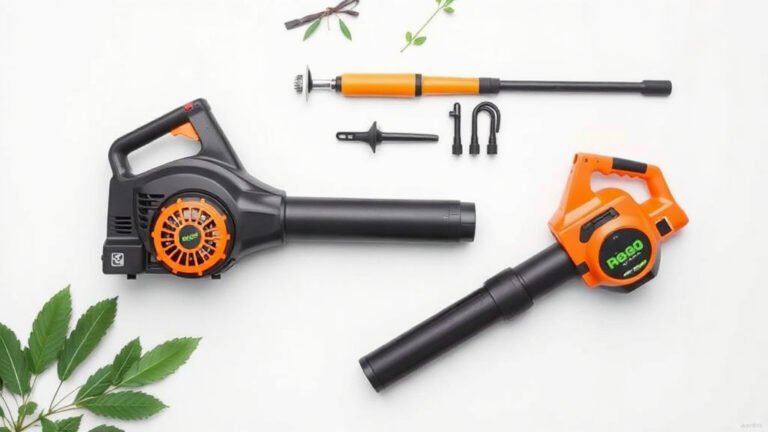
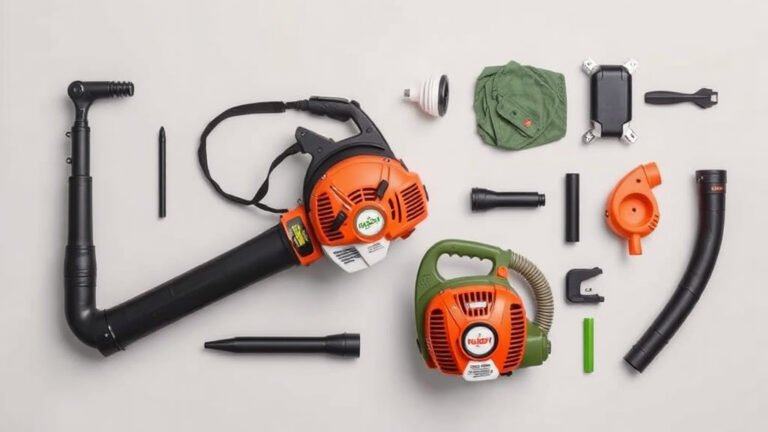
Two blowers can have identical CFM and MPH ratings, yet one clears leaves faster. Why? The nozzle design. A “concentrator” nozzle narrows the air stream to boost MPH. A “wide” nozzle spreads the air out for covering more ground.
Many quality blowers ship with a flat nozzle. This creates a wide, horizontal air stream. We found that this shape is remarkably efficient for pushing leaves across a lawn. It lifts the leaf pile slightly and glides it forward instead of burying it.
When comparing models, check if the nozzle is adjustable. Being able to switch between a wide sweep and a focused jet is like having two tools in one. It makes a 450 CFM blower feel like a 600 CFM blower in narrow spaces.
Weight and Ergonomics: The Rating Nobody Talks About
No spec sheet tells you how your back will feel after 30 minutes. But weight is a silent rating. A gas blower tipping the scales at 10 to 15 pounds is a real problem for most homeowners. It throws off your center of gravity and strains your arms.
We found that a good rule is to keep handheld blowers under 8 pounds. Backpack blowers are different—they distribute weight to your hips, so 10 to 11 pounds on your back feels lighter than 7 pounds in your hands.
Test the blower in the store. Raise it to chest level. Hold it for a minute. If your forearm aches just from the static hold, imagine 45 minutes of actual work. That “budget pick” might be the most expensive choice you could make.
Airflow Speed vs. Volume: The Winning Formula
We keep coming back to this because it is the core of leaf blower ratings. The industry standard way to judge a unit is by multiplying CFM and MPH together to get a composite score. But that is a lazy shortcut. It ignores the shape of the airflow.
Think of it like this: a leaf blower with 400 CFM and 150 MPH clears most suburban lawns perfectly. A blower with 500 CFM and 120 MPH will clear a similar area but with less effort. The high CFM pushes a wider wave of leaves. The lower MPH is fine because you are not trying to pry leaves out of a fortress—you’re just moving them off grass.
We recommend you use this mental checklist when comparing two models side by side:
- What is the largest pile I need to move? (That is your minimum CFM.)
- What is the tightest space I need to clean? (That is your minimum MPH.)
- How long will the job take? (That is your battery Ah or gas tank size.)
- Will my neighbors call the cops? (That is your dB rating.)
- Can I lift it comfortably with one hand? (That is your weight limit.)
Your Simple Rating Checklist Before You Buy
We have covered a lot of numbers. Let’s boil it down to a practical, printable checklist. When you are standing in the aisle or scrolling online, run through these quickly:
- Yard size check: Confirm the CFM matches your square footage, not just the marketing photos.
- Debris type check: Decide if you fight wet leaves (need CFM) or packed pine needles (need MPH).
- Listen check: Look for a dB rating under 70. Your ears will thank you later.
- Power source check: If battery, verify both voltage AND amp hours, not just volts.
- Ergonomics check: Hold the blower. Modify your natural grip. Feel the trigger placement.
- Nozzle check: See if you can swap or adjust the nozzle for tight spots and wide sweeps.
If you check off all six boxes, you have found your match. Stop obsessing over the highest number on the shelf. The best rating for you is the one that gets the job done with the least fatigue and the least noise. And that is a rating we can all appreciate.
Conclusion
You don’t need to chase the biggest numbers to find the right leaf blower. You need the combination of CFM and MPH that matches your yard, plus a noise rating your neighbors won’t hate. Skip the marketing hype and focus on what actually moves your leaves.
Start with your yard size to find your CFM range, then check the MPH for tough spots. Factor in battery runtime if you’re going cordless, and always pick a model under 8 pounds if you’re holding it. Write down your top five matches before shopping. That simple list will get you a blower that saves time and spares your back.
Frequently Asked Questions
What is a good CFM rating for a leaf blower?
For most city and suburban yards, 400 to 600 CFM is the sweet spot. Smaller lots under a quarter acre can get by with 350 CFM. You only need more than 600 CFM if you’re tackling a large property with heavy leaf piles on a regular basis.
Is higher MPH or higher CFM more important?
It depends on your debris. CFM matters more for moving large piles of leaves, especially wet ones. MPH matters more for blasting debris out of flower beds, cracks, and tight spaces. Most homeowners should prioritize CFM first, then make sure the MPH is at least 120.
Why do battery leaf blowers have lower CFM ratings than gas ones?
Battery power has limits on how much air it can move consistently. Gas engines can sustain high CFM for hours, while batteries need to manage power draw to preserve runtime. That said, modern 60V blowers can hit 600+ CFM, which beats most gas models of a decade ago.
How loud is too loud for a leaf blower?
Anything above 70 decibels can damage your hearing with extended use. Gas blowers often hit 95 to 105 dB, which is genuinely dangerous. Look for a model rated under 65 dB if you want to skip ear protection. Your ears will thank you after a full afternoon of yard work.
What does amp hours mean on a leaf blower battery?
Amp hours (Ah) measure battery capacity and directly control runtime. A higher Ah rating means the blower runs longer before needing a charge. For example, a 5Ah battery outlasts a 2Ah battery by more than double, even if they have the same voltage.